

What is the Defect Liability Period Under RERA?
-
By Ayush Oswal
- July 21, 2026
Introduction
The purchase of a home is a major financial decision for an individual, and every purchaser expects to receive the home free of any construction defects or structural problems. However defects like seepage, wall cracks, faulty plumbing, electrical defects, poor flooring or leaking roofs may only be visible after possession. To protect homebuyers from such issues, the Real Estate (Regulation and Development) Act, 2016 (RERA) brought in the concept of Defect Liability Period (DLP).
One of the strongest consumer protection provisions under RERA is the Defect Liability Period. It places a statutory duty on the promoter or builder to correct certain defects brought to his notice by the homebuyer within a certain period, free of cost. This protects buyers from paying for poor workmanship or construction defects shortly after they buy their home.
In this guide, learn about the meaning of the Defect Liability Period under RERA, duration of the Defect Liability Period, what are the defects covered, how can buyers claim repairs, and what to do if a builder refuses to rectify the defects.
Also Read: When Is RERA Registration Mandatory For Projects?
Fast Answer
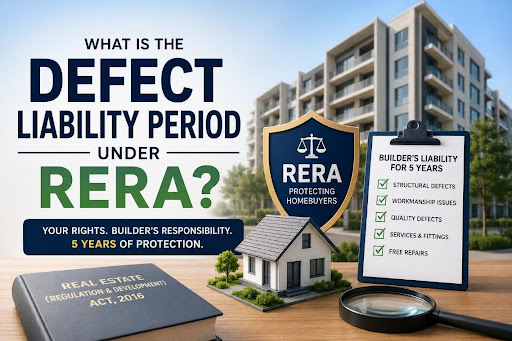
Under Section 14(3) of the Real Estate (Regulation and Development) Act, 2016, the promoter is obligated to rectify any structural defect or defect in workmanship, quality or provision of services reported within a period of five years from the date of handing over possession at no cost. The builder has to resolve the issue within 30 days, else the home buyer can claim compensation under RERA.
Market Overview
| Specifics | Information |
|---|---|
| Applicable Law | Real Estate (Regulation and Development) Act, 2016 |
| Applicable Section | Section 14(3) |
| Defect Liability Period | 5 Years |
| Commencement Date | Possession Date |
| Repair Cost | Nil to Purchaser |
| Builder’s Time to Repair | Within 30 Days |
| Compensation Offered | Yes, if builder fails to rectify |
| Applies To | Registered RERA Projects |
What is Defect Liability Period under RERA?
The Defect Liability Period (DLP) is the period as per the law when the builder is liable for fixing certain defects found in a property after the possession has been handed over.
Should the homebuyer discover structural defects, shoddy workmanship, poor quality of construction or deficiencies in the services promised during this time, the builder must fix the problem without charge to the buyer.
What Section 14(3) of RERA says?
Section 14(3) states that if the structural defect or defect in workmanship, quality or provision of services is brought to the notice of the promoter within five years from the date of taking possession, the promoter shall make good the defect within thirty days.
If the builder does not do so then the homebuyer can claim compensation under RERA.
Also Read: How to Check if a Real Estate Project is Maha RERA Registered?
Duration of the Defect Liability Period?
Defect Liability Period as per RERA is:
| Particular | Duration |
|---|---|
| Defect Liability Period | 5 Years |
| Builder’s Rectification Time | 30 Days |
| Repair Charges | Free |
The five-year period commences from the date the buyer takes possession of the property.
RERA Under Which Defects Are Covered?
RERA covers defects that occur due to poor quality of construction or poor workmanship.
Typical examples are:
| Covered Defects | Examples |
|---|---|
| Structural Defects | Cracks on beams, slabs, foundation or columns |
| Water Leakage | Damp walls, Roof Leakage, Seepage |
| Plumbing Defects | Leaking, broken pipes |
| Electrical Problems | Improper wiring, unsafe installations |
| Flooring Defects | Uneven flooring, broken tiles |
| Waterproofing Problems | Leaking in terrace or bathroom |
| Poor Worksmanship | Faulty finishing, poor plastering |
Also Read: Builder Cheating You? How RERA Can Get Your Money Back in 2026
What are Structural Flaws?
Structural defects impact the stability, durability or safety of the building.
These might be:
- Large cracks in the wall
- Defects in foundations
- Weak columns
- Broken beams
- Instability of roof
- Load bearing problems
Such defects usually need immediate attention as they may affect occupant safety.
What Are Defects in Workmanship or Quality?
RERA also safeguards the buyers against sub-standard construction apart from structural defects.
For example:
- Hollow-core floor slabs
- lumpy plastering
- Bad paint
- Sloppy Fittings
- Glass broken
- Improperly installed doors
- Plumbing problems
- Problems with Electrical Installations
What defects are generally excluded?
Some issues with general wear and tear, neglect or alterations by the owner may not be covered under the Defect Liability Period.
These are typically:
| Generally Not Covered | Reason |
|---|---|
| Owner-induced renovation damage | Owner-induced |
| Wear & Tear | Natural aging |
| Improper Maintenance | Resident Responsibility |
| Accidental damage | External influences |
| Changes by purchaser | Not builder’s responsibility |
How does a buyer report a defect?
The buyer must notify the builder in writing as soon as a defect is found.
It is recommended that you include:
- Pictures
- Video
- Possession letter copy
- Defect description
- Date defect noticed
Written communication is useful documentation if the dispute reaches RERA.
Also Read: What Is the Status of RERA for Redevelopment Projects in Maharashtra? A Complete 2025 Deep-Dive
What Happens Next After Reporting?
The builder is then expected to be informed and inspect the problem and arrange repairs.
The defect should ordinarily be remedied within thirty days at no cost to the homebuyer.
What if the Builder Says No?
If the builder does not respond to the complaint or refuses to repair, the buyer can complain before the respective State RERA Authority.
The authority may order repairs, compensation or other appropriate relief depending on the facts.
Why is Defect Liability Period Important?
The provision provides several advantages:
| Benefit | Effect |
|---|---|
| Buyer Protection | Lessens financial burden |
| Higher Construction Quality | Encourages responsibility |
| Legal Security | Transparent rights under RERA |
| Faster Resolution | Time-bound repair obligation |
| Greater transparency | Encourages responsible development |
All Property Covered Under Defect Liability Protection?
The protection is primarily for projects registered under RERA and covered by the Act.
Home-buyers must always check the RERA registration of the project before buying.
Homebuyer Tips
Potential buyers should examine the property thoroughly before they take ownership.
A detailed snag list with photographs of the plumbing, electrical fittings, walls, flooring, waterproofing and common areas will help in early identification of problems and assist with any future claims if required.
Why should you choose Housiey?
At Housiey, we believe that buying a home should come with clarity, confidence and reliable information behind it. Our guides simplify complicated real estate laws, explain buyer rights in simple language and help you make informed property decisions without the confusion.
Whether you’re buying your first apartment or investing in a new project, Housiey offers practical insights on RERA regulations, legal protections, market trends, and home-buying essentials so you stay informed at every stage of your property journey.
Conclusion:
The Defect Liability Period under RERA is one of the most important legal rights available to the homebuyers in India. RERA improves the construction standards and reinforces buyer confidence by holding builders accountable for structural defects, poor workmanship and quality-related issues for five years after possession.
Knowing your rights under Section 14(3) helps you act in time in case of defects after possession. Proper documentation, timely reporting of issues and seeking assistance from the State RERA Authority when required can help ensure that your investment remains protected for years to come.
The Bottom Line
- The Defect Liability Period under RERA is 5 years from the date of possession.
- Builders must fix covered defects at no charge.
- Generally speaking repairs must be made within thirty days of the defect being reported.
- Quality defects and deficiencies in services, workmanship problems and structural defects are covered.
- Buyers must submit defects in writing with supporting photographs and documents.
- If the builder does not fix the defect, compensation may be payable.
- Section 14(3) of RERA is the legal basis for defect liability.
- Maintenance of records strengthens the claim of a buyer before RERA Authority.
References
- Real Estate (Regulation and Development) Act, 2016
- Ministry of Housing and Urban Affairs (MoHUA)
- Central Advisory Council guidelines on State Real Estate Regulatory Authority (RERA)
- Consumer Protection Act, 2019 (as applicable)
- Notifications and circulars issued by State RERA Authorities
FAQ’s
This is when, after you take ownership, the builder is liable to repair certain defects. This period is five years from the date of possession handover, under RERA.
This provision is subject to Section 14(3) of the Real Estate (Regulation and Development) Act, 2016. It sets out the duty of the promoter to rectify defects that are covered.
The Defect Liability Period is 5 years. It starts from the date the buyer takes possession.
No, the builder must fix covered defects without charging the buyer. Repair should be free of charge.
The structural defects affect the stability or safety of the building. Like foundation, beam, column and slab defects.
Yes, seepage may be covered if it is caused by construction defects or poor workmanship. Each complaint is evaluated on its facts.
Yes, if the plumbing problem is due to shoddy construction it may be covered. The liability period is the duration in which builders are expected to correct such defects.
Yes, defective electrical installations related to workmanship may fall under the Defect Liability Period. Such problems should be reported by buyers promptly.
The builder must fix the defect reported within thirty days. Any failure to do so may attract compensation under RERA.
Yes, buyers can file a complaint with the State RERA Authority. The authority shall issue such directions as may be appropriate in the circumstances.
Typically, normal wear and tear is not covered. The law protects mainly buyers against defects that are related to construction.
Only if repainting is required due to construction defects such as dampness or seepage. Damage caused by normal use, such as wear and tear, is usually not covered.
Yes it can be applicable to Villas in registered RERA project. The same legal principles typically apply to eligible properties.
Yes, compensation can be claimed if the builder does not fix covered defects. The decision is based on the RERA Authority’s findings.
Keep possession letters, photographs, invoices, emails and written complaints. And they use these documents to support their claim.
No, it starts from the date of possession. The five-year calculation is unaffected by the booking date.
Yes, written complaints are on record. They also help establish timelines should legal proceedings become necessary.
Common area issues may also be addressed, where the promoter remains responsible under the applicable provisions. What you are responsible for exactly depends on the type of defect.
Builders cannot lawfully disregard valid obligations under Section 14(3). If the builder fails to act, buyers can approach the RERA Authority.
It protects buyers from having to pay for repair costs due to poor construction quality. It also encourages developers to build to a higher standard.

Ayush Oswal is an SEO Executive at Housiey, specializing in optimizing real estate content for better visibility and engagement. With a strong understanding of SEO strategies and the property market, he ensures that every blog helps homebuyers make informed decisions while performing well on search engines.
Related Stories