

What is Repo Rate and Reverse Repo Rate? | Housiey
-
By Zeeshan Qureshi
- March 21, 2025
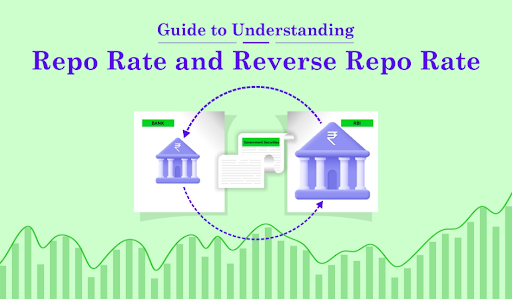
The financial system of a country relies on various monetary tools used by the central bank to maintain stability and growth. Two such critical instruments are the Repo Rate and Reverse Repo Rate. These rates play a crucial role in regulating liquidity, controlling inflation, and ensuring economic stability.
In this blog, we will break down what is repo rate and reverse repo rate, their definitions, current rates, historical trends, and their impact on the banking system and the economy.
Also Read: What is Repo Rate: Definition and How It Works?
Understanding Repo Rate and Reverse Repo Rate
Before diving into details, let’s start with the definitions:
| Term | Definition |
|---|---|
| Repo Rate | The interest rate at which commercial banks borrow funds from the central bank by pledging government securities. |
| Reverse Repo Rate | The interest rate at which commercial banks deposit their excess funds with the central bank. |
Both these rates are set by the Reserve Bank of India (RBI) in India and play a key role in monetary policy implementation.
What is Repo Rate?

Repo Rate Definition
Repo Rate, or Repurchase Agreement Rate, is the rate at which commercial banks take short-term loans from the Reserve Bank of India (RBI) by selling government bonds or securities with an agreement to repurchase them later at a higher price.
What is Repo Rate in India?
In India, the RBI uses the repo rate to manage inflation and liquidity in the economy. A higher repo rate makes borrowing expensive for banks, thereby reducing money supply and controlling inflation. Conversely, a lower repo rate encourages lending, boosting economic growth.
What is Repo Rate in Banking?
In the banking sector, the repo rate determines the cost of borrowing for financial institutions. If the repo rate increases, banks have to pay more interest to the RBI, making loans and credit more expensive for businesses and individuals.
What is Repo Rate in Economics?
In macroeconomics, the repo rate is a crucial tool for controlling inflation, stabilizing the economy, and ensuring steady economic growth. A low repo rate results in increased spending, while a high repo rate restricts money supply.
What is Repo Rate Now?
The repo rate fluctuates based on economic conditions. You can check the current repo rate and reverse repo rate on the RBI’s official website.
Historical Repo Rate Trends
| Year | Repo Rate |
|---|---|
| 2019 | 5.15% |
| 2020 | 4.00% (COVID-19 period) |
| 2021 | 4.00% |
| 2022 | 6.50% (due to inflation control) |
| 2023 | 6.50% |
| 2025 | 6.25 |
What is Repo Rate at Present?
As per the latest RBI monetary policy, the repo rate today is 6.25% It plays a vital role in determining loan and deposit rates across the economy.
What is Reverse Repo Rate?

Reverse Repo Rate Meaning
Reverse Repo Rate is the interest rate at which commercial banks park their excess funds with the RBI for short-term periods.
What is Reverse Repo Rate Used For?
The RBI uses the reverse repo rate to absorb excess liquidity from banks, thus controlling inflation and preventing excess money from circulating in the economy.
Difference Between Repo Rate and Reverse Repo Rate
| Factor | Repo Rate | Reverse Repo Rate |
|---|---|---|
| Definition | Rate at which RBI lends money to banks | Rate at which banks deposit excess funds with RBI |
| Impact on Liquidity | Increases money supply | Reduces money supply |
| Effect on Inflation | Higher repo rate controls inflation | Higher reverse repo rate absorbs excess liquidity |
| Usage | Helps banks meet short-term liquidity needs | Used by RBI to regulate surplus liquidity |
What is Reverse Repo Rate Today?
The reverse repo rate today is 3.25% which helps control liquidity in the banking system.
Historical Reverse Repo Rate Trends
| Year | Reverse Repo Rate |
|---|---|
| 2019 | 4.90% |
| 2020 | 3.35% (during COVID-19) |
| 2021 | 3.35% |
| 2022 | 3.35% |
| 2023 | 3.35% |
Repo Rate vs Bank Rate
A common confusion in monetary policy discussions is the difference between repo rate and bank rate.
| Factor | Repo Rate | Bank Rate |
|---|---|---|
| Definition | Rate at which RBI lends to banks for short-term needs | Rate at which RBI lends money to banks without collateral |
| Tenure | Short-term (overnight) | Long-term |
| Impact on Economy | Controls short-term liquidity and inflation | Affects long-term interest rates in the economy |
Impact of Repo and Reverse Repo Rates on the Economy
Impact on Loans and Interest Rates
- A higher repo rate increases home loan and car loan interest rates.
- A lower repo rate makes loans cheaper, boosting demand in sectors like real estate and automobile.
Impact on Inflation
- When inflation is high, RBI raises repo rates to reduce money supply.
- When inflation is low, RBI lowers repo rates to boost spending.
Impact on Stock Markets
- A lower repo rate boosts market sentiment, leading to increased investments.
- A higher repo rate may cause a slowdown in stock markets.
Conclusion
Repo Rate and Reverse Repo Rate are vital tools in India’s monetary policy framework. They influence everything from loan interest rates, inflation, economic growth, and stock markets. Understanding repo and reverse repo rates can help individuals make informed financial decisions.
At Housiey, we provide detailed insights into real estate, finance, and investment trends. If you’re looking to understand more about legal and financial aspects affecting property investments.
Don’t miss our blog on “Uniform Civil Code Uttarakhand 2025.
FAQs
- Repo Rate is the interest rate at which RBI lends to commercial banks.
- Reverse Repo Rate is the interest rate at which banks deposit funds with RBI.
- The current repo rate is 6.25%.
- The current reverse repo rate is 3.5%.
- A higher repo rate increases loan interest rates.
- A lower repo rate makes borrowing cheaper.
- The repo rate has ranged from 4.00% to 6.50% over the past five years.
- It helps absorb excess liquidity in the economy, preventing inflation.
- Repo stands for Repurchase Agreement.
- Loan interest rates rise, making borrowing costlier.
- Inflation is controlled by reducing money supply.
- Economic growth slows down as borrowing decreases.
- Loan interest rates drop, making borrowing cheaper.
- More money flows into the economy, boosting demand.
- Inflation may rise if liquidity increases too much.
- The Reserve Bank of India (RBI) sets the repo rate and reverse repo rate through its Monetary Policy Committee (MPC) meetings.
- The RBI reviews the repo rate every two months in its Monetary Policy Committee (MPC) meeting.
- The repo rate at present is 6.25% (Check RBI’s website for updates).
- The reverse repo rate today is 3.5% (Updated as per RBI policy).
- Higher repo rate → Higher home loan interest rates → Costlier EMIs.
- Lower repo rate → Lower home loan interest rates → Cheaper EMIs.
- When RBI increases the reverse repo rate, banks prefer to deposit excess funds with RBI instead of lending, which reduces liquidity in the economy.
- Repo Rate is a short-term borrowing rate, while Bank Rate is for long-term loans without collateral.
- No, the repo rate cannot be zero or negative in India, as it would disrupt the financial system.
- Higher repo rate → Banks increase FD interest rates.
- Lower repo rate → FD interest rates decrease.
- Lower repo rate → Encourages investment → Stock markets rise.
- Higher repo rate → Costlier borrowing → Stock markets may fall.
- During financial crises, RBI lowers the repo rate to boost lending and economic growth.
- During inflation, RBI raises the repo rate to control excess liquidity.
- You can check the latest repo rate and reverse repo rate today on the Reserve Bank of India (RBI) website.

I am Zeeshan Qureshi, a dedicated content writer for Housiey.com, passionate about simplifying the home-buying journey for everyone. With strong expertise in the real estate industry, I strive to offer transparent, reliable, and up-to-date information that empowers homebuyers to make smart property decisions.
My articles, guides, and project reviews reinforce Housiey’s core values—No Brokerage Policy and Bottom Rate Guarantee—ensuring every reader gets genuine market insight, legal clarity, and the most recent trends.
Through Housiey Blogs, I aim to provide readers with valuable knowledge on topics like Real Estate Law, RERA, Stamp Duty, Home Loans, Vastu Tips, and the latest property market updates, blending useful information with a touch of lifestyle, sports, and entertainment content.
Specialization: Project analysis, government policy explainers, financial guidance, home design tips.
Mission: To empower Indian families with trustworthy knowledge for their dream home purchase.
Writing Style: Making complex real estate topics easily understandable and engaging for every reader.
If you are seeking answers to your property questions or want to stay updated with the latest real estate trends, stay connected with Housiey Blogs—where you’ll always find insight, trust, and real-world guidance.
Related Stories