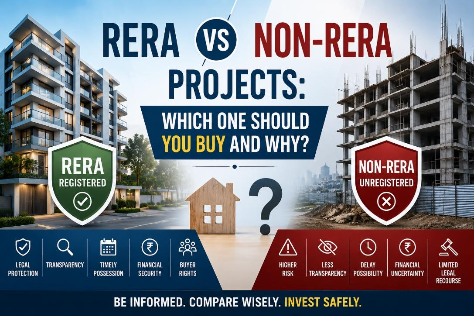
RERA vs Non-RERA Projects: Which One Should You Buy and Why?
-
 By L. Sadriwala
- June 18, 2026
Buying a property is one of the biggest financial decisions you will ever make. Whether you are purchasing your dream home, an investment apartment, or your first residential property, your decision should never be based only on location, amenities, or pricing.
One of the most important aspects that many buyers overlook is whether the project is registered under the Real Estate (Regulation and Development) Act, popularly known as RERA.
Before 2016, the Indian real estate market suffered from multiple challenges. Homebuyers frequently faced delayed possession, misleading advertisements, hidden charges, changes in project plans without consent, poor construction quality, and very limited legal protection. Buyers often had little control once they had invested their life savings.
To improve transparency and restore confidence in the real estate sector, the Government of India introduced the Real Estate (Regulation and Development) Act, 2016. Today, RERA has become one of the biggest reforms in Indian real estate.
However, not every property falls under RERA. Some projects are exempt from registration, while others may not comply despite being required to register. This creates confusion among buyers.
So which one should you choose?
This detailed guide explains everything you need to know about RERA vs Non-RERA projects, their differences, advantages, risks, legal implications, and how to make the safest buying decision.
Quick Answer
If you are planning to buy a home in India, choosing a RERA-registered project is generally the safer and smarter option. RERA offers legal protection, greater transparency, timely possession commitments, regulated financial practices, and an official grievance redressal mechanism. While some non-RERA projects may still be reliable, especially if they qualify for exemptions or were launched before RERA came into effect, buyers should conduct much deeper due diligence before investing.
Market Snapshot Table
|
Factor |
RERA Project |
Non-RERA Project |
| Government Registration | Mandatory | Not mandatory (if exempt) |
| Transparency | High | Depends on developer |
| Legal Protection | Strong | Limited |
| Project Information | Publicly Available | Often Limited |
| Delay Compensation | Applicable | Depends on Agreement |
| Financial Monitoring | Mandatory | Not Regulated by RERA |
| Buyer Rights | Clearly Defined | Contract-Based |
| Complaint Resolution | Dedicated RERA Authority | Consumer Court/Civil Court |
| Investment Risk | Lower | Comparatively Higher |
What Is RERA?
The Real Estate (Regulation and Development) Act, 2016 is a central legislation introduced to regulate India’s real estate sector.
The primary objectives of RERA include:
- Protecting homebuyers.
- Promoting transparency.
- Reducing fraud.
- Ensuring timely project completion.
- Standardizing real estate transactions.
- Increasing accountability among developers.
Each state and union territory has its own RERA authority responsible for implementing the Act and monitoring registered projects.
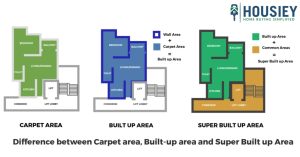
Also Read:- How Does the RERA Carpet Area Rule Save You Lakhs?
What Is a RERA-Registered Project?
A RERA project is one that has been officially registered with the respective State RERA authority before being marketed or sold.
Developers are legally required to disclose comprehensive project information, including:
- Land ownership details
- Government approvals
- Layout plans
- Construction schedule
- Completion timeline
- Apartment specifications
- Carpet area
- Financial disclosures
- Quarterly construction updates
This information is publicly accessible through the respective State RERA portal.
What Is a Non-RERA Project?
A non-RERA project is one that is not registered under RERA.
However, not all non-RERA projects are illegal.
Some projects are legally exempt, such as:
- Projects with land area below the prescribed threshold (subject to RERA provisions)
- Small projects with limited apartment units (as per applicable rules)
- Renovation projects
- Repair works
- Projects completed before RERA became applicable
- Projects that received Completion Certificate before implementation
On the other hand, if a project is legally required to register but has failed to do so, buyers should exercise extreme caution.
Also Read:- When Is RERA Registration Mandatory For Projects?
Buyer Insights
Recent market trends show that buyers increasingly prioritize legal compliance over promotional offers. Easy access to project details through State RERA portals has made purchasers more informed than ever before. Projects with transparent documentation, regular construction updates, and a proven compliance history generally inspire greater buyer confidence and often experience stronger demand in competitive markets.
Why Was RERA Introduced?
Before RERA, several common issues affected homebuyers.
- Delayed Possession
Builders often delayed projects by several years without compensation.
- Hidden Charges
Unexpected expenses frequently increased the final property cost.
- Misleading Advertisements
Many brochures promised amenities that were never delivered.
- Layout Changes
Builders could significantly alter project plans after booking.
- Fund Diversion
Money collected from one project was sometimes used to finance unrelated developments.
- Poor Accountability
Buyers had very limited legal remedies against defaulting developers.
Also check the latest Article about: What Penalties Do Developers Face for RERA Violations in 2026?
Major Benefits of Buying a RERA Project
- Greater Transparency
Developers must disclose accurate project information before selling units.
Buyers can independently verify details rather than relying solely on marketing material.
- Timely Possession
Builders must specify possession timelines.
If unjustified delays occur, buyers may be entitled to compensation as per RERA provisions.
- Regulated Use of Buyer Funds
A significant portion of buyer payments must be deposited in a dedicated escrow account and used primarily for that project’s construction and land costs.
This reduces the risk of fund diversion.
- Standard Carpet Area
RERA standardizes the definition of carpet area.
This enables buyers to compare projects more accurately.
- Legal Protection
If developers violate RERA provisions, buyers can file complaints before the State RERA Authority.
- Better Construction Accountability
Developers remain responsible for rectifying specified structural defects reported within the applicable liability period under RERA.
- Transparent Pricing
Mandatory disclosures help reduce hidden costs and misleading pricing practices.
Also Read:- Will RERA 2.0 in 2026 Increase Demand for 1 BHK and 2 BHK Homes in India?
Risks of Buying a Non-RERA Project
- Limited Transparency
Project approvals and financial information may not be readily available.
- Higher Delay Risk
Completion schedules may be less enforceable.
- Limited Regulatory Oversight
Buyers may have fewer statutory protections.
- Greater Due Diligence Required
Buyers must independently verify every legal document.
- Higher Legal Complexity
Disputes often require approaching consumer forums, civil courts, or other legal authorities, depending on the issue.
RERA vs Non-RERA Projects: Detailed Comparison
|
Feature |
RERA Projects |
Non-RERA Projects |
| Government Regulation | Yes | Limited or Exempt |
| Transparency | Excellent | Varies |
| Construction Updates | Mandatory | Not Mandatory |
| Buyer Protection | Strong | Limited |
| Compensation for Delay | Available under applicable provisions | Depends on agreement and applicable laws |
| Carpet Area Definition | Standardized | May vary |
| Complaint Mechanism | State RERA Authority | Consumer Forum/Civil Court |
| Financial Monitoring | Yes | No RERA Oversight |
| Builder Accountability | High | Depends on Builder |
How to Verify Whether a Project Is RERA Registered
- Visit the State RERA Website
Every state has its own official RERA portal.
- Search Using the Project Name
Most portals allow searches by:
- Project Name
- Builder Name
- Registration Number
- Verify Project Details
Check:
- Registration validity
- Construction status
- Completion date
- Approvals
- Litigation disclosures (if any)
- Quarterly updates
- Match the Details
Ensure the information shared by the sales team matches the official records.
Check RERA projects step by step: MahaRERA 2026: RERA Maharashtra Registration, Complaint, Projects & Agents
Can Non-RERA Projects Still Be Good Investments?
Yes.
Some older projects developed by reputed builders remain excellent investments.
However, buyers should thoroughly verify:
- Title documents
- Occupancy or Completion Certificate, where applicable
- Approved plans
- Encumbrance status
- Bank approvals
- Construction quality
- Litigation history
- Builder reputation
- Possession status
The absence of RERA registration does not automatically indicate poor quality, but it increases the importance of careful due diligence.
Questions Every Buyer Should Ask Before Purchasing
Ask the developer:
- Is the project registered under RERA?
- What is the RERA registration number?
- What is the promised possession date?
- Has the project faced previous delays?
- Are all approvals available?
- Are there any pending legal disputes?
- What amenities are guaranteed?
- Is the carpet area RERA compliant?
- What penalties apply in case of delayed possession?
- How frequently are construction updates published?
Common Myths About RERA
Myth 1: Every Project Must Be Registered
Reality: Certain categories of projects are exempt under the Act.
Myth 2: RERA Guarantees No Delays
Reality: RERA discourages delays and provides legal remedies, but unforeseen circumstances may still affect timelines.
Myth 3: RERA Guarantees Investment Returns
Reality: RERA regulates transactions and protects buyers; it does not guarantee appreciation or rental income.
Myth 4: Only New Projects Need Verification
Reality: Buyers should verify legal approvals and documentation for every property, regardless of age.
When Should You Consider Buying a Non-RERA Project?
A non-RERA property may still be worth considering if:
- It is legally exempt from RERA registration.
- The project already has a valid Occupancy or Completion Certificate.
- The builder has an excellent delivery record.
- All legal documents are independently verified.
- A reputed legal expert has completed due diligence.
- The pricing advantage justifies the additional verification effort.
Why Buyers Choose Housiey
Buying a property involves much more than selecting a floor plan or comparing prices. Buyers need reliable guidance, verified information, and direct access to trusted developers.
Housiey simplifies the home-buying journey by connecting buyers directly with builders without circulating their contact details to multiple brokers. This creates a smoother, more transparent, and hassle-free experience while helping buyers explore verified residential projects across leading cities.
Whether you are evaluating a RERA-registered development or comparing multiple projects, having access to accurate information and professional guidance can make your decision significantly more confident and informed.
Conclusion
Choosing between a RERA and a non-RERA project is ultimately a question of risk, transparency, and legal protection.
For most homebuyers, particularly first-time purchasers, a RERA-registered project provides greater peace of mind through mandatory disclosures, regulated financial practices, standardized documentation, and an established grievance redressal mechanism. These safeguards help reduce many of the uncertainties traditionally associated with real estate purchases.
That said, not every non-RERA project is unsuitable. Many are legally exempt or completed before the implementation of the Act and may still represent sound investments when backed by strong documentation, a credible developer, and thorough legal verification.
Regardless of your choice, never rely solely on advertisements or verbal assurances. Verify approvals, review project records, understand the agreement carefully, and conduct comprehensive due diligence before making one of the most important financial decisions of your life.
Key Takeaways
- RERA projects offer stronger legal protection and higher transparency.
- Buyers can verify project information through official State RERA portals.
- RERA standardizes carpet area calculations and improves pricing transparency.
- Registered developers are subject to stricter disclosure and compliance requirements.
- Non-RERA projects are not necessarily risky if they are legally exempt and properly verified.
- Independent legal due diligence remains essential for every property purchase.
- Compare documentation, approvals, possession timelines, and builder credibility before investing.
- A well-informed buyer is far more likely to make a secure and rewarding real estate investment.
Sources
- Ministry of Housing and Urban Affairs (Government of India)
- The Real Estate (Regulation and Development) Act, 2016
- Official State RERA Authority Portals
- Department of Land Resources, Government of India
- National Consumer Disputes Redressal Commission (NCDRC)
- Reserve Bank of India (Housing Finance and Lending Guidelines)
- Insolvency and Bankruptcy Board of India (Relevant Real Estate Matters)
- Government of India Gazette Notifications relating to RERA
- Housing and Urban Development policy publications
- Publicly available regulatory advisories and official circulars issued by State RERA Authorities
FAQs
- A RERA project is registered under the Real Estate (Regulation and Development) Act and must comply with prescribed disclosure and compliance requirements. A non-RERA project is either exempt from registration or may not be registered despite legal requirements, making due diligence especially important.
- Generally, yes, because buyers benefit from greater transparency and legal safeguards. However, buyers should still verify project documents before investing.
- Yes, if it falls within the categories exempt from RERA registration. Buyers should confirm the reason for exemption before proceeding.
- You can search for the project on the respective State RERA portal using its name, builder, or registration number. The portal provides publicly available registration details and project disclosures.
- RERA requires developers to declare possession timelines and provides remedies if obligations are not met under applicable provisions. It cannot eliminate every cause of delay.
- The portal generally includes registration details, approvals, project timelines, layout plans, quarterly updates, and developer information. Availability may vary slightly across states.
- Yes, eligible buyers can approach the respective State RERA Authority if they believe a developer has violated applicable provisions. The authority follows the procedures established under the Act.
- Projects completed before the Act came into force or those with the required completion documentation may not require registration. Buyers should verify the legal status of each project.
- No, RERA does not fix or regulate property prices. Its primary objective is to improve transparency, accountability, and consumer protection.
- Carpet area refers to the net usable floor area inside an apartment, excluding certain external areas as defined under the Act. This standard definition allows easier comparison between projects.
- Major changes generally require compliance with RERA provisions and, in many cases, consent from affected allottees. Buyers should review the applicable rules before agreeing to any modifications.
- Yes, many commercial real estate projects also fall under RERA if they meet the applicable registration criteria. The exact requirements depend on the Act and relevant state rules.
- Yes, investors often benefit from improved transparency and lower regulatory risk. This can support more informed investment decisions.
- Failure to register may attract penalties under the Act and can expose buyers to additional risks. It is advisable to avoid investing until the project’s legal status is clarified.
- Some financial institutions may provide loans depending on their internal assessment and legal verification. Loan approval alone should not replace independent due diligence.
- Not necessarily, because lower pricing may come with higher legal or construction risks. Buyers should evaluate the overall value rather than focusing only on cost.
- Yes, engaging a qualified legal professional can help verify ownership, approvals, and contractual terms. This is valuable for both RERA and non-RERA projects.
- No project can be assumed to be completely free from disputes. Buyers should review available disclosures and verify the project’s legal status independently.
- Yes, NRIs often appreciate the increased transparency and access to verified project information provided through State RERA portals. These features can simplify remote decision-making.
- For most buyers, a RERA-registered project is generally the preferred option because of stronger consumer protection and transparency. A non-RERA project should only be considered after thorough legal and technical verification.
L. Sadriwala is the Editor-in-Chief at Housiey, with a professional writing career spanning since 2015. Coming from a family of real estate developers, her deep-rooted industry understanding naturally shaped her focus on real estate content, where she combines domain knowledge with clear, reader-first writing.
She specializes in simplifying complex property concepts — from housing policies and market trends to builder reviews and project insights — into accurate, easy-to-understand guidance for homebuyers and investors.
At Housiey, every article by L. Sadriwala is built on thorough research and verified facts. Her goal is straightforward: to empower homebuyers and investors with reliable, trustworthy information that helps them make confident property decisions.
Related Stories