

What Do Your Society Maintenance Charges Cover?
-
By Ayush Oswal
- June 5, 2026
Introduction
When purchasing a home in a gated community, apartment complex, or residential society, most homebuyers focus on the property’s price, home loan EMIs, registration charges, and interior expenses. However, one recurring cost that often gets overlooked is the society maintenance charge.
Whether you own a compact apartment in Mumbai, a luxury residence in Bengaluru, a township home in Pune, or a premium project in Hyderabad, society maintenance charges are a mandatory expense that directly impacts your monthly household budget.
Many homeowners pay these charges regularly but are often unaware of what exactly they are paying for. Questions such as “Why are maintenance charges increasing every year?”, “What services are included?”, and “Can a society charge additional fees?” are quite common among residents.
Understanding society maintenance charges is important because these fees ensure that the property remains safe, functional, clean, and valuable over the long term. Proper maintenance not only improves residents’ quality of life but also preserves property appreciation and rental potential.
In this comprehensive guide, we will explore what society maintenance charges cover, how they are calculated, why they vary across projects, and what homeowners should know before paying them.
Tired of High Maintenance Charges? Buy Smart in Mumbai!
Top RERA Verified Projects with Transparent Pricing in Mumbai. No Brokerage – Direct from Builder!!
Buy Smart in Mumbai →Quick Answer
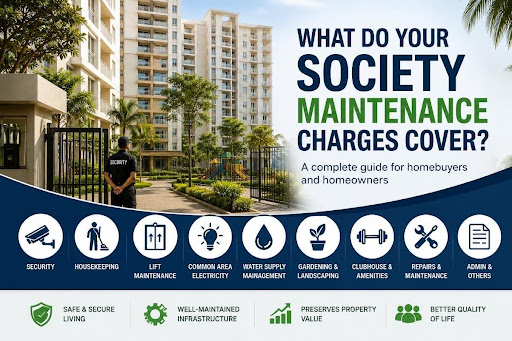
Society maintenance charges are fees collected by housing societies, resident welfare associations (RWAs), or facility management teams to cover the operational, repair, security, cleaning, and upkeep expenses of common areas and shared amenities within a residential project.
These charges typically cover:
- Security services
- Housekeeping and cleaning
- Lift maintenance
- Electricity for common areas
- Water supply management
- Gardening and landscaping
- Clubhouse upkeep
- Swimming pool maintenance
- Repairs and maintenance
- Administrative expenses
- Staff salaries
- Waste management
- Building insurance
- Sinking funds for future repairs
Market Snapshot Table
| Maintenance Component | Typical Coverage |
|---|---|
| Security | Guards, CCTV monitoring, access control |
| Housekeeping | Cleaning lobbies, corridors, common areas |
| Lift Maintenance | AMC contracts and repairs |
| Common Electricity | Lighting, pumps, generators |
| Water Management | Tank cleaning, pumps, water treatment |
| Landscaping | Garden upkeep and beautification |
| Clubhouse Maintenance | Fitness centers, indoor activity zones |
| Swimming Pool | Cleaning, filtration, staffing |
| Administrative Costs | Office operations and documentation |
| Repair Fund | Future structural repairs and replacements |
| Waste Management | Garbage collection and disposal |
| Building Insurance | Common area insurance coverage |
What Are Society Maintenance Charges?
Society maintenance charges are periodic fees collected from homeowners to manage and maintain shared infrastructure and common facilities within a residential project.
Unlike individual household expenses, these charges are pooled together and used for community-wide services that benefit all residents.
The amount may be collected:
- Monthly
- Quarterly
- Half-yearly
- Annually
The exact amount depends on:
- Property size
- Number of amenities
- Age of the building
- Society budget
- Location
- Maintenance standards
Know Your Maintenance Charges Before Buying in Pune!
Top Transparent RERA Verified Projects in Pune. No Brokerage – Direct from Builder!!
Check Pune Projects →Why Are Maintenance Charges Necessary?
A residential society functions like a small city.
Every day, multiple systems operate simultaneously:
- Elevators
- Water pumps
- Security systems
- Fire safety equipment
- Common lighting
- Clubhouse facilities
- Landscaping systems
Without regular maintenance funding, these facilities would deteriorate quickly.
Maintenance charges help ensure:
- Safety of residents
- Smooth operations
- Better living standards
- Property value preservation
- Long-term infrastructure sustainability
Security Services
One of the biggest portions of maintenance charges goes toward security.
Modern residential communities employ:
- Security guards
- Supervisors
- Gate management staff
- Visitor verification personnel
Security expenses generally include:
- Salaries
- Uniforms
- Training
- Equipment
- CCTV monitoring systems
Premium residential communities often maintain 24×7 security operations, making this one of the most significant recurring costs.
Housekeeping and Cleaning
Clean surroundings contribute significantly to residents’ comfort and property value.
Maintenance fees are used to pay housekeeping staff responsible for:
- Cleaning lobbies
- Sweeping corridors
- Washing common areas
- Cleaning staircases
- Maintaining parking areas
- Sanitizing shared spaces
Regular cleaning also helps maintain hygiene standards and prevents long-term deterioration.
Lift Maintenance and Repairs
Elevators are among the most heavily used facilities in high-rise residential buildings.
Maintenance charges cover:
- Annual Maintenance Contracts (AMCs)
- Routine inspections
- Emergency repairs
- Spare parts replacement
- Safety certifications
Proper lift maintenance is essential for resident safety and regulatory compliance.
Bangalore Society Charges Too High? Find Better Homes!
Top RERA Approved Projects with Best Pricing in Bangalore. No Brokerage – Direct from Builder!!
Find Better Homes →Electricity for Common Areas
Common areas consume substantial electricity every month.
Maintenance charges help pay for:
- Lobby lighting
- Parking lights
- Garden lighting
- Corridor lighting
- Security cabins
- Water pumps
- Clubhouse electricity
- Elevator operations
In larger townships, electricity costs can account for a significant portion of the annual maintenance budget.
Water Supply and Water Management
Water infrastructure requires continuous monitoring and maintenance.
Maintenance charges often cover:
- Water pumps
- Borewell maintenance
- Water treatment plants
- Tank cleaning
- Pipeline repairs
- Water quality testing
Projects with advanced water recycling systems may incur additional maintenance costs but often achieve better sustainability.
Gardening and Landscaping
Beautiful landscapes improve the visual appeal of a residential community.
Maintenance charges support:
- Garden maintenance
- Lawn care
- Tree pruning
- Irrigation systems
- Seasonal plantation
- Pest control for green areas
Well-maintained landscapes often increase overall property attractiveness and market value.
Clubhouse Maintenance
Many modern residential developments offer lifestyle amenities that require ongoing upkeep.
These include:
- Indoor games rooms
- Multipurpose halls
- Reading lounges
- Co-working spaces
- Community halls
Maintenance expenses cover cleaning, staffing, repairs, and utility costs associated with these facilities.
Swimming Pool Maintenance
Swimming pools require specialized maintenance to remain safe and hygienic.
Maintenance charges generally cover:
- Water treatment chemicals
- Filtration systems
- Pool cleaning
- Lifeguard salaries
- Equipment servicing
Luxury communities often allocate substantial budgets toward pool operations.
Gym and Fitness Facilities
Fitness centers have become a standard amenity in modern projects.
Society maintenance fees may include:
- Equipment servicing
- Repairs
- Cleaning
- Air-conditioning expenses
- Trainer salaries in some communities
Regular maintenance ensures equipment remains safe and functional.
Fire Safety System Maintenance
Fire safety systems require periodic testing and maintenance.
These systems include:
- Fire extinguishers
- Smoke detectors
- Sprinklers
- Fire pumps
- Emergency alarms
Housing societies must ensure these systems remain operational at all times.
Waste Management Services
Effective waste management is a critical responsibility of residential communities.
Maintenance charges often cover:
- Garbage collection
- Waste segregation
- Disposal services
- Composting initiatives
- Sanitation staff
Many modern societies now implement sustainable waste management programs to reduce environmental impact.
Staff Salaries
Several employees work behind the scenes to keep residential communities functioning smoothly.
Maintenance charges contribute toward salaries of:
- Security personnel
- Housekeeping staff
- Gardeners
- Technicians
- Facility managers
- Administrative staff
Labour costs often represent one of the largest portions of maintenance expenditure.
Repairs and Routine Maintenance
Every building experiences wear and tear over time.
Maintenance funds are used for:
- Plumbing repairs
- Electrical repairs
- Painting work
- Waterproofing
- Common area restoration
- Minor structural fixes
Regular repairs help avoid larger and more expensive issues in the future.
Administrative and Management Expenses
Managing a housing society involves administrative costs.
These may include:
- Office expenses
- Accounting services
- Software systems
- Audit fees
- Legal compliance
- Documentation
Professional management contributes to smoother operations and better financial transparency.
Building Insurance
Many societies purchase insurance for common areas and shared infrastructure.
Maintenance charges may cover insurance premiums for:
- Structural damage
- Fire incidents
- Natural disasters
- Common asset protection
Insurance provides financial security against unexpected events.
Sinking Fund Contributions
A sinking fund is a reserve fund accumulated over time for major future repairs and replacements.
Examples include:
- Lift replacement
- Structural strengthening
- External painting
- Roof repairs
- Infrastructure upgrades
Contributing to a sinking fund helps avoid large one-time financial burdens on residents.
Buyer Insights
Older Buildings May Have Higher Maintenance Costs
As buildings age, repair and replacement requirements increase.
Luxury Projects Typically Charge More
Premium amenities require larger maintenance budgets and specialized staff.
Low Maintenance Isn’t Always Better
Very low maintenance charges can indicate underfunded operations and deferred repairs.
Well-Maintained Projects Hold Value Better
Properties in well-managed communities often attract higher resale values and rental demand.
How Are Society Maintenance Charges Calculated?
Different societies follow different methods:
Per Square Foot Method
Charges are calculated based on apartment size.
Equal Share Method
All homeowners pay the same amount regardless of apartment size.
Hybrid Method
A combination of fixed and area-based charges is used.
Usage-Based Method
Some expenses are allocated according to actual consumption.
The calculation method is generally determined by society bylaws and local regulations.
No Hidden Charges – Best Society Homes in Hyderabad!
Top Transparent RERA Verified Projects in Hyderabad. No Brokerage – Direct from Builder!!
Explore Hyderabad Homes →Why Do Maintenance Charges Increase Over Time?
Several factors contribute to rising maintenance expenses:
- Inflation
- Increased labour costs
- Rising electricity tariffs
- Water charges
- Equipment replacement expenses
- Building aging
- Regulatory compliance requirements
Annual revisions are common in most residential communities.
Why Buyers Choose Housiey
Buying a home is about more than just selecting the right apartment. Understanding recurring costs such as maintenance charges is equally important for long-term financial planning.
Housiey helps homebuyers connect directly with builders without having their contact details circulated to multiple brokers, creating a smooth, transparent, and hassle-free home-buying experience. Buyers can compare projects, understand ownership costs, evaluate amenities, and make informed real estate decisions with confidence.
Conclusion
Society maintenance charges play a vital role in ensuring that residential communities remain safe, clean, functional, and attractive over the long term. While many homeowners view these charges as an additional expense, they are actually an investment in preserving property value and enhancing quality of life.
From security and housekeeping to lift maintenance, landscaping, water management, and future repair funds, maintenance charges support nearly every aspect of community living. Understanding exactly what these fees cover helps homeowners evaluate projects more effectively and avoid surprises after possession.
Before purchasing a property, buyers should always review the maintenance structure, available amenities, reserve funds, and historical charge trends. A well-maintained society often translates into better living experiences, stronger resale potential, and higher rental demand, making maintenance charges a critical factor in real estate decision-making.
Key Takeaways
- Society maintenance charges fund the upkeep of common infrastructure and amenities.
- Security, housekeeping, lifts, electricity, and water management form the core components of maintenance expenses.
- Luxury projects generally have higher maintenance charges due to premium amenities.
- A sinking fund helps finance major future repairs and replacements.
- Regular maintenance preserves property value and enhances resident satisfaction.
- Maintenance charges may be calculated using area-based, equal-share, hybrid, or usage-based methods.
- Rising operational costs often lead to annual increases in maintenance fees.
- Buyers should evaluate maintenance structures before purchasing a property.
FAQs
- Society maintenance charges are recurring fees collected from homeowners to maintain common areas and shared facilities. These charges ensure smooth operation and upkeep of residential communities.
- Yes, homeowners are generally required to pay maintenance charges as per society rules and applicable regulations. Non-payment can attract penalties and restrictions on certain services.
- Maintenance charges typically include security, housekeeping, lift maintenance, common electricity, landscaping, repairs, and administrative expenses. The exact inclusions vary by society.
- Societies may calculate charges based on apartment size, equal contribution, or a hybrid formula. The method is usually defined in society bylaws.
- Luxury developments often feature extensive amenities such as clubhouses, pools, and advanced security systems. Maintaining these facilities requires larger operational budgets.
- Some societies include common water infrastructure costs within maintenance fees. Individual water consumption charges may be billed separately depending on the project.
- Yes, upkeep of common parking areas is often covered under society maintenance charges. This may include lighting, cleaning, and repairs.
- A sinking fund is a reserve collected over time for major future repairs and replacements. It helps societies manage large expenses without imposing sudden special charges.
- Yes, societies often revise charges annually due to inflation and rising operational costs. Increased utility expenses and building repairs can also contribute to revisions.
- The payment arrangement depends on the rental agreement between the owner and tenant. In many cases, owners pay society charges while tenants cover utility expenses.
- Yes, maintenance and operation of clubhouses are commonly funded through society maintenance fees. This includes cleaning, repairs, and utility expenses.
- Yes, regular servicing and repair of lifts are usually included. Major replacements may sometimes require additional contributions from residents.
- The society may impose penalties, charge interest, or initiate legal recovery procedures. Persistent non-payment can create financial strain on the community.
- Many societies allocate a portion of maintenance funds toward building insurance premiums. Coverage generally applies to common areas and shared assets.
- Housekeeping requires dedicated staff, equipment, and cleaning supplies throughout the year. Large residential communities often need extensive cleaning operations.
- Yes, housing societies typically provide financial statements and annual reports. Residents can review expenditures and participate in meetings regarding budgets.
- Yes, landscaping and garden maintenance are usually covered. This includes irrigation, pruning, lawn care, and plant replacement.
- Well-utilized maintenance charges can improve property value by ensuring the community remains attractive and functional. Poor maintenance can negatively impact resale demand.
- Buyers should review maintenance charges, amenities offered, reserve funds, and historical increases. Understanding these costs helps assess long-term affordability.
- Yes, societies may levy special charges for major repairs or emergency projects that exceed regular budgets. Such charges are usually approved according to society rules.

Ayush Oswal is an SEO Executive at Housiey, specializing in optimizing real estate content for better visibility and engagement. With a strong understanding of SEO strategies and the property market, he ensures that every blog helps homebuyers make informed decisions while performing well on search engines.
Related Stories