

Top Up Loan vs Personal Loan: Which is Better?
-
 By L. Sadriwala
- June 4, 2026
Introduction
In today’s fast-paced world, financial requirements can arise unexpectedly. Whether it is funding a child’s education, renovating a home, managing a medical emergency, consolidating debt, or planning a dream vacation, having access to funds can make a significant difference. While there are multiple borrowing options available, two of the most popular choices are Top Up Loans and Personal Loans.
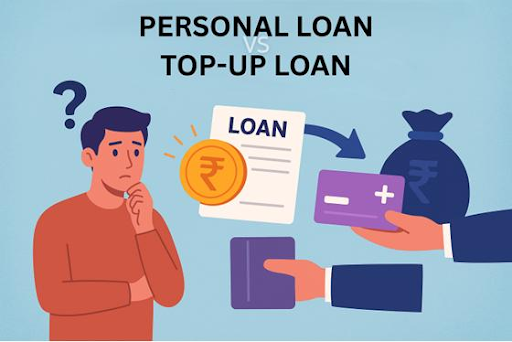
Many borrowers often find themselves confused between these two loan products. At first glance, both appear to serve the same purpose: they provide access to additional funds. However, when examined closely, they differ significantly in terms of eligibility, interest rates, repayment terms, processing speed, documentation, and overall cost.
Understanding the differences between a Top Up Loan and a Personal Loan is crucial because choosing the wrong option can result in higher interest costs, longer repayment burdens, and financial stress.
This comprehensive guide explores everything you need to know about Top Up Loans and Personal Loans, their advantages, disadvantages, key differences, and which option may be better suited for your financial needs.
Quick Answer
A Top Up Loan is generally a better option if you already have an existing home loan and require additional funds at a lower interest rate. A Personal Loan, on the other hand, is suitable for individuals who need quick access to funds without having an existing home loan. The right choice depends on your eligibility, urgency, loan amount, repayment capacity, and purpose of borrowing.
Mumbai’s Hottest Projects Selling Out Fast!
Join Mumbai’s Most Trusted Home Buying Platform. RERA Verified – No Brokerage!!
Find My Dream Home →Market Snapshot Table
| Parameter | Top Up Loan | Personal Loan |
|---|---|---|
| Eligibility | Existing home loan borrowers | Salaried and self-employed individuals |
| Interest Rate | Generally lower | Generally higher |
| Loan Amount | Higher borrowing potential | Moderate borrowing limits |
| Processing Time | Moderate | Faster |
| Collateral Requirement | Linked to existing home loan | Usually unsecured |
| Repayment Tenure | Longer | Shorter |
| Documentation | Moderate | Minimal |
| Approval Chances | Higher for existing borrowers | Based on income and credit profile |
| Best For | Large expenses | Immediate financial needs |
What is a Top Up Loan?

A Top Up Loan is an additional loan offered to borrowers who already have an active home loan. Lenders provide this facility based on the borrower’s repayment history, outstanding loan amount, property value, and overall creditworthiness.
The loan amount is usually added over and above the existing home loan, allowing borrowers to access extra funds without applying for a completely new loan.
Common Uses of a Top Up Loan
- Home renovation
- Medical expenses
- Higher education
- Business expansion
- Wedding expenses
- Debt consolidation
- Property upgrades
Since the loan is linked to an existing secured loan, lenders often offer it at comparatively lower interest rates.
Also Read: What To Do If Home Loan EMI Bounces in India in 2026?
What is a Personal Loan?

A Personal Loan is an unsecured loan that can be used for almost any personal financial requirement. Since no collateral is involved, lenders primarily assess the borrower’s income, employment stability, repayment history, and credit score before approving the loan.
One of the biggest advantages of a Personal Loan is its flexibility. Borrowers can use the funds for any legitimate purpose without restrictions.
Bangalore Property Prices Rising – Lock In Now!
Buy Today Before Prices Go Higher! Top Verified Projects in Bangalore. No Brokerage!!
Start Investing Now →Common Uses of a Personal Loan
- Medical emergencies
- Travel expenses
- Wedding funding
- Home improvements
- Education expenses
- Consumer durable purchases
- Debt consolidation
Because Personal Loans are unsecured, they generally carry higher interest rates than Top Up Loans.
How Does a Top Up Loan Work?
When a borrower already has a home loan and has maintained a satisfactory repayment record, the lender may offer an additional loan amount based on:
- Current market value of the property
- Outstanding home loan balance
- Repayment history
- Income profile
- Credit score
The borrower receives additional funds while continuing repayment under revised loan terms.
How Does a Personal Loan Work?
A Personal Loan is sanctioned independently without any property backing the loan.
The lender evaluates:
- Monthly income
- Employment status
- Credit score
- Existing debt obligations
- Banking history
Upon approval, the loan amount is disbursed directly into the borrower’s bank account and repaid through monthly EMIs.
Also Read:- What Are the Latest Capri Home Loan Interest Rates in 2026? A Complete Guide for Smart Homebuyers
What Are the Major Differences Between a Top Up Loan and a Personal Loan?
Interest Rates
Interest rates are among the biggest differentiating factors.
Top Up Loans usually carry lower interest rates because they are linked to an existing secured loan. Personal Loans are unsecured and therefore involve greater risk for lenders, resulting in higher interest rates.
Loan Amount Eligibility
Top Up Loans generally offer larger borrowing limits because they are based on the property’s value and existing loan relationship.
Personal Loan amounts are determined primarily by income and repayment capacity.
Approval Speed
Personal Loans are known for quick approvals and fast disbursal.
Many lenders can approve eligible Personal Loan applications within a short period due to simplified verification processes.
Top Up Loans may require additional assessments related to the property and existing home loan account.
Pune’s Best Homes Near IT Parks & Colleges!
Top Verified Projects Near Hinjewadi & Kothrud. No Brokerage — Buy Directly from Builder!!
Find Home Near My Area →Documentation Requirements
Personal Loans usually require:
- Identity proof
- Address proof
- Income proof
- Bank statements
Top Up Loans may require additional documentation associated with the existing property and loan account.
Repayment Tenure
Top Up Loans often offer longer repayment periods because they are linked to housing finance.
Personal Loans generally have shorter repayment tenures.
A longer tenure can significantly reduce monthly EMI obligations.
EMI Burden
Due to lower interest rates and longer repayment tenures, Top Up Loans often result in lower monthly EMIs.
Personal Loans may lead to higher EMI commitments because of shorter tenures and higher interest rates.
Accessibility
Not everyone qualifies for a Top Up Loan because it is available only to existing home loan borrowers.
Personal Loans are accessible to a wider range of individuals.
Advantages of a Top Up Loan
Lower Interest Rates
One of the biggest benefits is the comparatively lower cost of borrowing.
Higher Loan Eligibility
Borrowers can access larger funds for significant financial requirements.
Longer Repayment Period
Extended tenures improve affordability.
Lower EMI Outflow
Monthly repayment obligations are usually lower than those of Personal Loans.
Easier Approval for Existing Borrowers
A strong repayment track record can improve approval chances.
Also Read: Credit Score for Home Loans: Fast Fixes to Jump 50+ Points
Disadvantages of a Top Up Loan
Available Only to Existing Home Loan Borrowers
New borrowers cannot access this facility.
Processing May Take Longer
Additional verification procedures can delay disbursal.
Property Value Influences Eligibility
Loan amount approval depends partly on the property’s current valuation.
Also Read: Why Your CIBIL Score Matters for Getting a Home Loan in 2025
Advantages of a Personal Loan
Quick Processing
Funds can often be obtained faster.
No Collateral Requirement
Borrowers do not need to pledge any asset.
Flexible Usage
Funds can be used for virtually any personal need.
Wider Accessibility
Suitable for individuals without a home loan.
Simple Documentation
Application requirements are generally straightforward.
Disadvantages of a Personal Loan
Higher Interest Rates
Borrowing costs are typically higher.
Lower Loan Amounts
Loan limits may be restricted based on income.
Higher EMI Burden
Monthly repayment commitments can be substantial.
Shorter Repayment Tenure
Borrowers have less time to repay the loan.
Buyer Insights
Recent lending trends indicate that borrowers are increasingly choosing Top Up Loans for planned expenses such as home renovation, education funding, and debt restructuring due to lower interest costs. Meanwhile, Personal Loans continue to dominate emergency financing needs because of their faster approval process and minimal documentation.
Financial experts generally recommend evaluating the total repayment amount rather than focusing solely on monthly EMIs. A loan with a lower interest rate can generate significant savings over the entire repayment tenure.
Metro + ORR Connected Homes in Hyderabad!
Live Well Connected in Hyderabad’s Best Localities. RERA Verified — Direct from Builder!!
Check Connected Projects →When Should You Choose a Top Up Loan?
A Top Up Loan may be suitable if:
- You already have a home loan.
- You need a large amount of funding.
- You prefer lower interest rates.
- You want a longer repayment period.
- You aim to reduce monthly EMI obligations.
When Should You Choose a Personal Loan?
A Personal Loan may be suitable if:
- You do not have an existing home loan.
- You need funds urgently.
- You want a quick approval process.
- You require moderate funding.
- You prefer minimal documentation.
Which Option Is Better?
There is no universal answer because the ideal choice depends on individual financial circumstances.
If you already have a home loan and qualify for a Top Up Loan, it is often the more cost-effective option due to lower interest rates, larger loan eligibility, and longer repayment periods.
However, if speed, convenience, and accessibility are your primary concerns, a Personal Loan may be the better solution.
Before making a decision, compare interest rates, processing fees, repayment tenure, EMI obligations, and total repayment costs. Borrowing should always align with your financial goals and repayment capacity.
Why Buyers Choose Housiey
Homebuyers often require expert guidance not only for property selection but also for understanding financing options that support their homeownership journey. Housiey connects buyers directly with trusted developers, helping them explore suitable projects while simplifying the overall home-buying process through transparency, convenience, and informed decision-making.
Conclusion
Both Top Up Loans and Personal Loans serve important financial purposes, but they are designed for different borrower profiles. A Top Up Loan can offer significant cost savings and higher borrowing capacity for existing home loan customers, while a Personal Loan provides unmatched convenience and speed for immediate financial needs.
The key is to evaluate your eligibility, funding requirement, urgency, and repayment capability before choosing either option. A well-informed borrowing decision can help you meet your financial goals efficiently while maintaining long-term financial stability.
Key Takeaways
- Top Up Loans are available only to existing home loan borrowers.
- Top Up Loans generally offer lower interest rates than Personal Loans.
- Personal Loans provide faster approval and quicker disbursal.
- Top Up Loans usually allow larger borrowing limits.
- Personal Loans require no collateral.
- Top Up Loans often come with longer repayment tenures.
- Personal Loans are ideal for urgent financial requirements.
- EMI obligations are generally lower under Top Up Loans.
- Eligibility criteria differ significantly between both loan types.
- Comparing total borrowing cost is essential before making a decision.
- A Top Up Loan is an additional loan provided over an existing home loan. It allows borrowers to access extra funds based on their repayment history and property value.
- A Personal Loan is an unsecured loan offered without requiring collateral. It can be used for various personal financial needs.
- Top Up Loans generally have lower interest rates because they are linked to secured home loans. Personal Loans typically cost more due to higher lending risk.
- Personal Loans are generally easier to access because they are available to a broader range of borrowers. Top Up Loans require an existing home loan relationship.
- Most lenders allow Top Up Loan funds to be used for various legitimate purposes. However, specific terms may vary among lenders.
- No, Personal Loans are usually unsecured. Borrowers are not required to pledge assets.
- Top Up Loans often provide higher loan amounts. Eligibility depends on property value and outstanding loan balance.
- Personal Loans generally have quicker approval and disbursal timelines. Many lenders offer streamlined digital processing.
- Yes, self-employed individuals can apply if they meet income and credit requirements. Eligibility criteria differ among lenders.
- Most lenders require a satisfactory repayment history before granting a Top Up Loan. The waiting period varies depending on lender policies.
- Top Up Loans often have lower EMIs due to lower interest rates and longer tenures. Actual EMI amounts depend on the loan amount and tenure selected.
- Yes, like any credit product, a Personal Loan impacts your credit profile. Timely repayments can help maintain or improve your credit score.
- Yes, lenders generally charge processing fees for both loan types. The charges vary based on lender policies.
- Most lenders allow prepayment of Personal Loans. Certain charges or conditions may apply.
- Yes, many lenders permit partial or full prepayment. Terms and charges depend on the lender’s policy.
- A Top Up Loan is often preferred because of lower borrowing costs. However, a Personal Loan may be suitable when urgent funding is required.
- Higher credit scores generally improve approval chances and loan terms. Specific score requirements vary by lender.
- Some lenders offer loan products to retirees based on pension income and financial stability. Eligibility conditions differ significantly.
- Tax benefits may be available in certain situations depending on fund utilization and prevailing tax regulations. Borrowers should consult a qualified tax professional.
- Compare interest rates, eligibility, tenure, processing speed, and total repayment costs. Choose the option that best aligns with your financial needs and repayment capacity.
L. Sadriwala, the Editor-in-Chief at Housiey, is a seasoned writer whose professional journey in content creation began in 2015. With a background rooted in a family of real estate developers, her transition into real estate writing was a natural evolution, bringing together her storytelling expertise and deep industry understanding.
Over the years, she has authored impactful blogs across diverse niches such as food, travel, and lifestyle, before establishing her reputation as a trusted voice in Indian real estate. Today, her work stands out for its clarity, accuracy, and ability to simplify complex property concepts for readers.
At Housiey, every article crafted by L. Sadriwala reflects thorough research, verified facts, and a reader-first approach. From decoding housing policies and trends to offering in-depth builder reviews and project insights, her mission is clear: to empower homebuyers and investors with the knowledge they need to make confident property decisions.
Her writing not only informs but also builds trust, making her one of the most credible editorial voices in the real estate space.
Related Stories