
Maharashtra Property Title Verification: Online Steps, Docs, and Tips
-
 By L. Sadriwala
- July 1, 2026
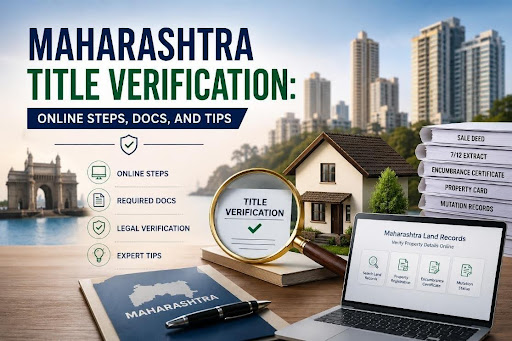
Introduction
Buying a property is one of the biggest financial decisions you will ever make. Whether you are purchasing an Apartment in Mumbai, a Plot in Pune, or agricultural land in Nashik, ensuring that the property’s title is legally clear should always be your first priority.
Many buyers focus on location, amenities, and pricing while overlooking title verification. A property with an unclear title may lead to ownership disputes, pending loans, legal claims, or even financial losses. Fortunately, Maharashtra has digitized several land and registration services, making it easier for buyers to verify important property records online.
This guide explains everything you need to know about Maharashtra title verification, including the online verification process, required documents, important government portals, and practical tips that can help you make a safe property purchase.
Quick Answer
Property title verification in Maharashtra is the process of confirming that a property’s ownership is genuine, legally transferable, and free from disputes or hidden liabilities. Buyers can verify ownership by checking land records, sale deeds, Encumbrance Certificates, property tax records, approved building plans, and registration details through official government portals before completing a property purchase.
Also Read: How to Check 7/12 Land Record Online in Maharashtra in 2025-26
What is Property Title Verification?
Property title verification is the legal process of checking whether a property’s ownership is valid and whether the seller has the legal authority to transfer ownership.
A proper title verification helps buyers determine:
- Whether the seller is the legal owner
- Whether the property has any legal disputes
- Whether loans or mortgages exist on the property
- Whether government approvals are valid
- Whether the property can be legally sold
Title verification is usually carried out before signing the sale agreement.
Why is Title Verification Important?
Verifying a property’s title protects buyers from future legal and financial complications.
Some major benefits include:
- Prevents ownership disputes
- Identifies fraudulent property transactions
- Confirms legal ownership
- Detects existing mortgages or encumbrances
- Ensures smooth property registration
- Helps banks approve home loans more easily
Documents Required for Maharashtra Property Title Verification
Several documents should be examined before purchasing any property.
- Sale Deed
The Sale Deed confirms ownership transfer from the previous owner to the current owner.
- Mother Deed
This document establishes the ownership history of the property over several years.
- 7/12 Extract (Satbara)
For agricultural properties, the 7/12 extract contains ownership details, cultivation information, and land records.
- Property Card
Urban properties generally have a Property Card that records ownership details.
- Encumbrance Certificate
This certificate shows whether the property has any registered loans or legal liabilities.
- Mutation Records
Mutation entries confirm that ownership changes have been officially recorded in government records.
- Approved Building Plan
For apartments and residential buildings, approved construction plans should be verified.
- Occupancy Certificate (OC)
The Occupancy Certificate confirms that the building complies with approved construction norms and is fit for occupation.
How to Verify Property Title Online in Maharashtra
Maharashtra offers several digital platforms for verifying land and property records.
Step 1: Check Land Records
Visit the Maharashtra land records portal and search using district, taluka, village, survey number, or Gat number.
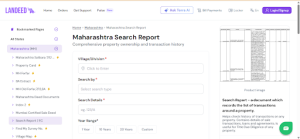
Verify:
- Owner’s name
- Survey details
- Area
- Mutation entries
Step 2: Verify Property Registration
Use the Inspector General of Registration (IGR Maharashtra) portal to verify registered documents.
You can confirm:
- Registration details
- Sale deed information
- Property registration status
Step 3: Check Mutation Records
Mutation records help verify whether ownership changes have been legally updated after previous sales.
Step 4: Verify Property Tax Records
Municipal property tax records help confirm ownership and reveal pending tax dues.
Step 5: Check Building Approvals
For apartments and buildings, verify:
- Approved layout
- Building permission
- Occupancy Certificate
- Completion Certificate
Common Red Flags During Title Verification
Buyers should be cautious if they notice any of the following:
- Seller’s name differs from government records
- Missing ownership documents
- Multiple ownership claims
- Pending litigation
- Existing bank mortgage
- Unapproved construction
- Incomplete mutation entries
- Property tax arrears
Tips for Safe Property Title Verification
Follow these practical tips before finalizing your purchase.
- Verify original documents instead of photocopies.
- Compare all ownership records carefully.
- Check multiple government databases.
- Verify mutation entries.
- Confirm municipal tax payments.
- Ensure all approvals are available.
- Hire a qualified property lawyer for legal verification.
- Never make full payment before completing title verification.
Common Mistakes Buyers Should Avoid
Many buyers unknowingly make errors that create problems later.
Some common mistakes include:
- Ignoring old ownership records
- Not checking encumbrances
- Skipping legal verification
- Relying only on the seller’s statements
- Overlooking municipal approvals
- Failing to verify registration details online
How Housiey Helps Buyers
Purchasing a property involves much more than comparing prices and locations. Buyers also need confidence that the property’s legal documentation is in order.
Housiey connects homebuyers directly with verified builders, making the buying journey simpler, more transparent, and hassle-free. While buyers should always complete independent legal title verification, working with reputed developers and maintaining proper documentation significantly reduces the chances of legal complications.
Conclusion
Property title verification is one of the most important steps before buying any property in Maharashtra. A few hours spent checking ownership records, land documents, encumbrances, and approvals can save years of legal disputes and financial losses.
With Maharashtra’s digital land records and registration services, buyers can conveniently verify many essential documents online before making a purchase. However, for complete peace of mind, professional legal verification remains highly recommended, especially for high-value transactions.
Key Takeaways
- Property title verification confirms legal ownership and transfer rights.
- Verify Sale Deeds, Property Cards, 7/12 extracts, mutation records, and Encumbrance Certificates.
- Maharashtra provides online portals for checking land and registration records.
- Always verify municipal approvals and property tax payments.
- Watch for ownership mismatches, loans, and pending disputes.
- Consult a property lawyer before completing the transaction.
Sources
- Department of Registration and Stamps, Government of Maharashtra
- Inspector General of Registration (IGR), Maharashtra
- Maharashtra Bhumi Abhilekh (Land Records Department)
- Maharashtra Revenue Department
- Maharashtra Government Citizen Service Portals
- Municipal Corporation Property Tax Departments (relevant local authorities)
FAQs
- It is the process of confirming that a property’s ownership is legally valid and transferable. It also helps identify disputes, mortgages, or legal claims on the property.
- Although not legally mandatory in every transaction, it is strongly recommended. It protects buyers from future ownership disputes and fraud.
- Yes, several government portals provide access to land and registration records. These online services simplify preliminary verification.
- A Property Card is an official ownership record mainly used for urban properties. It contains details about ownership and land measurements.
- The 7/12 extract is an important land record for agricultural properties. It provides ownership and cultivation information.
- It shows whether the property has registered financial liabilities or legal encumbrances. Buyers should always review this document before purchasing.
- Mutation records confirm that ownership changes have been updated in government records. They help establish the latest legal ownership.
- Technically yes, but it is extremely risky. Lack of verification can result in legal disputes and financial loss.
- Property lawyers usually conduct comprehensive title verification. Buyers may also perform preliminary checks using official government portals.
- A Mother Deed traces the ownership history of the property. It helps establish a clear chain of ownership.
- Property tax records help confirm ownership and identify pending dues. Outstanding taxes may become the buyer’s responsibility in some situations.
- This should be investigated immediately before proceeding. Such discrepancies may indicate legal or documentation issues.
- Buyers should verify the Sale Deed, approved building plans, Occupancy Certificate, Completion Certificate, and registration documents. These records confirm legal compliance.
- Banks conduct legal checks before approving home loans. However, buyers should still perform their own independent verification.
- No, online verification provides only preliminary confirmation. A legal expert should still review all original documents.
- The duration depends on document availability and property history. Simple cases may be completed quickly, while older properties may require additional time.
- The mortgage should be cleared before ownership is transferred. Buyers should obtain proof that the loan has been settled.
- It may reveal certain legal issues through document examination and public records. Additional legal searches may also be necessary.
- Yes, resale properties should always undergo title verification. Older properties often require more detailed ownership checks.
- While no process offers absolute protection, proper title verification significantly reduces the risk of fraud. It helps buyers identify suspicious transactions before completing the purchase.
L. Sadriwala, the Editor-in-Chief at Housiey, is a seasoned writer whose professional journey in content creation began in 2015. With a background rooted in a family of real estate developers, her transition into real estate writing was a natural evolution, bringing together her storytelling expertise and deep industry understanding.
Over the years, she has authored impactful blogs across diverse niches such as food, travel, and lifestyle, before establishing her reputation as a trusted voice in Indian real estate. Today, her work stands out for its clarity, accuracy, and ability to simplify complex property concepts for readers.
At Housiey, every article crafted by L. Sadriwala reflects thorough research, verified facts, and a reader-first approach. From decoding housing policies and trends to offering in-depth builder reviews and project insights, her mission is clear: to empower homebuyers and investors with the knowledge they need to make confident property decisions.
Her writing not only informs but also builds trust, making her one of the most credible editorial voices in the real estate space.
Related Stories