
PM Modi to Inaugurate Navi Mumbai International Airport Today | CIDCO Fast-Tracks 667-Acre Aerocity Master Plan – 5 Key Highlights
-
 By L. Sadriwala
- October 8, 2025
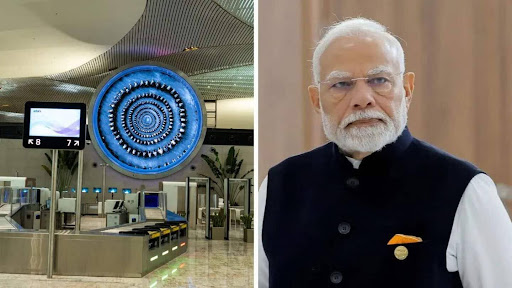
As Prime Minister Narendra Modi inaugurates the much-awaited Navi Mumbai International Airport (NMIA) today, the event marks a defining moment for India’s aviation and infrastructure growth story. In parallel, the City and Industrial Development Corporation (CIDCO) is speeding up its ambitious 667-acre Aerocity project, designed to transform the airport’s vicinity into a vibrant business and lifestyle hub.
CIDCO has already invited bids to appoint a consultant for preparing the Aerocity’s Master Plan and transaction advisory services, signaling the beginning of an expansive development phase that complements the airport’s upcoming operations — expected to commence by December 2025.
Here’s an in-depth look at the five most important things to know about the CIDCO Navi Mumbai Aerocity Project:
What is CIDCO and Its Role in Navi Mumbai’s Growth?
The City and Industrial Development Corporation (CIDCO) is the special planning authority behind Navi Mumbai’s evolution. Conceived in the 1970s as Mumbai’s satellite township, Navi Mumbai was built to decongest the financial capital and provide balanced urban growth. Over the years, CIDCO has developed 14 well-planned nodes, each integrating residential, commercial, and recreational zones — making it one of India’s most successful planned cities.
667 Acres Allocated for the Aerocity Project
CIDCO has earmarked 667 acres near the Navi Mumbai International Airport for the upcoming Aerocity. The plan involves appointing a consultant to design a world-class master plan encompassing commercial, residential, and institutional spaces. This Aerocity is envisioned as a mixed-use ecosystem strategically located to serve both airport operations and urban growth.
Also Read: Pune Airport: Terminal | Lounge | Connectivity & Nearest Hotels
Land Use Distribution and Zoning Plan
Within the 667-acre area, CIDCO’s preliminary plan proposes:
- 123 acres for residential spaces
- 123 acres for commercial developments
- 123 acres for retail, entertainment, and leisure activities
The balance area will accommodate infrastructure, logistics, and essential services, ensuring a balanced blend of work, life, and connectivity.
Feasibility, Connectivity, and Infrastructure Synergy
The consultant appointed by CIDCO will conduct techno-economic feasibility studies to analyze:
- Market demand and investment potential
- Infrastructure readiness and design planning
- Integration with major projects like the Mumbai Trans Harbour Link (MTHL), Metro corridors, and suburban rail networks
This integrated connectivity ensures that the Navi Mumbai Aerocity will emerge as a seamlessly connected commercial district, rivaling established hubs like Bandra-Kurla Complex (BKC) and GIFT City.
Vision: A Mixed-Use, Aero-Centric Urban Hub
CIDCO’s vision for the Navi Mumbai Aerocity goes beyond real estate — it’s about creating a future-ready urban district centered around aviation-led economic growth. The proposed development includes:
- Financial and corporate hubs
- Export-oriented and logistics units
- Aero-warehousing facilities
- Luxury hotels and convention centers
- Healthcare and education clusters (including “Educity” and “Medicity”)
- Residential enclaves and lifestyle zones
This strategic clustering aims to attract global businesses, boost employment, and position Navi Mumbai as a key gateway for trade, tourism, and technology.
Also Read: Adani Realty to Launch ₹10,000 Cr Mega Township Near Navi Mumbai Airport
Aerocities Across India – A Growing Trend
India is witnessing rapid development of Aerocities, aligning with the global model of airport-centric urbanization. Currently, there are nine such projects either operational or underway, including:
- Delhi Aerocity (IGI Airport)
- Hyderabad Aerocity (RGIA)
- Devanahalli (near Bengaluru Airport)
- Mohali (Chandigarh)
- Durgapur
- Jewar (Noida International Airport)
- Ayodhya International Airport
- Navi Mumbai Aerocity
These Aerocities are designed to enhance ease of doing business, create employment opportunities, and promote sustainable urban ecosystems anchored around major airports.
In Summary
With PM Modi inaugurating the Navi Mumbai International Airport and CIDCO propelling its Aerocity master plan, this development marks the dawn of a new growth era for Navi Mumbai. The combination of cutting-edge infrastructure, robust connectivity, and mixed-use planning promises to make Navi Mumbai one of India’s most dynamic business destinations in the coming decade.
L. Sadriwala, the Editor-in-Chief at Housiey, is a seasoned writer whose professional journey in content creation began in 2015. With a background rooted in a family of real estate developers, her transition into real estate writing was a natural evolution, bringing together her storytelling expertise and deep industry understanding.
Over the years, she has authored impactful blogs across diverse niches such as food, travel, and lifestyle, before establishing her reputation as a trusted voice in Indian real estate. Today, her work stands out for its clarity, accuracy, and ability to simplify complex property concepts for readers.
At Housiey, every article crafted by L. Sadriwala reflects thorough research, verified facts, and a reader-first approach. From decoding housing policies and trends to offering in-depth builder reviews and project insights, her mission is clear: to empower homebuyers and investors with the knowledge they need to make confident property decisions.
Her writing not only informs but also builds trust, making her one of the most credible editorial voices in the real estate space.
Related Stories