

How Bhopal Metro Will Affect Property Prices
-
By Ayush Oswal
- July 7, 2026
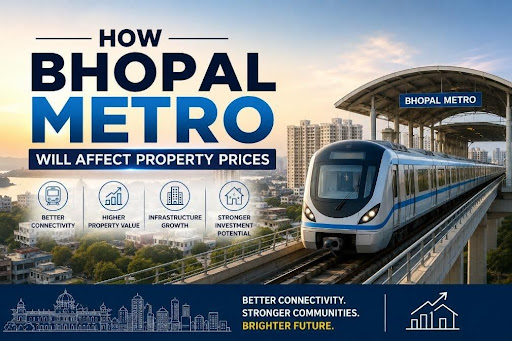
Introduction
The launch of the Bhopal Metro is expected to reshape the city’s real estate landscape over the coming years. As metro connectivity improves, residential and commercial markets often experience increased demand, better infrastructure, and stronger long-term appreciation. Across India, metro rail projects have consistently influenced buyer preferences, making locations near stations more attractive for both end-users and investors.
Bhopal, known for its planned development, educational institutions, government offices, and growing IT presence, is now entering a new phase of urban transformation. The metro project is expected to reduce travel time, improve connectivity between key parts of the city, and unlock development opportunities in emerging localities.
In this blog, we explore how the Bhopal Metro is likely to affect property prices, which areas could benefit the most, and what homebuyers and investors should keep in mind.
Also Read:- Delhi Metro Phase 5 Explained: Routes, Station List & Real Estate Opportunities
Bhopal Metro at a Glance
The Bhopal Metro is being developed to provide faster, safer, and more efficient public transport across the city. The project connects major residential, commercial, educational, and industrial zones, helping reduce congestion and encouraging planned urban growth.
Some expected benefits include:
- Reduced travel time
- Better connectivity between major neighborhoods
- Improved public transportation
- Increased commercial activity
- Higher demand for properties near metro stations
As construction progresses, real estate experts expect gradual appreciation in strategically located micro-markets.
How Metro Projects Influence Property Prices
Metro connectivity has transformed real estate markets in several Indian cities. Improved accessibility makes daily commuting easier, attracting homebuyers, tenants, and businesses.
Property prices generally rise because:
- Travel becomes more convenient.
- Commercial activity increases.
- Infrastructure development accelerates.
- Developers launch new projects.
- Rental demand improves.
- Investors anticipate future appreciation.
Although appreciation varies by location, metro connectivity often becomes a major factor in property valuation.
Also Read:- Best Places to Rent Near Delhi Metro’s Blue Line
Why the Bhopal Metro Could Increase Property Values
Better Connectivity Creates Higher Demand
Areas that previously required long commuting hours become more accessible after metro operations begin. This increases buyer interest, especially among working professionals and families.
Higher demand often results in gradual appreciation of residential property prices.
Commercial Development Around Metro Stations
Metro stations naturally attract retail stores, offices, restaurants, banks, and service businesses.
As commercial activity grows, nearby residential properties also become more valuable due to improved convenience and employment opportunities.
Infrastructure Improvements
Metro projects usually bring additional civic improvements such as:
- Better roads
- Street lighting
- Footpaths
- Public spaces
- Traffic management
- Drainage upgrades
Improved infrastructure enhances the overall desirability of surrounding neighborhoods.
Rising Rental Demand
Professionals and students often prefer homes with easy metro access.
Properties located within walking distance of metro stations generally attract higher rental demand because tenants value reduced commuting time.
Increased Interest from Developers
Improved connectivity encourages developers to launch:
- Residential apartments
- Mixed-use developments
- Commercial complexes
- Premium housing projects
New developments contribute to long-term growth in property values.
Also read:- Bangalore Metro Route Map: Timing | Lines | Stations
Areas That May Benefit the Most
Although appreciation depends on multiple factors, localities located close to metro corridors may experience stronger demand.
These include areas near:
- Educational institutions
- Government offices
- Business districts
- Commercial markets
- Transport hubs
As connectivity improves, even emerging neighborhoods may become attractive investment destinations.
Benefits for Homebuyers
The metro offers several advantages for homebuyers beyond property appreciation.
These include:
- Faster daily commuting
- Better quality of life
- Lower transportation costs
- Easier access to workplaces
- Improved public infrastructure
- Greater resale potential
Buying near metro corridors may provide both lifestyle and financial benefits over the long term.
Also Read:- Hyderabad Metro Blue Line – Route Map, Stations, Timings, Extension & Complete Commuter Guide
Benefits for Property Investors
Investors often prefer locations where future infrastructure can drive appreciation.
Potential advantages include:
- Long-term capital growth
- Better rental income
- Higher occupancy rates
- Improved resale demand
- Increased market liquidity
However, investors should always evaluate project quality, legal approvals, and pricing before making a purchase.
Factors That Will Influence Future Price Growth
While the metro is a major growth catalyst, property prices also depend on:
- Project completion timelines
- Economic growth
- Employment generation
- Availability of civic infrastructure
- Quality of residential projects
- Demand and supply balance
- Government development policies
Metro connectivity alone does not guarantee immediate appreciation, but it significantly strengthens long-term growth prospects.
Also read:- Pune Metro Guide: Timings, Routes, Fares, Stations & Best Areas to Live Nearby
Challenges Buyers Should Consider
Despite the positive outlook, buyers should remain cautious.
Consider:
- Avoid paying excessive premiums solely because of metro announcements.
- Verify legal approvals before purchasing.
- Evaluate builder reputation.
- Compare multiple projects.
- Assess future infrastructure plans.
- Focus on long-term investment horizons.
Well-informed decisions generally produce better investment outcomes.
Why Bhopal Metro Matters for the City’s Future
The Bhopal Metro represents more than a transportation project. It is expected to support planned urban expansion, encourage sustainable mobility, and improve overall livability.
As accessibility improves, residential and commercial development is likely to spread beyond traditional city centers, creating new opportunities for both buyers and investors.
Also Read:- What Are the Upcoming Metro-Connected Projects in Mumbai?
Conclusion
The Bhopal Metro has the potential to become one of the biggest drivers of real estate growth in the city. Better connectivity, improved infrastructure, rising commercial activity, and increasing buyer demand could contribute to steady appreciation in property values over the coming years.
However, smart investing requires more than simply choosing a property near a metro station. Buyers should evaluate location, builder credibility, legal documentation, infrastructure, and long-term development prospects before making a decision.
If you are planning to buy a home in Bhopal, choosing a well-connected project with strong future growth potential can be a wise long-term investment. Housiey helps homebuyers connect directly with trusted builders, making the home-buying journey transparent, efficient, and hassle-free.
Key Takeaways
- The Bhopal Metro is expected to improve connectivity across major parts of the city.
- Properties near metro stations may witness better appreciation over time.
- Commercial development can increase demand for nearby residential properties.
- Improved infrastructure often boosts overall neighborhood value.
- Rental demand is likely to rise in metro-connected locations.
- Buyers should focus on project quality rather than metro proximity alone.
- Long-term investment planning remains essential for maximizing returns.
Sources
- Madhya Pradesh Metro Rail Corporation Limited (MPMRCL)
- Ministry of Housing and Urban Affairs (MoHUA)
- Government of Madhya Pradesh
- National Capital Region Transport and Metro Planning Reports
- Reserve Bank of India (RBI) housing-related publications
- National Housing Bank (NHB)
- Industry reports on Indian real estate and transit-oriented development
- Publicly available infrastructure and urban development reports
FAQs
Yes, metro connectivity generally supports higher property demand over time. The extent of appreciation will depend on location, infrastructure, and market conditions.
Residential properties located close to metro stations often see increased buyer interest. Commercial spaces may also experience higher demand.
It can be a good long-term investment if the property is legally sound and well-located. Buyers should also assess pricing and future development plans.
Rental demand often improves because commuters prefer better connectivity. This may support stronger rental yields over time.
Yes, prices sometimes increase during construction due to future growth expectations. However, appreciation depends on market sentiment.
No, appreciation varies based on infrastructure, demand, and surrounding development. Prime locations usually perform better.
Yes, improved connectivity enhances daily convenience and future resale prospects. It can also improve overall quality of life.
Businesses benefit from increased footfall and accessibility. This can improve commercial property values.
Early investments may offer better appreciation potential. Proper due diligence remains essential.
Infrastructure, employment, builder reputation, and market demand all play significant roles. Metro connectivity is one of several growth drivers.
Yes, public transport often lowers travel expenses. It also saves commuting time.
Metro projects are usually accompanied by civic upgrades. These improvements enhance neighborhood appeal.
Well-connected properties generally attract more buyers. This may improve resale opportunities.
Yes, increased employment and business activity often raise housing demand. This supports long-term appreciation.
Not necessarily. Buyers should evaluate legal status, pricing, and development quality before investing.
Price growth often occurs gradually over several years. Immediate gains are not guaranteed.
A reasonable premium may be justified for strong connectivity. Excessive pricing should be carefully evaluated.
Improved infrastructure generally encourages new residential and commercial projects. This supports planned urban expansion.
Yes, it offers easier commuting and better access to city amenities. This makes daily living more convenient.
Overall, it is expected to strengthen the city’s property market over the long term. Buyers should still make informed investment decisions.

Ayush Oswal is an SEO Executive at Housiey, specializing in optimizing real estate content for better visibility and engagement. With a strong understanding of SEO strategies and the property market, he ensures that every blog helps homebuyers make informed decisions while performing well on search engines.
Related Stories