

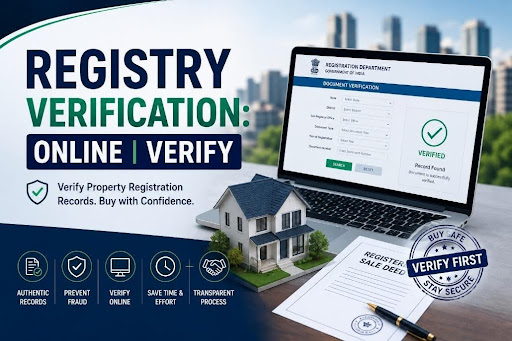
Registry Verification: Online | Verify
-
By Ayush Oswal
- July 4, 2026
Introduction
Buying a property is one of the biggest financial decisions you’ll ever make. However, simply signing an agreement or paying the seller does not guarantee ownership. The most important step is ensuring that the property’s registry is genuine and legally recorded. This is where registry verification becomes essential.
Today, most Indian states have digitized their land registration records, allowing buyers to verify registered sale deeds and property registration details online. Whether you are purchasing a residential apartment, plot, commercial space, or inherited property, verifying the registry helps protect you from fraud, duplicate registrations, forged documents, and ownership disputes.
In this guide, we’ll explain what registry verification is, why it matters, how to verify property registry online, the documents required, common mistakes to avoid, and useful tips for buyers.
Also Read:- Mumbai, Bengaluru or Hyderabad: Which City Is the Best to Buy Property in 2026?
Quick Answer
Registry verification is the process of checking whether a property’s registration details are genuine and officially recorded with the respective state’s Registration Department. Most states provide online portals where buyers can verify registered documents using details such as the document number, registration year, office, or party names.
Market Snapshot
| Particular | Details |
|---|---|
| Purpose | Verify registered property documents |
| Available Mode | Online and Offline |
| Managed By | State Registration Departments |
| Required Information | Document Number, Year, Registration Office, Party Details |
| Time Required | Usually 5–15 minutes online |
| Applicable For | Residential, Commercial, Agricultural Properties |
| Main Benefit | Prevents property fraud and ownership disputes |
What is Registry Verification?
Registry verification is the process of confirming that a property’s registration has been officially recorded with the Sub-Registrar’s Office. It allows buyers to cross-check whether the sale deed or registration document exists in government records.
The verification process ensures that the registration details match the property’s ownership information and helps establish the authenticity of the transaction.
Also Read:- Resale vs New Property: Which is Better in 2026?
Why is Registry Verification Important?
Registry verification offers several advantages for buyers and property owners.
Confirms Legal Ownership
It verifies that the property has been legally transferred and registered in the owner’s name.
Prevents Property Fraud
Verification helps detect fake sale deeds, forged registrations, or duplicate transactions.
Reduces Legal Risks
Checking registration records before purchasing minimizes the chances of future ownership disputes.
Assists During Home Loans
Banks usually examine property registration documents before approving a home loan.
Simplifies Future Transactions
Verified records make resale, inheritance, gifting, and mortgage processes much smoother.
Also Read:- Step-by-Step Guide for NRIs to Buy Property in India
How to Verify Registry Online?
Most state governments follow a similar process for online verification.
Step 1: Visit the State Registration Portal
Open the official registration department website of the respective state.
Step 2: Select Document Verification
Choose the option for document search, deed verification, or registered document verification.
Step 3: Enter Required Details
Provide information such as:
- Registration Year
- Document Number
- Sub-Registrar Office
- District
- Party Name (if applicable)
Step 4: Submit the Information
The portal searches the government database for matching records.
Step 5: Verify the Details
Cross-check important information including:
- Owner’s Name
- Registration Date
- Property Description
- Registration Office
- Document Number
Also Read:- RERA vs Non-RERA Projects: Which One Should You Buy and Why?
Documents Required for Registry Verification
Depending on the state portal, you may require:
- Sale Deed Number
- Registration Year
- Property Address
- Owner’s Name
- Registration Office Details
- Survey Number or Property Number (where applicable)
Benefits of Online Registry Verification
Online verification has made property transactions much more transparent.
Saves Time
Buyers no longer need multiple visits to government offices.
Available Anytime
Most portals are accessible 24×7.
Easy Record Checking
Documents can be verified from anywhere with internet access.
Improves Transparency
Government databases provide authentic registration information.
Supports Due Diligence
Buyers can verify documents before making payments.
Also Read:- First Home Buyer? 10 Costly Mistakes That Can Ruin Your Dream Home Purchase
Common Mistakes to Avoid
Many buyers unknowingly skip important checks.
Avoid these mistakes:
- Verifying only photocopies instead of official records.
- Ignoring spelling errors in owner names.
- Not checking document numbers carefully.
- Assuming registration alone guarantees a clear title.
- Skipping legal verification before purchase.
Tips Before Purchasing a Property
Always verify the registry before paying the token amount.
Match the seller’s identity with the registered owner.
Check whether the property details match the physical property.
Verify encumbrance records wherever available.
Consult a legal expert if discrepancies are found.
Aslo read:- Home Loan Approved But Still Confused? Your Complete Next Step Guide
Buyer Insights
Registry verification should be considered a mandatory part of every property purchase rather than an optional step. Spending a few minutes verifying official records can save buyers from expensive legal disputes, financial losses, and fraudulent transactions in the future.
Why Buyers Choose Housiey
Housiey simplifies the home-buying journey by connecting buyers directly with reputed builders while maintaining transparency throughout the process. From property discovery to expert assistance, Housiey helps buyers make informed decisions with greater confidence.
Conclusion
Registry verification is one of the simplest yet most effective ways to safeguard your property investment. With most states offering online verification services, buyers can easily confirm whether a property’s registration details are genuine before completing the transaction.
However, registry verification should always be combined with title verification, encumbrance checks, and legal due diligence for complete peace of mind. A few careful checks today can prevent years of legal complications and financial stress later.
Also Read:- When Is RERA Registration Mandatory For Projects?
Key Takeaways
- Registry verification confirms whether a property’s registration exists in official government records.
- Most Indian states provide online verification facilities through their Registration Departments.
- Buyers should verify document numbers, ownership details, and registration dates before purchasing.
- Registry verification helps reduce the risk of fraud and ownership disputes.
- It should always be accompanied by legal title verification and other due diligence checks.
Sources
- Department of Land Resources, Government of India
- Department of Registration and Stamps (Various State Governments)
- National Generic Document Registration System (NGDRS)
- Ministry of Rural Development, Government of India
- State Inspector General of Registration (IGR) Portals
FAQs
Registry verification is the process of confirming that a property’s registration has been officially recorded with the government. It helps establish the authenticity of the registered document.
Yes, most Indian states provide online registry verification services. Buyers can search registered documents using basic registration details.
Many states allow basic verification free of cost. Some advanced document services may require a nominal fee.
Generally, the document number, registration year, and Sub-Registrar Office are required. Some states also allow searches using party names or property details.
It confirms that a registration exists in government records. Complete ownership verification also requires title verification.
Yes, many state portals maintain historical registration records. Availability depends on the state’s digitization process.
It helps identify fake registrations and protects buyers from fraud. It also supports informed decision-making during property purchases.
Yes, banks verify registration records while processing home loan applications. They may also conduct additional legal checks.
It is not legally mandatory for buyers, but it is strongly recommended. It significantly reduces legal and financial risks.
Yes, inherited properties can also be verified through the registration records. Additional succession documents may also need verification.
The discrepancy should be investigated immediately. Buyers should avoid proceeding until the issue is resolved.
Official government records help identify many forged documents. However, legal due diligence remains equally important.
No, registration alone does not guarantee a clear title. Buyers should also verify ownership history and encumbrances.
Yes, NRIs can access online registration portals where available. They only need the required registration details.
The Registration Department of the respective state government maintains these records. Documents are registered through the concerned Sub-Registrar Office.
Yes, registry verification applies to residential, commercial, industrial, and agricultural properties. The process is generally similar.
In most cases, verification takes only a few minutes. The exact time depends on the portal and data availability.
It reduces risks but cannot eliminate them completely. Comprehensive legal verification remains essential.
Some state portals allow certified or informational document downloads. Availability varies from state to state.
Yes, consulting a property lawyer is advisable before completing a property transaction. Legal experts can identify issues that may not appear during registry verification.

Ayush Oswal is an SEO Executive at Housiey, specializing in optimizing real estate content for better visibility and engagement. With a strong understanding of SEO strategies and the property market, he ensures that every blog helps homebuyers make informed decisions while performing well on search engines.
Related Stories