
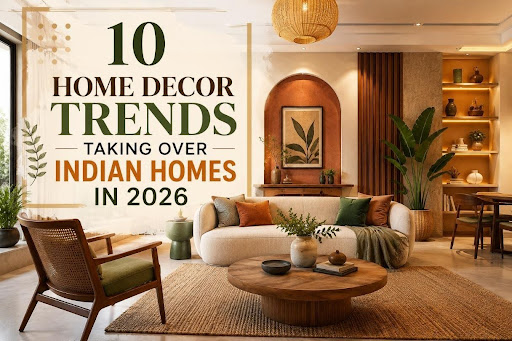
10 Home Decor Trends Taking Over Indian Homes in 2026
-
By Ayush Oswal
- June 23, 2026
Introduction
A house becomes a home not because of expensive furniture or luxury accessories, but because every corner reflects the people living inside it. The way we decorate our homes has always evolved with changing lifestyles, and 2026 is proving to be one of the biggest years for interior transformation in India.
Today’s homeowners want interiors that are practical, easy to maintain, environmentally responsible, and visually appealing. The focus has shifted from simply following international trends to creating spaces that blend modern aesthetics with Indian traditions. Instead of filling homes with unnecessary decorative items, people now prefer meaningful décor, natural materials, flexible furniture, and technology that simplifies everyday living.
The post-pandemic lifestyle has also played a major role in changing design preferences. Since people spend more time at home, every room is expected to serve multiple purposes. Living rooms double as entertainment zones, bedrooms become workspaces, balconies transform into mini gardens, and kitchens are designed for both efficiency and aesthetics.
Whether your budget is ₹50,000 or ₹50 lakh, these home decor trends can inspire you to create a space that feels contemporary while remaining timeless.
Let’s explore the ten biggest home decor trends dominating Indian homes in 2026.
Also Read: 60+ Latest POP Ceiling Designs for Hall in 2026 (Modern, Luxury & Simple False Ceiling Ideas)
Quick Answer
Home decor in India is evolving rapidly in 2026, with homeowners prioritizing functionality, sustainability, personalization, and smart living. From earthy colour palettes and curved furniture to biophilic interiors, multifunctional spaces, AI-powered smart homes, and handcrafted décor, modern Indian homes are becoming more stylish, practical, and future-ready.
Market Snapshot Table
| Trend | Popularity in 2026 | Why It’s Trending |
|---|---|---|
| Earthy Colour Palettes | Very High | Creates calm and timeless interiors |
| Sustainable Materials | Very High | Eco-conscious lifestyle and durability |
| Multifunctional Furniture | Very High | Ideal for compact urban homes |
| Curved Furniture | High | Softer and luxurious aesthetics |
| Smart Home Integration | Very High | Convenience and automation |
| Biophilic Design | Very High | Better wellness and indoor air quality |
| Handmade & Artisan Decor | High | Supports local craftsmanship |
| Statement Lighting | High | Enhances ambience and design |
| Textured Walls & Ceilings | High | Adds depth without clutter |
| Personalized Spaces | Very High | Reflects homeowner personality |
Buyer Insights
Interior design is no longer just about making a home look beautiful. In 2026, Indian homeowners are investing in homes that support their lifestyle, improve productivity, reduce maintenance, save energy, and create healthier living environments. The growing influence of hybrid work culture, smart technology, sustainable living, and social media inspiration has completely transformed how homes are designed.
Whether you’re purchasing your first apartment, renovating an independent house, or preparing your property for resale, understanding the latest decor trends can help increase both your comfort and your property’s value.
Also Read: What is Japandi Design and Why is India Loving It?
1. Earthy Colour Palettes Are Replacing Bright Interiors
The era of glossy white walls and vibrant accent colours is gradually giving way to softer, nature-inspired shades.
Popular colours include:
- Terracotta
- Sage green
- Sand beige
- Clay brown
- Olive green
- Warm taupe
- Muted mustard
- Soft charcoal
These colours make homes feel warm, relaxing, and sophisticated while complementing natural materials like wood, cane, and stone.
Why homeowners love this trend
Earthy colours create timeless interiors that remain stylish for years. They are also easier to pair with furniture, artwork, and décor accessories, making future upgrades more affordable.
2. Sustainable Decor Is Becoming the New Luxury
Luxury is no longer defined only by expensive imported furniture. Today’s homeowners appreciate environmentally responsible choices that combine beauty with longevity.
Popular sustainable materials include:
- Bamboo
- Cane
- Reclaimed wood
- Natural stone
- Organic cotton
- Linen
- Jute
- Recycled glass
Many homeowners are also choosing locally crafted furniture to reduce environmental impact while supporting Indian artisans.
Benefits
Sustainable materials generally last longer, require less maintenance, improve indoor air quality, and contribute to environmentally responsible living.
3. Multifunctional Furniture Is Taking Centre Stage
Urban homes are becoming smarter rather than bigger.
Furniture is now expected to perform multiple functions without occupying excessive space.
Examples include:
- Storage beds
- Foldable dining tables
- Sofa-cum-beds
- Extendable work desks
- Modular wardrobes
- Ottoman storage benches
- Nesting coffee tables
Why it works
Multifunctional furniture helps maximise available space, reduces clutter, and offers greater flexibility for changing family needs.
4. Curved Furniture Is Softening Modern Interiors
Sharp edges are slowly disappearing from modern homes.
Rounded sofas, curved coffee tables, oval mirrors, circular dining tables, and arched bookshelves are becoming increasingly popular because they create softer and more welcoming interiors.
Curved furniture also improves movement within smaller apartments by reducing sharp corners and making spaces feel more open.
5. Smart Home Integration Is Becoming Standard
Technology is now seamlessly blending into interior design.
Instead of visible wires and bulky gadgets, smart devices are becoming an integral part of home décor.
Popular smart additions include:
- Voice-controlled lighting
- Smart curtains
- Digital door locks
- Smart thermostats
- Motion sensors
- Automated lighting scenes
- Video doorbells
Benefits
Smart homes improve convenience, security, and energy efficiency while creating cleaner, more organized interiors.
6. Biophilic Design Is Bringing Nature Indoors
Nature-inspired interiors continue to dominate Indian homes in 2026.
Biophilic design focuses on strengthening the connection between people and nature through thoughtful interior planning.
Popular ideas include:
- Indoor plants
- Vertical gardens
- Natural sunlight
- Wooden finishes
- Stone textures
- Water features
- Large windows
- Natural ventilation
Why it’s popular
Homes with natural elements often feel brighter, calmer, and healthier while promoting mental well-being.
7. Handmade and Artisan Decor Is Making Every Home Unique
Mass-produced décor is gradually being replaced by handcrafted pieces that add character and authenticity.
Trending décor items include:
- Handwoven rugs
- Terracotta planters
- Brass décor
- Hand-painted artwork
- Ceramic pottery
- Wooden carvings
- Woven baskets
Each handcrafted item tells a story and creates interiors that feel personal rather than identical to every other home.
8. Statement Lighting Is Becoming the Star of Every Room
Lighting is no longer just functional.
It has become one of the biggest design elements in modern interiors.
Popular lighting choices include:
- Pendant lights
- Sculptural chandeliers
- Cove lighting
- Wall sconces
- Floor lamps
- LED strip lighting
- Layered ambient lighting
Proper lighting enhances colours, highlights textures, and creates different moods throughout the day.
9. Textured Walls and Decorative Ceilings Are Replacing Plain Surfaces
Minimalism doesn’t have to be boring.
Instead of using excessive decorative items, homeowners are adding depth through textured finishes.
Popular options include:
- Limewash paint
- Fluted wall panels
- Wooden slats
- Decorative mouldings
- Stone cladding
- Wallpaper with subtle textures
- Wooden ceiling beams
These elements make rooms visually interesting without overwhelming the space.
10. Personalized Spaces Are Becoming More Important Than Perfect Interiors
One of the biggest shifts in 2026 is that homeowners are moving away from copying catalogue interiors.
Instead, they’re creating homes that reflect their personality.
Examples include:
- Family photo walls
- Travel souvenirs
- Reading corners
- Hobby rooms
- Music spaces
- Custom artwork
- Children’s creative corners
- Pet-friendly furniture
The goal is no longer perfection but comfort, functionality, and individuality.
How Can You Incorporate These Trends Without Overspending?
- You don’t need a complete renovation to embrace modern décor.
- Here are a few practical ideas:
- Replace bright cushions with earthy shades.
- Add indoor plants to brighten empty corners.
- Invest in multifunctional furniture for maximum utility.
- Upgrade lighting before replacing expensive furniture.
- Support local artisans when purchasing decorative items.
- Choose timeless materials over short-lived trends.
- Declutter your home before buying new décor.
- Mix modern elements with traditional Indian craftsmanship for a balanced look.
Common Mistakes to Avoid While Following Decor Trends
- Many homeowners make the mistake of blindly following trends without considering practicality.
- Avoid these common errors:
- Ignoring your home’s layout.
- Choosing aesthetics over comfort.
- Overdecorating small rooms.
- Buying poor-quality furniture.
- Using too many colours together.
- Neglecting storage requirements.
- Ignoring natural lighting.
- Following social media trends without considering long-term maintenance.
- A beautiful home should be comfortable, functional, and easy to maintain—not just visually impressive.
Why Buyers Choose Housiey
Buying a beautifully designed home starts with choosing the right property. Housiey connects homebuyers directly with trusted builders, making the buying process transparent, smooth, and hassle-free. Unlike traditional property searches where your contact details may circulate among multiple brokers, Housiey helps you connect directly with developers, allowing you to explore projects with greater confidence and convenience.
Conclusion
Home decor in 2026 is no longer about chasing luxury for the sake of appearances. Instead, it reflects a growing desire for homes that are comfortable, practical, sustainable, and deeply personal. Indian homeowners are embracing interiors that improve everyday living while also standing the test of time. Whether it’s adding natural textures, investing in smart technology, choosing handcrafted décor, or designing flexible spaces, the emphasis is on creating homes that genuinely support modern lifestyles.
The best part about these trends is that they can be adopted gradually. A few thoughtful changes—such as introducing earthy colours, upgrading lighting, adding indoor plants, or selecting multifunctional furniture—can make a significant difference without requiring a complete makeover. As you plan your dream home or renovate your existing one, focus on choices that match your lifestyle rather than short-lived fads. And if you’re looking for a home that combines thoughtful design with modern amenities, Housiey can help you discover projects that align with your vision for comfortable, future-ready living.
Key Takeaways
- A successful home in 2026 combines aesthetics with everyday functionality.
- Earthy colour palettes are replacing bold and overly bright interiors.
- Sustainability has become a major factor in home décor decisions.
- Multifunctional furniture is essential for maximizing urban living spaces.
- Curved furniture creates softer and more inviting interiors.
- Smart home technology is becoming a standard feature in modern homes.
- Biophilic design promotes healthier and more relaxing living environments.
- Handcrafted décor adds uniqueness and supports Indian artisans.
- Statement lighting can dramatically transform the appearance of any room.
- Personalized spaces create homes that truly reflect the people living in them.
Sources
- Ministry of Housing and Urban Affairs (MoHUA)
- Bureau of Energy Efficiency (BEE)
- Indian Green Building Council (IGBC)
- Council of Architecture (India)
- National Building Code of India (BIS)
- Architectural Digest India
- Elle Decor India
- GoodHomes India
- Society of British & International Interior Design (SBID)
- American Society of Interior Designers (ASID)
- World Green Building Council
- Various interior design industry reports, sustainable design publications, and home décor trend analyses published during 2025–2026.
FAQs
- Earthy colour palettes and sustainable interiors are among the most popular trends. They create timeless spaces while promoting comfort and environmental responsibility.
- Yes, smart home features are becoming increasingly accessible across different budget segments. Many homeowners now include smart lighting, security systems, and automation during renovations.
- Not necessarily. Many sustainable materials offer excellent durability and can provide better long-term value despite a slightly higher upfront cost.
- Warm neutrals, terracotta, olive green, sage green, beige, and earthy browns are highly popular. These shades create calming and sophisticated interiors.
- It helps maximize available space while reducing clutter in compact homes. It also offers greater flexibility for changing lifestyle needs.
- Biophilic design incorporates natural elements such as plants, sunlight, wood, and stone into living spaces. It aims to create healthier and more relaxing indoor environments.
- Simple changes like repainting walls, improving lighting, adding indoor plants, and replacing soft furnishings can make a noticeable difference. Prioritizing quality over quantity also helps.
- Yes, handcrafted pieces are highly valued for their uniqueness and cultural appeal. They also help support local artisans and traditional craftsmanship.
- Layered lighting that combines ambient, task, and accent lighting works best. It improves both functionality and the overall atmosphere of a room.
- No, it’s better to choose trends that suit your lifestyle and home’s architecture. Timeless design decisions usually provide greater satisfaction over the years.
- Well-designed interiors can improve buyer perception and make a property more attractive. Functional upgrades often add more value than purely decorative changes.
- Yes, many low-maintenance plants thrive indoors and are ideal for apartment living. They also contribute to a fresher and more welcoming environment.
- Yes, but it has evolved into warm minimalism with natural materials and soft textures. Homes now balance simplicity with comfort and personality.
- Natural stone, engineered wood, and large-format tiles continue to be popular choices. They offer durability while complementing modern interior styles.
- Textured walls add visual depth and interest without overcrowding a room with accessories. They also help create a more refined and premium look.
- Yes, many curved designs improve movement and create softer visual appeal. They work particularly well in living rooms and open-plan layouts.
- Storage is one of the most important aspects of functional design. Smart storage solutions help keep homes organized and visually uncluttered.
- Personalized interiors make homes feel authentic and meaningful. They allow homeowners to showcase their interests, memories, and lifestyle.
- Absolutely, many of these ideas are especially beneficial for compact homes. Multifunctional furniture, smart storage, and lighter colour palettes can make smaller spaces feel larger and more efficient.
- Focus first on functionality, quality, and long-term comfort before selecting decorative elements. A well-planned foundation makes it easier to update the home’s style over time.

Ayush Oswal is an SEO Executive at Housiey, specializing in optimizing real estate content for better visibility and engagement. With a strong understanding of SEO strategies and the property market, he ensures that every blog helps homebuyers make informed decisions while performing well on search engines.
Related Stories