

What is Japandi Design and Why is India Loving It?
-
 By L. Sadriwala
- June 2, 2026
Introduction
Home design trends come and go, but some styles create a lasting impact because they reflect how people truly want to live. One such design movement that has rapidly gained popularity across the world, including India, is Japandi design.
In recent years, Indian homeowners have shifted away from heavily decorated interiors and started embracing cleaner, more functional living spaces. The rise of compact apartments, work-from-home culture, mental wellness awareness, and sustainable living has encouraged people to seek interiors that feel peaceful rather than overwhelming.
Japandi design addresses all these needs beautifully.
A blend of Japanese minimalism and Scandinavian functionality, Japandi interiors focus on creating harmonious spaces where every element serves a purpose. Instead of filling homes with decorative clutter, this design philosophy emphasizes quality over quantity, natural materials, craftsmanship, comfort, and simplicity.
From luxury villas in Bengaluru and Hyderabad to modern apartments in Mumbai, Pune, Gurgaon, and Chennai, Japandi-inspired interiors are becoming increasingly common among homeowners looking for timeless elegance.
But what exactly is Japandi design, and why has it become one of the most talked-about interior trends in India?
Let’s explore in detail.
Quick Answer
Japandi design is a modern interior design style that combines the simplicity of Japanese aesthetics with the warmth and functionality of Scandinavian design. It focuses on minimalism, natural materials, neutral colors, clutter-free spaces, and purposeful living. Indian homeowners are increasingly embracing Japandi design because it creates calm, elegant, practical, and space-efficient homes that align perfectly with contemporary urban lifestyles.
What is Japandi Design?
Japandi is a fusion of two design philosophies:
- Japanese design
- Scandinavian design
The term itself combines the words “Japan” and “Scandi.”
Although these design traditions originate from different parts of the world, they share several common principles:
- Simplicity
- Functionality
- Natural beauty
- Craftsmanship
- Minimalism
- Connection with nature
Japandi design merges the best aspects of both styles to create spaces that feel warm, calm, elegant, and highly practical.
The style embraces the Japanese concept of “Wabi-Sabi,” which appreciates imperfection and authenticity, alongside the Scandinavian concept of “Hygge,” which focuses on comfort and well-being.
The result is a home that feels sophisticated without being extravagant and minimal without feeling cold.
Also Read:- False Ceiling Design: Elevating Bedroom Spaces with Purpose and Precision
The Origins of Japandi Design
The relationship between Japanese and Scandinavian design dates back over a century.
In the late 19th and early 20th centuries, Scandinavian designers became fascinated by Japanese craftsmanship, architecture, and aesthetics. Both cultures shared a deep appreciation for:
- Handmade objects
- Natural materials
- Clean lines
- Functional design
- Respect for nature
Over time, designers began combining these principles, eventually creating what is now known as Japandi design.
Today, Japandi has evolved into a globally recognized interior style that influences architecture, furniture design, home décor, and lifestyle choices.
What Are the Core Principles of Japandi Design?
Minimalism with Purpose
Japandi design follows the principle that every object should have a reason to exist.
Instead of decorating every corner of a room, the focus remains on essential pieces that contribute to functionality and aesthetics.
This creates:
- Cleaner spaces
- Better organization
- Improved visual balance
- Reduced stress
The goal is not emptiness but intentional living.
Natural Materials Take Center Stage
Natural materials are at the heart of Japandi interiors.
Common materials include:
- Wood
- Bamboo
- Rattan
- Linen
- Cotton
- Stone
- Clay
- Ceramic
These materials add warmth, texture, and authenticity to living spaces.
In India, where natural materials have always been a part of traditional architecture, Japandi aesthetics feel surprisingly familiar.
Also Read:- Best Low Cost Normal Front Elevation Designs for House in 2025-26
Neutral and Earthy Color Palettes
Japandi homes avoid loud color schemes.
Instead, they rely on soothing shades such as:
- Beige
- Cream
- Taupe
- White
- Sand
- Soft grey
- Muted green
- Earthy brown
- Charcoal accents
These colors create a sense of calm and make spaces appear larger and brighter.
Functional Furniture
Furniture in Japandi interiors is selected carefully.
Characteristics include:
- Clean lines
- Low-profile designs
- Comfortable forms
- Durable materials
- Multifunctional usage
Every piece should serve a practical purpose while contributing to the overall visual harmony of the room.
Decluttered Living Spaces
A clutter-free environment is a fundamental Japandi principle.
The design encourages:
- Smart storage
- Organized layouts
- Fewer decorative items
- Open spaces
This helps create a peaceful atmosphere and improves everyday living.
Connection with Nature
Nature plays a significant role in Japandi homes.
This can be achieved through:
- Indoor plants
- Natural light
- Wooden finishes
- Organic textures
- Outdoor views
The aim is to blur the boundaries between indoor and outdoor spaces.
Why is Japandi Design Becoming Popular in India?
Are Urban Homeowners Seeking Simpler Lifestyles?
Modern Indian lifestyles have become increasingly hectic.
Long working hours, traffic congestion, digital overload, and busy schedules often leave people searching for peace within their homes.
Japandi interiors offer a calm environment that supports relaxation and mental well-being.
As a result, many homeowners are moving away from overly ornate designs and choosing cleaner aesthetics.
Does Japandi Work Well in Compact Apartments?
Yes.
One of the biggest reasons behind Japandi’s popularity is its suitability for compact homes.
Indian cities are witnessing increasing demand for:
- 1 BHK apartments
- 2 BHK apartments
- Compact luxury residences
Japandi principles help maximize available space through:
- Minimal furniture
- Smart storage
- Open layouts
- Functional design
This makes small homes feel larger and more organized.
Are Homebuyers Prioritizing Mental Wellness?
The concept of wellness-focused homes has become increasingly important.
People now want homes that:
- Reduce stress
- Improve comfort
- Enhance productivity
- Support emotional well-being
Japandi interiors naturally contribute to these goals through simplicity, natural materials, and uncluttered environments.
Does Japandi Align with Sustainable Living?
Sustainability has become a major consideration among Indian homebuyers.
Japandi encourages:
- Long-lasting furniture
- Quality craftsmanship
- Natural materials
- Reduced consumption
- Minimal waste
Instead of buying numerous decorative items, homeowners invest in fewer but better-quality pieces.
This aligns closely with sustainable living principles.
Is Japandi Compatible with Indian Design Elements?
Absolutely.
One reason for Japandi’s success in India is its adaptability.
Indian homeowners can easily blend Japandi aesthetics with:
- Handcrafted wooden furniture
- Cane furniture
- Terracotta décor
- Brass accents
- Traditional textiles
- Artisan-made ceramics
This allows homeowners to create unique interiors that feel both contemporary and culturally rooted.
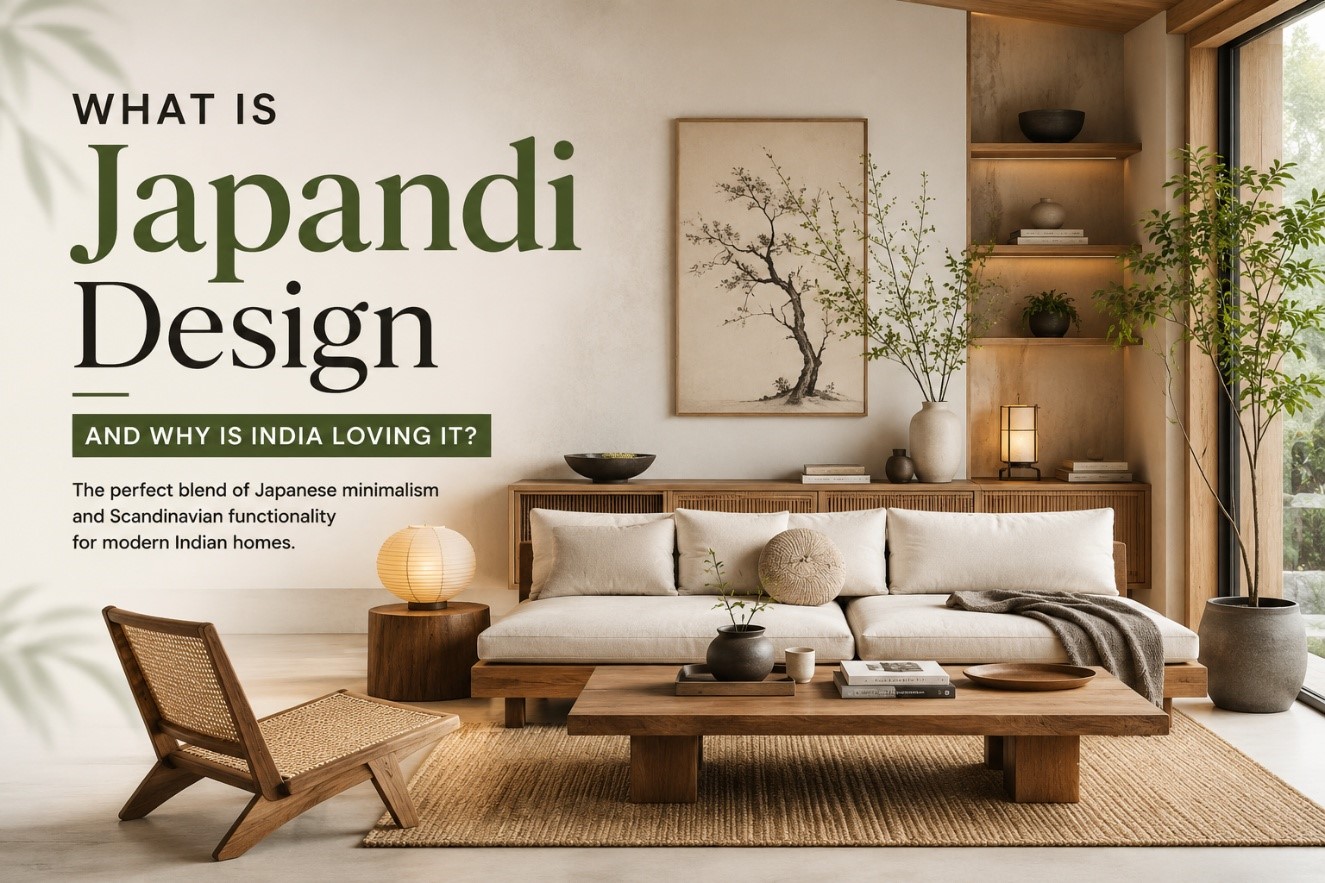
What Does a Japandi Living Room Look Like?
A Japandi living room typically includes:
- Neutral walls
- Wooden furniture
- Low-profile seating
- Natural fabrics
- Minimal décor
- Indoor plants
- Soft lighting
Instead of displaying numerous decorative items, the focus remains on carefully selected pieces that add character and functionality.
The result is a room that feels inviting, spacious, and balanced.
Also Read:- Best Single Floor House Design in 2026
How Can You Create a Japandi Bedroom?
A Japandi bedroom focuses on comfort and tranquility.
Key elements include:
Low Beds
Low-height beds create a grounded and relaxing atmosphere.
Soft Textures
Natural bedding materials such as linen and cotton enhance comfort.
Warm Lighting
Soft lighting creates a peaceful environment for rest.
Minimal Furniture
Only essential furniture is included to maintain visual calmness.
Neutral Color Schemes
Muted shades help promote relaxation and better sleep quality.
How Can You Design a Japandi Kitchen?
Japandi kitchens prioritize functionality and cleanliness.
Features often include:
- Wooden cabinetry
- Hidden storage
- Neutral countertops
- Open shelving
- Minimal hardware
- Natural textures
The kitchen becomes both aesthetically pleasing and highly efficient.
Which Materials Work Best for Japandi Interiors?
Some of the most popular materials include:
| Material | Purpose |
| Oak Wood | Furniture and flooring |
| Teak Wood | Cabinets and accents |
| Bamboo | Decorative elements |
| Stone | Countertops and flooring |
| Linen | Curtains and upholstery |
| Cotton | Soft furnishings |
| Rattan | Chairs and storage baskets |
| Ceramic | Decorative pieces and tableware |
These materials create warmth while maintaining simplicity.
Common Mistakes to Avoid in Japandi Design
Overdecorating the Space
Adding too many accessories can destroy the minimalist aesthetic.
Choosing Bright Colors
Excessively vibrant colors may disrupt the calm atmosphere.
Ignoring Functionality
Every item should serve a purpose.
Using Artificial Materials Excessively
Natural materials remain central to authentic Japandi design.
Creating Empty Rather Than Balanced Spaces
Japandi is about thoughtful simplicity, not bare emptiness.
Is Japandi Design Suitable for Luxury Homes?
Absolutely.
Many luxury homes now embrace Japandi principles because they create sophisticated interiors without appearing excessive.
Luxury Japandi homes often incorporate:
- Premium wood finishes
- Bespoke furniture
- Designer lighting
- Natural stone surfaces
- High-quality craftsmanship
This creates understated elegance that feels timeless rather than trendy.
Future of Japandi Design in India
Industry experts believe Japandi design will continue growing in popularity across India.
Several factors support this trend:
- Growing urbanization
- Smaller living spaces
- Wellness-focused lifestyles
- Sustainable design awareness
- Preference for timeless interiors
As Indian homeowners increasingly prioritize comfort, simplicity, and functionality, Japandi design is likely to remain one of the most influential interior trends for years to come.
Why Buyers Choose Housiey
Housiey simplifies the home-buying journey by connecting buyers directly with developers and eliminating unnecessary complications. From property discovery to site visits and final purchase decisions, Housiey helps homebuyers make informed choices with greater transparency and convenience.
Buyer Insights
- Japandi design is particularly popular among first-time urban homebuyers.
- Compact apartments benefit significantly from Japandi space-planning principles.
- Natural materials and neutral palettes improve the perceived spaciousness of a home.
- Wellness-focused homeowners increasingly prefer minimalist interiors.
- Sustainable living trends continue to drive interest in Japandi-inspired homes.
Key Takeaways
- Japandi design combines Japanese minimalism and Scandinavian functionality.
- The style emphasizes simplicity, comfort, and intentional living.
- Natural materials form the foundation of Japandi interiors.
- Neutral color palettes create calm and visually spacious environments.
- Functional furniture plays a crucial role in the design philosophy.
- Decluttered spaces improve organization and well-being.
- Japandi works exceptionally well in compact Indian apartments.
- The style supports sustainable and mindful living.
- Indian craftsmanship blends naturally with Japandi aesthetics.
- Japandi design is expected to remain a major interior trend in India.
Conclusion
Japandi design represents far more than an interior design trend. It is a lifestyle philosophy that promotes intentional living, simplicity, comfort, and harmony.
By blending Japanese minimalism with Scandinavian warmth, Japandi creates spaces that feel calm, elegant, and highly functional. Its emphasis on natural materials, neutral colors, craftsmanship, and clutter-free living resonates strongly with modern Indian homeowners seeking peaceful sanctuaries amid increasingly busy urban lives.
Whether you own a compact apartment, a spacious villa, or a luxury residence, Japandi principles can help transform your home into a space that is beautiful, practical, and timeless.
At Housiey, we believe that the best homes are not simply visually appealing—they enhance everyday living. Japandi design embodies this philosophy perfectly, making it one of the most relevant and desirable interior styles for contemporary India.
Sources
- Books and publications on Japanese interior design and Wabi-Sabi philosophy
- Scandinavian design studies and Nordic architecture references
- Interior design industry reports and trend analyses
- Architectural Digest
- Elle Decor
- Design Milk
- Dezeen
- House Beautiful
- The Spruce
- International Interior Design Association (IIDA)
- American Society of Interior Designers (ASID)
- Sustainability and wellness-focused residential design publications
- Contemporary architecture and home décor research journals
FAQs
- Japandi design is a fusion of Japanese minimalism and Scandinavian functionality. It focuses on simplicity, natural materials, comfort, and purposeful living.
- Indian homeowners appreciate its clean aesthetics and practical functionality. It also suits modern urban lifestyles and compact living spaces.
- Neutral and earthy shades dominate Japandi spaces. Common colors include beige, cream, grey, brown, and muted green.
- Japandi design can be adapted to different budgets. The focus is on quality and functionality rather than excessive spending.
- Yes, it is particularly effective in compact homes. Its emphasis on minimalism and smart storage helps maximize available space.
- Wood, bamboo, stone, linen, cotton, and ceramic are commonly used. These materials add warmth and authenticity to interiors.
- Scandinavian design emphasizes coziness and brightness. Japandi incorporates Japanese minimalism and a stronger appreciation for imperfection and simplicity.
- Yes, handcrafted Indian elements can blend beautifully with Japandi aesthetics. The key is maintaining balance and avoiding clutter.
- Yes, sustainability is one of its core principles. It encourages durable materials and mindful consumption.
- Low-profile, functional furniture with clean lines works best. Natural materials are preferred over synthetic alternatives.
- Yes, many luxury homes adopt Japandi aesthetics. Premium materials and bespoke craftsmanship enhance the style further.
- Indoor plants help strengthen the connection with nature. They also add texture and visual softness to minimalist spaces.
- Use neutral colors, natural fabrics, and low-profile furniture. Keep decorative items minimal and focus on comfort.
- Soft, warm lighting is preferred. The aim is to create a calm and welcoming atmosphere.
- Yes, the style promotes organization and functionality. It can be adapted to create practical family-friendly environments.
- No, it works equally well in small and large homes. The focus is on efficient use of space rather than size.
- Yes, technology can be integrated seamlessly. Hidden storage and clean layouts help maintain the minimalist aesthetic.
- Use texture, natural materials, and subtle contrasts. Carefully selected décor pieces can add character without creating clutter.
- Industry trends suggest continued growth in its popularity. Its timeless principles make it less susceptible to changing design fads.
- Yes, it provides a balanced combination of aesthetics and practicality. Its versatility makes it suitable for a wide range of homes and budgets.
L. Sadriwala, the Editor-in-Chief at Housiey, is a seasoned writer whose professional journey in content creation began in 2015. With a background rooted in a family of real estate developers, her transition into real estate writing was a natural evolution, bringing together her storytelling expertise and deep industry understanding.
Over the years, she has authored impactful blogs across diverse niches such as food, travel, and lifestyle, before establishing her reputation as a trusted voice in Indian real estate. Today, her work stands out for its clarity, accuracy, and ability to simplify complex property concepts for readers.
At Housiey, every article crafted by L. Sadriwala reflects thorough research, verified facts, and a reader-first approach. From decoding housing policies and trends to offering in-depth builder reviews and project insights, her mission is clear: to empower homebuyers and investors with the knowledge they need to make confident property decisions.
Her writing not only informs but also builds trust, making her one of the most credible editorial voices in the real estate space.
Related Stories