

Most Expensive Lands in India: Top Locations and Record-Breaking Prices 2026
-
By Ayush Oswal
- June 27, 2026
Introduction
Land has always been considered one of the safest and most rewarding assets in India. While apartments, villas, and commercial offices may depreciate over time due to wear and tear, land remains a finite resource that continues to appreciate when supported by infrastructure development, economic growth, and increasing urbanisation.
Over the last decade, India’s real estate sector has witnessed remarkable transformation. Massive metro rail projects, expressways, airports, business parks, IT corridors, financial districts, and luxury housing developments have significantly increased the value of land across major metropolitan cities. Prime locations are witnessing record-breaking transactions, with developers and institutional investors competing for every available parcel.
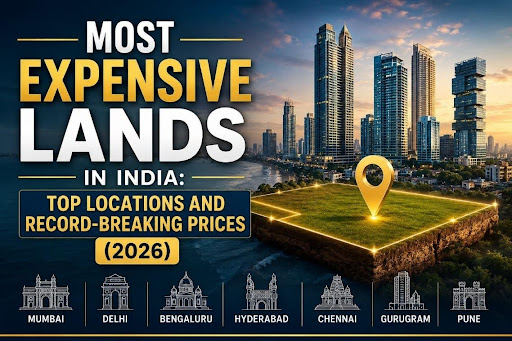
As of 2026, Mumbai continues to dominate India’s land market, followed by Delhi, Bengaluru, Hyderabad, Chennai, Pune, and Gurugram. These cities host some of the country’s costliest commercial and residential land, where even a few hundred square metres can be worth hundreds of crores.
In this blog, we’ll explore India’s most expensive land locations, understand what makes these areas so valuable, examine recent record-breaking trends, and discover why premium land continues to remain one of the strongest long-term investment assets.
Quick Answer
India’s most expensive land is concentrated in prime business districts and luxury residential zones of cities like Mumbai, Delhi, Bengaluru, Hyderabad, Chennai, Pune, and Gurugram. Locations such as Nariman Point, Bandra-Kurla Complex (BKC), Malabar Hill, Lutyens’ Delhi, and Golf Course Road command some of the country’s highest land values due to limited availability, premium infrastructure, strong commercial demand, and consistent appreciation.
Also Read: How to Buy Agricultural Land in Maharashtra? A Complete Step-by-Step Guide
Most Expensive Lands in India: Market Snapshot (2026)
| Factor | Details |
|---|---|
| Highest Land Prices | Mumbai remains India’s most expensive land market |
| Premium Segments | Commercial CBDs, Luxury Residential Areas, Mixed-use Developments |
| Top Demand Drivers | Infrastructure, Metro Connectivity, Business Hubs, Limited Supply |
| Fastest Appreciating Cities | Hyderabad, Bengaluru, Gurugram, Pune |
| Best Long-Term Investment | Prime commercial corridors and luxury residential districts |
| Major Buyers | Developers, REIT-backed firms, Corporates, HNIs, Institutional Investors |
Buyer Insights
- Premium land appreciates faster than standard residential plots in established cities.
- Infrastructure projects significantly influence land valuation.
- Commercial districts usually command higher land prices than residential areas.
- Limited land availability creates long-term appreciation potential.
- Investors increasingly prefer mixed-use development zones due to multiple income opportunities.
Why Buyers Choose Housiey
Buying premium real estate requires accurate information and trusted guidance. Housiey connects buyers directly with verified developers, making the property-buying journey more transparent, efficient, and hassle-free while helping buyers make informed investment decisions.
Which Are the Most Expensive Land Locations in India?
1. Mumbai – India’s Costliest Land Market
Mumbai has consistently remained India’s most expensive real estate destination. Being the country’s financial capital, the city experiences enormous demand for both residential and commercial land despite extremely limited availability.
Some of the most expensive locations include:
- Nariman Point
- Bandra-Kurla Complex (BKC)
- Malabar Hill
- Cuffe Parade
- Worli
- Lower Parel
- Tardeo
- Altamount Road
Land prices in these areas regularly reach record levels because of high-end commercial developments, luxury residences, multinational corporations, and premium infrastructure.
2. Lutyens’ Delhi – The Address of Prestige
Lutyens’ Delhi represents one of India’s most exclusive real estate markets.
Home to diplomats, industrialists, business leaders, and senior government officials, this area offers unmatched prestige. Large plot sizes, heritage bungalows, and strict redevelopment regulations make land extremely scarce.
Its exclusivity ensures consistently high property valuations with very limited supply entering the market.
3. Bengaluru – India’s Technology Capital
Bengaluru has emerged as one of India’s fastest-growing premium land markets.
Areas commanding exceptional land values include:
- Central Business District
- Indiranagar
- Koramangala
- Whitefield
- Hebbal
- MG Road
The city’s booming IT sector, startup ecosystem, and multinational investments continue driving demand for premium land parcels.
4. Hyderabad – Rapidly Rising Premium Market
Hyderabad has transformed into one of India’s strongest real estate performers.
High-value locations include:
- HITEC City
- Financial District
- Gachibowli
- Jubilee Hills
- Banjara Hills
With world-class infrastructure, expanding IT campuses, and comparatively organised urban planning, Hyderabad continues attracting developers and institutional investors.
5. Chennai – Southern India’s Commercial Powerhouse
Chennai’s strategic industrial and commercial growth has steadily increased premium land prices.
Top locations include:
- Boat Club Road
- Anna Salai
- Adyar
- Nungambakkam
- OMR Corridor
The city’s automobile industry, manufacturing sector, healthcare ecosystem, and IT expansion continue supporting sustained appreciation.
6. Gurugram – Corporate India’s Modern Business Hub
Gurugram has evolved into one of India’s leading commercial real estate destinations.
Premium areas include:
- Golf Course Road
- Golf Course Extension Road
- Cyber City
- DLF Phase 5
Excellent infrastructure, multinational companies, Grade-A office spaces, and luxury residential developments continue pushing land values upward.
7. Pune – A Rapidly Appreciating Investment Destination
Pune has become a preferred investment market due to its balanced growth across education, manufacturing, IT, and residential development.
Premium areas include:
- Koregaon Park
- Baner
- Kalyani Nagar
- Hinjawadi
- Boat Club Road
Increasing employment opportunities and infrastructure projects continue strengthening long-term appreciation prospects.
What Makes These Lands So Expensive?
Limited Land Availability
Prime city centres have almost no vacant land left for development. Scarcity naturally pushes prices higher as demand continues increasing.
Strong Commercial Demand
Business districts attract multinational companies, financial institutions, luxury retailers, and hospitality projects that compete aggressively for premium locations.
Excellent Infrastructure
Metro connectivity, airports, expressways, flyovers, business parks, and smart city initiatives significantly improve accessibility and increase land values.
Luxury Residential Demand
Affluent homebuyers prefer established premium neighbourhoods offering better security, lifestyle amenities, educational institutions, and healthcare facilities.
Future Growth Potential
Upcoming infrastructure projects often trigger substantial appreciation even before completion, making strategic land investments highly attractive.
Record-Breaking Land Transactions in Recent Years
India has witnessed multiple high-value land transactions over the past few years, particularly in Mumbai, Delhi, Hyderabad, and Bengaluru. Large developers, institutional investors, and commercial firms have acquired premium plots worth hundreds and even thousands of crores for luxury housing, commercial towers, mixed-use developments, and business parks.
These transactions demonstrate the strong confidence investors continue to place in India’s long-term urban growth and premium real estate market.
Should You Invest in Premium Land?
Premium land investments generally require substantial capital, but they often provide strong long-term appreciation due to limited supply and sustained demand.
However, buyers should evaluate legal ownership, zoning regulations, infrastructure plans, title clarity, market trends, and future development potential before making any purchase. Conducting proper due diligence remains essential regardless of the investment size.
Conclusion
India’s premium land market continues to set new benchmarks as rapid urbanisation, economic expansion, and infrastructure development reshape the country’s real estate landscape. Cities like Mumbai, Delhi, Bengaluru, Hyderabad, Chennai, Gurugram, and Pune remain at the forefront of this growth, attracting developers, businesses, and investors looking for long-term value.
Although purchasing land in these prime locations requires significant financial commitment, history has shown that strategically located land often delivers strong appreciation over time. As infrastructure projects expand and demand for premium real estate continues to rise, these locations are expected to remain among India’s most valuable assets for years to come.
Whether you’re an investor, developer, or homebuyer, understanding where India’s most expensive land is located—and what drives its value—can help you make more informed real estate decisions. If you’re planning to explore premium properties or invest in emerging markets, Housiey can help simplify your home-buying journey by connecting you directly with verified developers in a transparent and hassle-free manner.
Key Takeaways
- Mumbai continues to hold the title of India’s most expensive land market in 2026.
- Prime commercial districts generally command higher land prices than residential areas.
- Infrastructure development remains one of the biggest drivers of land appreciation.
- Scarcity of available land significantly increases long-term property values.
- Hyderabad, Bengaluru, Gurugram, and Pune continue emerging as premium investment destinations.
- Commercial and mixed-use developments are witnessing record investor interest.
- Premium land offers excellent long-term wealth creation potential when purchased after proper due diligence.
Sources
Ministry of Housing and Urban Affairs (MoHUA)
Department for Promotion of Industry and Internal Trade (DPIIT)
Reserve Bank of India (RBI)
National Highways Authority of India (NHAI)
State Government Land and Revenue Departments
Annual reports and investor presentations of leading listed real estate developers
Industry reports published by international real estate research and property consulting firms
Official notifications relating to metro rail, infrastructure, and urban development projects
Government budget and infrastructure announcements
Credible financial and business news publications covering Indian real estate and land transactions
FAQs
- Mumbai has the highest land prices in India due to its limited land availability and strong commercial demand. Premium locations regularly witness record-breaking transactions.
- Nariman Point, Bandra-Kurla Complex, Malabar Hill, and Altamount Road are among the city’s costliest locations. These areas are known for luxury developments and business activity.
- High population density, limited developable land, and continuous commercial demand drive prices upward. Strong infrastructure also contributes to premium valuations.
- Certain parts of Lutyens’ Delhi are exceptionally expensive, but Mumbai generally remains India’s overall costliest land market. Both cities attract high-value investments.
- Hyderabad, Bengaluru, Gurugram, and Pune have experienced significant appreciation in recent years. Infrastructure and employment growth continue supporting demand.
- In most metropolitan cities, commercial land commands higher prices because of stronger earning potential. Prime business districts usually see the highest valuations.
- Location, infrastructure, connectivity, demand, zoning regulations, and future development plans all influence land values. Scarcity also plays a major role.
- Premium land can be a rewarding long-term investment when legal documentation and market research are thoroughly verified. Buyers should always perform proper due diligence.
- Developers acquire premium land to build luxury residential, commercial, or mixed-use projects. High-demand locations often deliver better returns.
- Yes, metro connectivity improves accessibility and usually boosts demand for surrounding properties. This often leads to higher land prices.
- Bengaluru and Hyderabad are among the leading premium land markets in southern India. Chennai also remains an important high-value real estate destination.
- Short-term corrections are possible due to market conditions. However, prime land in established locations has historically shown strong long-term appreciation.
- Land is a limited resource that generally appreciates over time in growing cities. It also requires comparatively lower maintenance than constructed properties.
- Title documents, ownership records, zoning approvals, and legal clearances should always be verified. Proper due diligence helps minimise investment risks.
- Information technology, finance, manufacturing, healthcare, and commercial businesses significantly influence land demand. Employment growth also supports appreciation.
- Luxury neighbourhoods generally command higher prices because of better infrastructure, amenities, and exclusivity. Demand from affluent buyers further strengthens values.
- Yes, projects such as airports, metro lines, highways, and business parks often increase surrounding land values. Improved connectivity attracts more investment.
- Pune has witnessed strong appreciation driven by IT growth, education, and manufacturing sectors. Premium localities continue attracting investors.
- Large developers, institutional investors, corporations, and high-net-worth individuals are among the primary buyers. They typically seek long-term capital appreciation and development opportunities.
- As urbanisation and infrastructure continue expanding, prime land is expected to remain a highly sought-after asset. However, future performance depends on economic conditions and local development trends.

Ayush Oswal is an SEO Executive at Housiey, specializing in optimizing real estate content for better visibility and engagement. With a strong understanding of SEO strategies and the property market, he ensures that every blog helps homebuyers make informed decisions while performing well on search engines.
Related Stories