

Explain RERA Rules, Benefits, and Compliance in 2026
-
 By L. Sadriwala
- May 19, 2026
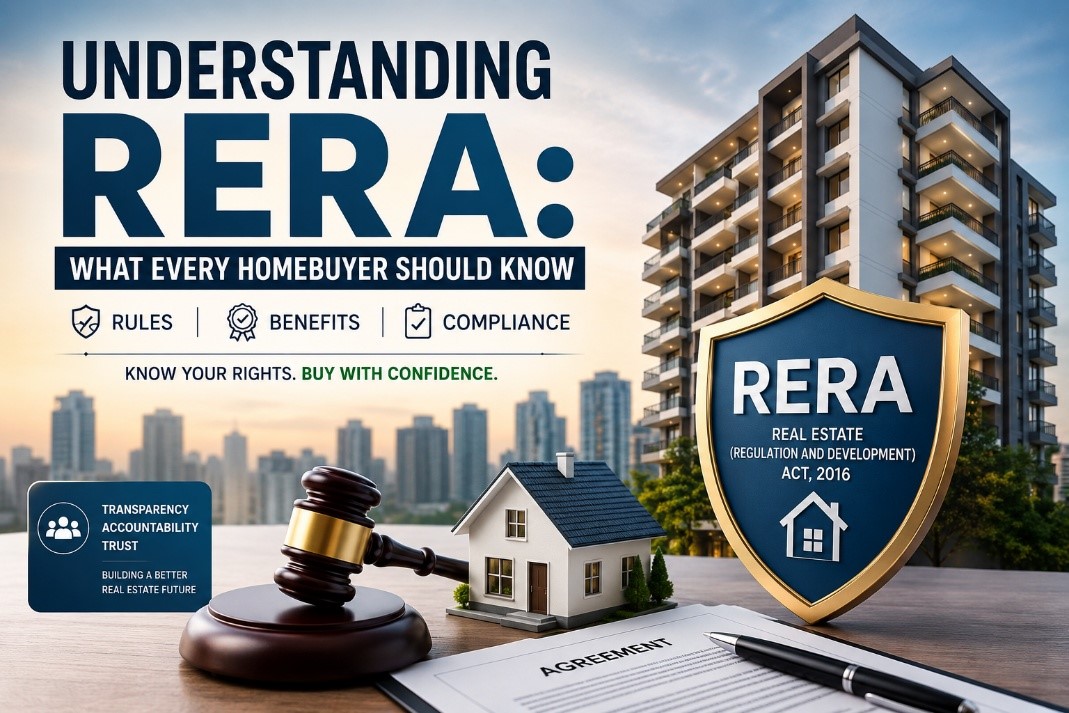
The Indian real estate sector has long been a mix of aspiration and uncertainty. For years, homebuyers navigated delayed projects, unclear legal frameworks, and opaque dealings with developers. The introduction of the Real Estate (Regulation and Development) Act, 2016; commonly known as RERA, marked a turning point. It brought structure, accountability, and transparency to an industry that desperately needed reform.
If you are planning to buy a home, invest in property, or simply want to understand how the market functions today, RERA is not just relevant; it is essential knowledge. This guide walks you through RERA rules, benefits, compliance requirements, and what they mean for you as a homebuyer.
What is RERA and Why Was It Introduced?
RERA came into force in 2016 with the primary objective of protecting homebuyers while boosting investor confidence in the real estate sector. Before its implementation, delays in project completion, misleading advertisements, and lack of accountability were common complaints.
The law established a regulatory authority in every state, such as the MahaRERA in Maharashtra, to oversee real estate transactions and ensure compliance.
RERA was designed to create a standardized framework across India, ensuring that developers operate transparently and buyers are well-informed before making one of the biggest financial decisions of their lives.
Also Read:- No Parking, No Claim: MahaRERA Draws a Clear Line for Homebuyers
Key RERA Rules Every Homebuyer Must Understand
Mandatory Registration of Projects
Under RERA, any residential or commercial project exceeding a certain size must be registered with the state authority before it can be marketed or sold. Developers cannot advertise or sell units without this registration.
This ensures that buyers are dealing with verified and approved projects rather than speculative developments.
Also Read:- RERA & Construction Quality: Can Homebuyers Fight Back Against Faulty Homes?
Carpet Area Standardization
RERA introduced a uniform definition of carpet area, eliminating confusion caused by super built-up or saleable area metrics. Buyers now pay only for the actual usable area within the walls of their home.
This brings clarity and prevents inflated pricing based on ambiguous measurements.
Also Read:- MoFA vs RERA: Understanding Maharashtra’s Plan to Repeal the MoFA Act
Escrow Account Requirement
Developers must deposit at least 70% of the funds collected from buyers into a dedicated escrow account. These funds can only be used for construction and land-related costs of the same project.
This rule significantly reduces the risk of fund diversion, which was a major cause of project delays earlier.
Strict Timelines for Project Completion
Builders are legally bound to complete projects within the declared timeline. Any delay makes them liable to compensate buyers.
This provision has fundamentally changed the way developers plan and execute projects.
Disclosure of Project Details
Developers must disclose all relevant information, including layout plans, approvals, timelines, and contractor details, on the RERA website.
This ensures transparency and allows buyers to make informed decisions.
Benefits of RERA for Homebuyers

Increased Transparency
- RERA mandates full disclosure, making it easier for buyers to verify project details and developer credibility. Information that was once difficult to access is now readily available online.
Protection Against Delays
- With strict timelines and penalties, buyers are no longer at the mercy of indefinite delays. Compensation clauses ensure accountability.
Financial Security
- The escrow mechanism ensures that your money is used only for the project you invested in, reducing the chances of stalled construction.
Legal Recourse
- RERA provides a structured grievance redressal system. Buyers can file complaints and expect timely resolution without lengthy court battles.
Fair Pricing
- Standardization of carpet area ensures that buyers pay for what they actually get, eliminating hidden costs.
Also Read:- Which States Have the Strongest RERA Enforcement in 2026?
RERA Compliance: What Developers Must Follow
For developers, RERA is not optional; it is mandatory. Compliance involves several key obligations.
They must register their projects before advertising or selling units. They must provide accurate and updated project information on the RERA portal. They must adhere to approved plans and cannot make changes without buyer’s consent.
Developers are also required to meet construction deadlines and maintain financial discipline through escrow accounts. Any violation can result in penalties, project suspension, or even imprisonment in severe cases.
This strict compliance framework ensures that the industry operates with discipline and integrity.
How RERA Impacts the Real Estate Market
RERA has reshaped the Indian real estate landscape in multiple ways.
It has filtered out unreliable developers, leaving behind more credible and professional players. It has increased buyer confidence, leading to more informed investments. It has also encouraged timely project completion, improving overall market efficiency.
While the initial phase saw a slowdown due to compliance adjustments, the long-term impact has been overwhelmingly positive. The market today is more structured, transparent, and trustworthy.
Also Read:- Why Checking RERA Possession Dates Is Crucial Before Booking Your Home at Gera Own the Blue
Common Misconceptions About RERA
One common misconception is that RERA applies only to new projects. In reality, ongoing projects without completion certificates must also register.
Another myth is that RERA guarantees project success. While it reduces risks significantly, buyers must still conduct due diligence.
Some also believe that RERA approvals mean government endorsement of project quality. In truth, RERA ensures regulatory compliance, not construction excellence.
Understanding these nuances helps buyers set realistic expectations.
How to Check RERA Registration
Every state has its own RERA portal where you can verify project details. For example, buyers in Maharashtra can visit the MahaRERA portal.
You can search using the project name, developer name, or registration number. The portal provides detailed insights into approvals, timelines, and legal status.
This step is crucial before making any booking or payment.
Key Takeaways
RERA has transformed the homebuying journey from a risky endeavor into a more structured and secure process. It ensures transparency through mandatory disclosures, protects buyers financially through escrow accounts, and enforces accountability with strict timelines and penalties. Developers must comply with stringent rules, making the market more reliable. Buyers now have access to verified information and a legal framework for grievance redressal. While RERA does not eliminate all risks, it significantly reduces them and empowers buyers to make informed decisions.
Conclusion
RERA is more than just a regulation; it is a safeguard for every homebuyer in India. It brings clarity where there was confusion, accountability where there was neglect, and confidence where there was hesitation.
However, navigating real estate decisions still requires the right guidance and insights. This is where Housiey steps in. From helping you understand RERA-compliant projects to guiding you through the buying process, Housiey ensures that your journey to owning a home is smooth, informed, and secure.
Sources
- Ministry of Housing and Urban Affairs, Government of India
- Real Estate (Regulation and Development) Act, 2016, official documentation
- Maharashtra Real Estate Regulatory Authority (MahaRERA) publications
- State RERA authority portals and regulatory guidelines
- Industry reports and whitepapers on Indian real estate regulation
FAQs
- RERA is a law that regulates the real estate sector to protect homebuyers and ensure transparency. It mandates accountability from developers and provides a structured system for dispute resolution.
- Yes, RERA is a central law, but each state has its own regulatory authority. The rules may vary slightly depending on state-specific guidelines.
- Projects exceeding a certain size or number of units must be registered. Smaller projects may be exempt depending on state rules.
- Developers must adhere to declared timelines or compensate buyers for delays. This ensures accountability and timely completion.
- Carpet area refers to the actual usable space within the walls of a home. It excludes balconies, terraces, and common areas.
- No, changes cannot be made without the consent of buyers. This prevents unauthorized alterations.
- Penalties can include fines, project suspension, or even imprisonment. The severity depends on the nature of the violation.
- You can file a complaint through the state RERA portal. The authority will review and resolve the issue within a specified timeframe.
- No, RERA primarily applies to new and ongoing projects. Resale transactions are generally not covered.
- It is a dedicated account where 70% of buyer funds are deposited. These funds can only be used for that specific project.
- Yes, buyers can withdraw if the developer fails to meet obligations. They are entitled to a refund with interest.
- RERA ensures compliance and transparency but does not directly guarantee construction quality. Buyers should still conduct inspections.
- Yes, agents must also register under RERA. This ensures accountability across the transaction chain.
- RERA aims to resolve disputes within 60 days. This is significantly faster than traditional legal processes.
- Yes, it increases transparency and reduces risks, making real estate a more secure investment option.
- Project approvals, layout plans, timelines, and developer details are available. This helps buyers verify authenticity.
- No, advertising without registration is illegal. This prevents misleading promotions.
- Yes, both residential and commercial projects fall under RERA regulations. The rules apply equally to both sectors.
- They regulate projects, ensure compliance, and resolve disputes. Each state authority operates independently.
- It provides transparency, legal protection, and financial security. This makes the buying process safer and more predictable.
L. Sadriwala, the Editor-in-Chief at Housiey, is a seasoned writer whose professional journey in content creation began in 2015. With a background rooted in a family of real estate developers, her transition into real estate writing was a natural evolution, bringing together her storytelling expertise and deep industry understanding.
Over the years, she has authored impactful blogs across diverse niches such as food, travel, and lifestyle, before establishing her reputation as a trusted voice in Indian real estate. Today, her work stands out for its clarity, accuracy, and ability to simplify complex property concepts for readers.
At Housiey, every article crafted by L. Sadriwala reflects thorough research, verified facts, and a reader-first approach. From decoding housing policies and trends to offering in-depth builder reviews and project insights, her mission is clear: to empower homebuyers and investors with the knowledge they need to make confident property decisions.
Her writing not only informs but also builds trust, making her one of the most credible editorial voices in the real estate space.
Related Stories