
Best Tier-2 Cities for Real Estate Investment in India 2026
-
By Ayush Oswal
- July 10, 2026
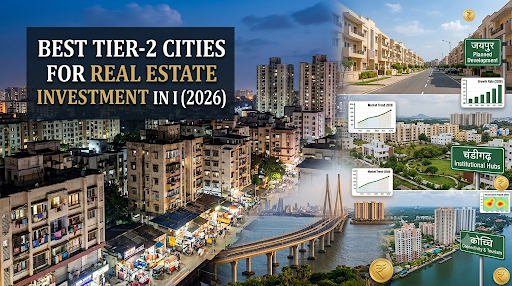
India’s real estate market is no longer limited to metro cities. While cities like Mumbai, Delhi, Bengaluru, and Hyderabad continue to attract investors, Tier-2 cities have emerged as the next big investment destination. Better infrastructure, lower property prices, improving employment opportunities, and government-backed development projects have transformed these cities into attractive real estate markets.
For homebuyers and investors looking for long-term appreciation without paying metro-city prices, Tier-2 cities offer an excellent opportunity. Whether you are buying your first home, investing in rental property, or planning for future capital appreciation, these cities deserve serious consideration.
In this guide, we’ll explore the best Tier-2 cities for real estate investment, why they are growing rapidly, and the factors you should evaluate before investing.
Also Read: First-Time Buyer? Government Schemes That Can Save You ₹2.67 Lakh on a Home Loan
What are Tier-2 Cities?
Tier-2 cities are rapidly developing urban centres that have strong economic growth but are smaller than India’s major metropolitan cities. These cities generally have improving infrastructure, growing industries, expanding educational institutions, and increasing demand for residential as well as commercial properties.
Compared to metro cities, Tier-2 locations usually offer lower property prices, better affordability, and higher future appreciation potential.
Why are Tier-2 Cities Becoming Popular for Property Investment?
- Several factors are driving investors towards Tier-2 markets.
- Affordable real estate prices make it easier for first-time buyers to enter the market.
- Improved highways, airports, metro projects, and railway connectivity are increasing accessibility.
- IT companies, manufacturing industries, logistics hubs, educational institutions, and healthcare facilities are creating employment opportunities.
- Remote working has encouraged professionals to move to cities that offer better quality of life with lower living costs.
- Government infrastructure investments continue to improve urban development across many emerging cities.
Best Tier-2 Cities for Real Estate Investment in India
- Indore
Indore has consistently ranked among India’s cleanest cities while becoming a major commercial and educational hub.
Why invest?
- Strong IT and manufacturing growth
- Affordable housing
- Excellent road connectivity
- Metro development
- High rental demand
Ideal for:
Residential apartments, plotted developments, and rental investments.
- Lucknow
The capital of Uttar Pradesh has experienced rapid infrastructure growth over the past few years.
Investment advantages include:
- Metro connectivity
- New expressways
- IT City development
- Expanding residential townships
- Strong government investments
The city offers steady appreciation with relatively affordable entry prices.
- Jaipur
Jaipur combines tourism, education, IT services, and industrial development, making it a balanced investment destination.
Reasons to invest:
- Expanding Ring Road
- Smart City initiatives
- Growing commercial sector
- Rising demand for premium housing
- Strong rental market
- Coimbatore
Known as the “Manchester of South India,” Coimbatore is becoming one of the strongest Tier-2 investment destinations.
Growth drivers include:
- Textile industry
- Engineering companies
- Educational institutions
- Healthcare sector
- IT parks
Its stable economy makes it attractive for long-term investors.
- Nagpur
Nagpur’s strategic central location gives it tremendous logistics potential.
Major growth factors include:
- Multi-modal logistics hub
- Metro Rail
- MIHAN project
- Expanding airport
- Industrial development
The city continues attracting both residential and commercial investments.
- Bhubaneswar
The capital of Odisha has emerged as one of eastern India’s fastest-growing cities.
Key advantages:
- Planned urban development
- Smart City Mission
- IT sector expansion
- Educational institutions
- Affordable housing
- Kochi
Kochi offers a balanced combination of tourism, IT, ports, and commercial development.
Investment highlights include:
- Metro connectivity
- IT parks
- International airport
- Port expansion
- Strong NRI investment
Premium residential projects continue witnessing healthy demand.
- Surat
Surat remains one of India’s fastest-growing business cities.
Reasons to consider:
- Diamond industry
- Textile business
- Metro project
- High disposable incomes
- Expanding residential market
Property demand continues growing due to migration and business expansion.
- Visakhapatnam
Visakhapatnam offers excellent growth potential through industrial expansion and infrastructure development.
Major growth drivers include:
- Port-based economy
- IT sector
- Defence establishments
- Tourism
- Smart City projects
- Vadodara
Vadodara has become an attractive investment destination due to industrial growth and quality infrastructure.
Investors benefit from:
- Manufacturing industries
- Petrochemical sector
- Educational institutions
- Affordable housing
- Stable rental demand
Factors to Consider Before Investing in Tier-2 Cities
- Although Tier-2 cities offer attractive opportunities, investors should carefully evaluate several factors before purchasing property.
- Study upcoming infrastructure projects that may increase future property values.
- Verify employment growth, industrial expansion, and economic development.
- Check RERA registration and legal documentation before finalising any property.
- Compare rental demand across different localities.
- Choose locations with schools, hospitals, shopping centres, and public transport nearby.
- Research future master plans and government development proposals.
Benefits of Investing in Tier-2 Cities
- Investors enjoy several advantages when choosing Tier-2 markets.
- Lower investment cost compared to metro cities.
- Higher affordability for first-time homebuyers.
- Better scope for long-term capital appreciation.
- Growing rental demand due to migration and employment.
- Improving lifestyle infrastructure.
- Lower population density and reduced congestion.
Challenges You Should Know
- Every investment carries some risks.
- Some locations may experience slower appreciation than expected.
- Infrastructure projects may face implementation delays.
- Rental demand differs significantly between localities.
- Investors should conduct proper due diligence before purchasing property.
Is 2026 a Good Time to Invest in Tier-2 Cities?
With India’s urbanisation accelerating, infrastructure investments increasing, and businesses expanding beyond metropolitan regions, 2026 presents favourable opportunities for investors willing to adopt a long-term perspective.
Cities with strong employment growth, planned infrastructure, and expanding residential demand are expected to remain attractive investment destinations over the coming years. Selecting the right locality, builder, and property type remains the key to maximising returns.
Conclusion
Tier-2 cities have transformed from affordable alternatives into promising real estate investment destinations. Improved infrastructure, expanding employment opportunities, government-backed development, and comparatively lower property prices continue attracting both homebuyers and investors.
Whether you are looking for your first home, rental income, or long-term capital appreciation, cities like Indore, Lucknow, Jaipur, Coimbatore, Nagpur, Surat, Kochi, Bhubaneswar, Visakhapatnam, and Vadodara offer strong growth potential. However, careful research, legal verification, and choosing the right location remain essential before making any investment decision.
Key Takeaways
- Tier-2 cities are emerging as some of India’s fastest-growing real estate markets.
- Lower property prices make these cities attractive for first-time buyers and investors.
- Infrastructure projects are improving connectivity and boosting demand.
- Employment growth is increasing residential and rental requirements.
- Cities with strong economic fundamentals generally offer better appreciation potential.
- Legal verification and RERA compliance should always be checked before buying property.
- Long-term investment usually provides better returns than short-term speculation.
- Choosing the right locality is often more important than simply selecting the right city.
Sources
Ministry of Housing and Urban Affairs (MoHUA)
Real Estate Regulatory Authority (RERA) portals of respective states
National Highways Authority of India (NHAI)
Department for Promotion of Industry and Internal Trade (DPIIT)
Smart Cities Mission
Reserve Bank of India (RBI)
National Statistical Office (NSO)
Ministry of Road Transport and Highways
State Urban Development Departments
Industry reports from reputed real estate research and consultancy organisations
FAQs
A Tier-2 city is a developing urban centre with growing infrastructure, industries, and residential demand. These cities are smaller than metros but offer significant economic potential.
Affordable property prices and improving infrastructure make them attractive. Employment growth is also increasing housing demand.
There is no single best city for every investor. The right choice depends on your budget, investment goals, and preferred property type.
Yes, many Tier-2 cities have growing rental demand due to education and employment. Returns vary depending on the locality.
Generally, yes. Property prices are often considerably lower than those in major metropolitan areas.
Apartments, plots, and independent homes are commonly preferred. The ideal choice depends on future development plans.
Yes, appreciation is possible where infrastructure and employment continue to expand. Long-term investment generally provides better opportunities.
Yes, it helps improve transparency and buyer protection. Always verify project registration before purchasing.
Yes, lower prices improve affordability. Buyers also get access to larger homes within their budget.
IT, manufacturing, logistics, education, tourism, and healthcare contribute significantly. These industries create employment and housing demand.
Both options have advantages depending on your investment objectives. Evaluate legal approvals and delivery timelines carefully.
Yes, office spaces, retail shops, and commercial developments are expanding steadily. Business growth continues to create demand.
Infrastructure greatly influences future appreciation. Better connectivity often leads to higher property demand.
Yes, NRIs can invest in residential and commercial properties according to applicable regulations. They should complete proper legal verification before buying.
Plots often offer strong appreciation in developing areas. However, legal documentation should always be thoroughly verified.
Project delays, slower appreciation, and weak local demand can affect returns. Proper research helps minimise these risks.
A long-term investment horizon generally offers better appreciation potential. Short-term gains may vary depending on market conditions.
Schools, hospitals, public transport, shopping centres, and business hubs improve demand. Good connectivity also enhances resale value.
No. Infrastructure, employment, legal status, and future development are equally important factors.
Yes, many Tier-2 cities are expected to benefit from continued urbanisation and infrastructure expansion. Growth will depend on economic development and planning.

Ayush Oswal is an SEO Executive at Housiey, specializing in optimizing real estate content for better visibility and engagement. With a strong understanding of SEO strategies and the property market, he ensures that every blog helps homebuyers make informed decisions while performing well on search engines.
Related Stories