What Are the New Developing Areas in Mumbai?
-
 By L. Sadriwala
- March 4, 2026
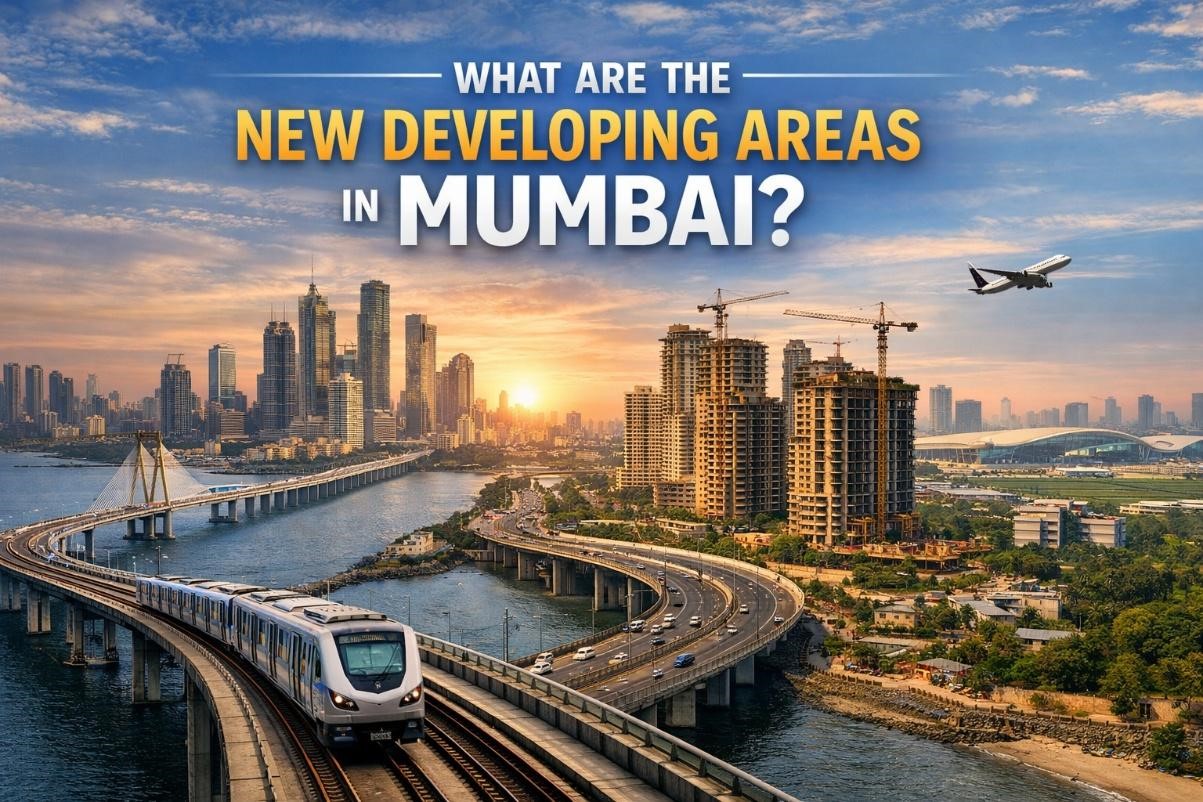
Mumbai has always been India’s most dynamic real estate market. But today, the city is not just expanding, it is strategically evolving. With infrastructure pushing boundaries, business districts spreading outward, and land scarcity driving redevelopment, several new micro-markets across the Mumbai Metropolitan Region (MMR) are emerging as powerful growth corridors.
For people who are planning to buy a home, upgrade their lifestyle, or invest for long-term appreciation, understanding these developing areas is not optional; it is essential. Prices in saturated locations have already peaked, but the real opportunity lies in identifying areas where infrastructure, employment, and residential demand are converging simultaneously.
In this comprehensive blog, we will systematically explore:
- What defines a “developing area” in Mumbai
• Region-wise emerging micro-markets
• Infrastructure catalysts driving growth
• Comparative price insights
• Investment logic behind each location
• Long-term appreciation outlook
What Defines a Developing Area in Mumbai?
Before diving into specific localities, it is important to understand what truly makes an area “developing” in Mumbai’s context.
A locality becomes a strong growth candidate when:
- Major infrastructure projects are announced or nearing completion
- Reputed developers begin launching projects in the micro-market
- Commercial hubs expand nearby
- Property prices are still relatively lower than saturated zones
- Social infrastructure such as schools, hospitals, and malls improves
- Rental demand begins to strengthen
Now let us examine Mumbai’s new developing areas region by region.
Central Mumbai and Eastern Corridor: Redevelopment and Connectivity Boost
Central suburbs are witnessing a powerful transformation due to redevelopment, improved connectivity, and proximity to major employment hubs.
Chembur
- Chembur has evolved from an industrial suburb into a premium residential and commercial zone.
Why Chembur Is Growing
- Chembur benefits from seamless connectivity via the Eastern Freeway, Harbour Line railway, and improving metro connectivity. Its strategic proximity to BKC, Lower Parel, and South Mumbai makes it attractive for working professionals. The area now offers strong social infrastructure including reputed schools, hospitals, malls, and lifestyle amenities.
Investment Perspective
- Chembur is ideal for buyers looking for balanced growth and rental income. It attracts mid to upper-mid segment buyers and has consistently shown steady appreciation.
New Launch Projects in Chembur:-
1- House of Hiranandani Maitri Park
2- Rustomjee Balmoral Golflinks
Wadala
- Wadala is emerging as a premium redevelopment-driven market.
Growth Drivers
- Wadala enjoys proximity to BKC and South Mumbai. Infrastructure upgrades and improved road connectivity have increased its residential appeal. Developers are focusing on high-rise luxury projects here, targeting upwardly mobile buyers.
Investment Logic
- Wadala’s central location makes it suitable for premium buyers seeking connectivity without South Mumbai’s price tag.
Upcoming New Launch Projects in Wadala:
1- Raymond The Address by GS Wadala
2- Lodha Lumis
Vikhroli
- Vikhroli is steadily becoming a residential hotspot.
Why It Is Emerging
- Metro Line 4 connectivity, proximity to Powai’s business ecosystem, and large township-style developments are driving growth. Compared to Powai, Vikhroli offers relatively more affordable entry points.
Buyer Profile
- Young professionals and families looking for upgraded living spaces are driving demand here.
Under construction projects in Vikhroli:
2- Lodha Casa Evergreen Vikhroli
Central Corridor Price Snapshot
| Area | Approx Price Range (₹ per sq ft) | Demand Type | Growth Outlook |
| Chembur | 20,000 – 28,000 | End users + Investors | Strong |
| Wadala | 22,000 – 32,000 | Premium buyers | High |
| Vikhroli | 18,000 – 25,000 | Young professionals | Consistent |
Western Suburbs: Metro-Led Expansion
The Western corridor continues to expand northward as Andheri and Bandra become saturated.
Goregaon
- Goregaon has transformed into a balanced residential and commercial hub.
Why Goregaon Is Developing
- Metro connectivity, IT parks, corporate offices, and proximity to Film City have strengthened its appeal. It now offers a mix of mid-segment and premium housing.
Investment Advantage
- Goregaon is attractive for both end users and investors due to strong rental demand.
New Projects in Goregaon:
1- Oberoi Garden City – Elysian
Malad
- Malad is becoming increasingly self-sufficient.
Growth Factors
- Corporate offices in Malad West, metro connectivity, and relatively lower prices compared to Andheri make it attractive. Rental yield remains stable.
Best New Launch Projects in Malad:
1- Mahindra Lifespace Malad West
Kandivali
- Kandivali is witnessing redevelopment and infrastructure upgrades.
- It appeals largely to families seeking relatively spacious homes within city limits at more moderate pricing.
Western Suburbs Price Snapshot
| Area | Approx Price Range (₹ per sq ft) | Buyer Segment | Outlook |
| Goregaon | 22,000 – 35,000 | Premium + IT crowd | Strong |
| Malad | 18,000 – 28,000 | Mid-income buyers | Stable |
| Kandivali | 17,000 – 24,000 | Families | Consistent |
Navi Mumbai: Infrastructure-Led Growth Engine
Navi Mumbai is among the most strategically developing zones due to airport and connectivity projects.
Ulwe
- Ulwe is widely regarded as one of the highest potential micro-markets.
Why Ulwe Is Important
- Proximity to the upcoming international airport and the Mumbai Trans Harbour Link has transformed investor sentiment. Prices are still accessible compared to Mumbai’s core.
Investment Potential
- Ulwe is suited for long-term investors willing to hold for infrastructure-driven appreciation.
Panvel
- Panvel is evolving into a major residential corridor.
Growth Catalysts
- Airport influence, industrial growth, rail connectivity, and township projects are driving demand. Developers are launching large-scale integrated communities.
Navi Mumbai Snapshot
| Area | Approx Price Range (₹ per sq ft) | Investment Type | Appreciation Scope |
| Ulwe | 9,000 – 14,000 | High-growth | Very High |
| Panvel | 8,000 – 13,000 | Long-term | High |
Thane and Extended Suburbs: Value-Oriented Growth
Thane
- Thane has transformed into an independent residential powerhouse.
Why Thane Is Thriving
- Better pricing compared to Mumbai, strong township developments, excellent schools and hospitals, and improving metro connectivity are driving demand.
Dombivli
- Dombivli remains a budget-friendly emerging hub.
- It attracts first-time buyers and investors seeking affordable entry points.
Kalyan
- Kalyan is growing due to logistics expansion and improving connectivity.
- It is becoming a strong alternative for buyers priced out of central suburbs.
Extended Suburbs Snapshot
| Area | Approx Price Range (₹ per sq ft) | Buyer Type | Future Outlook |
| Thane | 14,000 – 22,000 | End users + Investors | Strong |
| Dombivli | 6,000 – 9,000 | First-time buyers | Growing |
| Kalyan | 7,000 – 11,000 | Budget segment | Improving |
Infrastructure Projects Driving These Developments
- Expansion of Mumbai Metro network
• Mumbai Trans Harbour Link
• Coastal Road development
• Navi Mumbai International Airport
• Expansion of BKC and commercial corridors
Infrastructure remains the single biggest catalyst for price appreciation.
Conclusion
Mumbai’s growth is no longer confined to traditional prime areas. The real opportunity now lies in emerging corridors where infrastructure, employment hubs, and residential supply are aligning simultaneously.
For readers seeking high appreciation potential, Ulwe and Panvel present long-term opportunities. Those looking for balanced growth and rental demand may consider Chembur and Goregaon. Buyers seeking premium central positioning may explore Wadala, while first-time buyers can evaluate Dombivli or Kalyan.
If you are planning to explore projects in these developing areas, Housiey is a platform that connects you directly with builders without circulating your contact details to multiple brokers, making your home-buying journey smooth, transparent, and hassle-free.
Making the right decision today in the right micro-market can significantly impact your financial future tomorrow.
FAQs
- Ulwe and Panvel are currently among the fastest developing areas because of the upcoming Navi Mumbai International Airport and major connectivity projects such as the Mumbai Trans Harbour Link. These infrastructure developments are expected to significantly enhance accessibility and demand, making these locations strong long-term growth corridors.
- Chembur is considered a stable and strategic investment option due to its central location and seamless connectivity to business hubs like BKC and Lower Parel. The area offers a good balance between end-use demand and rental income potential, which supports steady appreciation over time.
- Wadala’s proximity to South Mumbai and BKC, combined with redevelopment projects and infrastructure upgrades, has elevated its real estate profile significantly. Developers are launching high-rise premium projects here because buyers see long-term value in its central positioning and improved accessibility.
- Thane offers comparatively larger homes at lower prices than many Mumbai suburbs while still providing strong social infrastructure such as schools, hospitals, and malls. For families seeking affordability without compromising lifestyle amenities, Thane presents a highly practical and value-driven alternative.
- Ulwe benefits directly from its proximity to the upcoming international airport and enhanced road connectivity, which are expected to transform the locality’s accessibility and commercial importance. Since prices are still relatively affordable, early investors may benefit from long-term capital appreciation once infrastructure becomes fully operational.
- Panvel is ideal for investors with a long-term horizon because it is emerging as a large residential and logistics corridor supported by airport-led growth. Township projects and improving rail and road connectivity are steadily strengthening its residential demand base.
- Yes, Goregaon and Malad continue to experience demand due to metro connectivity, IT parks, and commercial expansion in the western corridor. While these areas are more mature compared to outer suburbs, they still offer consistent appreciation supported by rental demand.
- Chembur, Goregaon, and Malad are considered strong rental markets because of their proximity to employment hubs and metro access. Working professionals and corporate employees drive stable occupancy levels, ensuring steady rental returns.
- Dombivli is suitable for first-time buyers who are looking for affordable entry points into the MMR property market. Although appreciation may be gradual compared to central locations, improving infrastructure and connectivity are gradually enhancing its demand profile.
- Kalyan is witnessing growth due to expanding rail connectivity and its emergence as a logistics and warehousing hub. With comparatively lower property prices, it is becoming an attractive option for budget-conscious buyers seeking long-term value.
- Infrastructure such as metro lines, highways, airports, and business districts significantly improves connectivity and accessibility, which directly increases residential demand. As commuting time reduces and convenience improves, property values in those areas typically experience upward momentum.
- Redevelopment projects often result in upgraded infrastructure, improved building quality, and higher market value for the area as a whole. However, buyers must evaluate project timelines, developer credibility, and construction progress carefully before committing.
- Goregaon offers a balanced mix of residential comfort, schools, healthcare facilities, and entertainment options, making it ideal for families. Its metro connectivity and corporate presence further enhance its livability quotient.
- Navi Mumbai presents strong long-term growth potential due to airport-driven infrastructure and planned development layouts. However, investment decisions should depend on the buyer’s risk appetite, time horizon, and budget capacity.
- Kandivali offers relatively lower price points compared to Andheri while maintaining decent connectivity and residential infrastructure. It appeals to families seeking spacious homes within city limits without paying premium central suburb rates.
- Township projects typically offer integrated amenities such as clubhouses, parks, security, and retail spaces, enhancing lifestyle appeal. They often attract long-term residents and create stronger community environments, which can support sustained appreciation.
- Central suburbs like Chembur and Wadala are expected to witness steady appreciation due to redevelopment and strong connectivity to business hubs. Limited land availability in prime areas further strengthens their long-term value proposition.
- Malad has developed into a self-sustained suburb with corporate offices, shopping centers, and metro access, supporting stable rental demand. Investors seeking consistent rental income often consider Malad due to its balanced residential-commercial ecosystem.
- Dombivli and Kalyan remain among the most budget-friendly options within the MMR region. These locations provide affordable housing opportunities while gradually benefiting from infrastructure upgrades.
- The safest strategy involves choosing infrastructure-backed locations where connectivity projects are either underway or near completion. Additionally, investing with reputed developers and adopting a long-term holding approach reduces risk and enhances return potential.
L. Sadriwala, the Editor-in-Chief at Housiey, is a seasoned writer whose professional journey in content creation began in 2015. With a background rooted in a family of real estate developers, her transition into real estate writing was a natural evolution, bringing together her storytelling expertise and deep industry understanding.
Over the years, she has authored impactful blogs across diverse niches such as food, travel, and lifestyle, before establishing her reputation as a trusted voice in Indian real estate. Today, her work stands out for its clarity, accuracy, and ability to simplify complex property concepts for readers.
At Housiey, every article crafted by L. Sadriwala reflects thorough research, verified facts, and a reader-first approach. From decoding housing policies and trends to offering in-depth builder reviews and project insights, her mission is clear: to empower homebuyers and investors with the knowledge they need to make confident property decisions.
Her writing not only informs but also builds trust, making her one of the most credible editorial voices in the real estate space.
Related Stories