

Dharavi Redevelopment Gets Major Push: 118 Acres in Malad Handed Over for Rehabilitation Housing
-
 By L. Sadriwala
- February 20, 2026
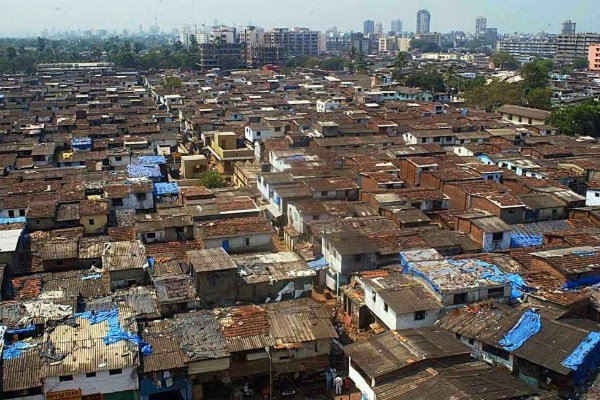
Mumbai’s most ambitious redevelopment plan just received a major boost.
In a significant update to the Dharavi Redevelopment Project (DRP), the Maharashtra Government has officially handed over possession of a 118-acre land parcel located at Mukteshwar in the Malvani area of Malad to the Slum Rehabilitation Authority (SRA). This land will play a key role in rehabilitating Dharavi residents who may not qualify for housing within Dharavi itself.
The development was confirmed by Saurabh Katiyar, Mumbai Suburban District Collector.
Why Has the Malad Land Been Handed Over?
The 118-acre plot at Mukteshwar, Malad, is being allocated specifically for rehabilitation of Dharavi residents who are not eligible for in-situ housing (rehabilitation within Dharavi).
Sources reveal that this relocation housing will be meant for:
- Residents living on upper floors
- Residents who settled in Dharavi after January 1, 2011
- Residents who settled before November 15, 2022
This means the Malad land will act as a major rehabilitation zone for those who fall outside Dharavi’s in-situ eligibility criteria.
Who Will Own the Land and Who Will Develop It?
Although the land has been handed over for the project, the ownership will remain with the Slum Rehabilitation Authority (SRA).
However, the development rights will be held by the Adani Group’s special-purpose vehicle (SPV), which is executing the project.
The redevelopment is being carried out through Navbharat Mega Developers Pvt Ltd (NMDPL)—a joint venture between:
- Adani Group
- Government of Maharashtra (stakeholder in the project)
This structure ensures that the land remains government-controlled, while development execution is managed through the SPV.
Land Value and Premium Paid by NMDPL
The 118-acre land parcel is estimated to be worth approximately ₹540 crore.
To acquire development rights, NMDPL has already paid:
- ₹135 crore as premium for development rights on the land parcel.
This payment indicates that the project is moving into serious implementation mode, especially in terms of land acquisition and planning.
What About the Remaining Land?
Interestingly, the original earmarked land at Mukteshwar was around 140 acres.
Out of that:
- 118 acres have been handed over
- 22 acres are still under litigation
This pending portion could potentially delay full-scale development on the entire plot, but the handover of the majority land suggests the rehabilitation plan is still progressing strongly.
Will There Be a Sale Component Too?
Yes.
Sources indicate that a portion of this Malad land will be used for construction of apartments under the sale component, which will be sold in the open market.
This sale component is a common model in large redevelopment projects because it helps developers recover costs and finance rehabilitation housing.
So while the land is mainly for Dharavi rehabilitation, it may also include market-driven residential development.
MMR-Wide Land Allocation for Dharavi Redevelopment
The Malad land is not the only location identified for rehabilitation.
The Maharashtra government has reportedly identified and allocated around 540 acres of land parcels across the Mumbai Metropolitan Region (MMR) to support Dharavi redevelopment.
These include locations such as:
- Kurla
- Salt pan lands in Kanjur
- Bhandup
- Mulund
- Portions of the Deonar dumping ground
These land parcels are meant to facilitate large-scale housing creation, especially for those who cannot be accommodated directly inside Dharavi.
How Many Homes Will Be Built Under the Project?
Officials estimate that the redevelopment will require construction of approximately:
- 1.25 lakh to 1.5 lakh new homes
These homes are expected to rehabilitate nearly:
- 10 lakh Dharavi residents
Given Dharavi’s massive population density and mixed eligibility groups, this large-scale housing construction is being planned both within and outside Dharavi.
Rehabilitation Housing Size: Bigger Than Typical SRA Projects
One notable detail is the size of rehabilitation units.
As per Maharashtra’s Slum Rehabilitation Act:
- Each eligible resident will get one rehabilitation unit
- This applies regardless of the number of tenements they own
The units planned for Dharavi redevelopment will measure:
- 350 sq. ft.
This is larger than the usual:
- 300 sq. ft. rehab units offered in other slum redevelopment schemes
This increase is being seen as an upgrade and a major benefit for eligible residents.
What Happens to Residents Who Are Ineligible?
Residents who are not eligible for in-situ rehabilitation in Dharavi will not be left out entirely.
Instead, they will be relocated to rental housing complexes outside Dharavi, under a hire-purchase arrangement.
This means residents will likely stay on rent initially but may eventually have a structured path to ownership, depending on scheme terms.
What Is the Dharavi Redevelopment Project?
The Dharavi redevelopment project is being positioned as one of the biggest urban renewal projects not only in India, but globally.
Key highlights include:
- The Adani Group won the bid in November 2022
- The group committed an initial investment of ₹5,069 crore
- The project is being executed by Navbharat Mega Developers Pvt Ltd (NMDPL)
The project is often referred to as:
- “The largest urban rejuvenation project in the world”
- A major step towards making Mumbai slum-free
Project Timeline: 7 Years for Rehab Housing, 17 Years Overall
The deadlines are clearly defined:
- NMDPL has 7 years to construct the required rehabilitation homes
- The overall redevelopment timeline is 17 years, as set by the Maharashtra government
This means while rehabilitation may be completed earlier, the complete transformation of Dharavi into a planned urban hub will take more than a decade.
Conclusion
The handover of 118 acres in Malad marks a crucial milestone for the Dharavi Redevelopment Project, especially because rehabilitation is the most complex and sensitive part of any slum redevelopment. With large-scale land identification across MMR, premium payments already made, and clear eligibility planning, the project appears to be shifting from planning to real execution.
If implemented efficiently, this redevelopment could redefine Mumbai’s urban landscape while also improving the living standards of lakhs of families who have waited decades for dignified housing.
L. Sadriwala, the Editor-in-Chief at Housiey, is a seasoned writer whose professional journey in content creation began in 2015. With a background rooted in a family of real estate developers, her transition into real estate writing was a natural evolution, bringing together her storytelling expertise and deep industry understanding.
Over the years, she has authored impactful blogs across diverse niches such as food, travel, and lifestyle, before establishing her reputation as a trusted voice in Indian real estate. Today, her work stands out for its clarity, accuracy, and ability to simplify complex property concepts for readers.
At Housiey, every article crafted by L. Sadriwala reflects thorough research, verified facts, and a reader-first approach. From decoding housing policies and trends to offering in-depth builder reviews and project insights, her mission is clear: to empower homebuyers and investors with the knowledge they need to make confident property decisions.
Her writing not only informs but also builds trust, making her one of the most credible editorial voices in the real estate space.
Related Stories