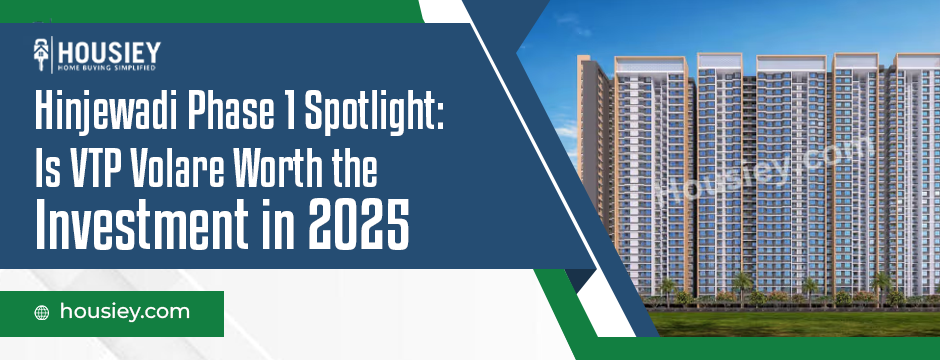
Hinjewadi Phase 1 Spotlight: Is VTP Volare Worth the Investment in 2025?


Buying a home is as much emotional as it is financial. When the address is Hinjewadi Phase 1, and the builder is VTP Realty, buyers expect a balance of location, quality, and future resale potential. VTP Volare is one of the newer launches in the area, and in this long-form guide we will walk through everything a buyer on Housiey needs to know. We will cover location and connectivity, the product mix, construction and amenities, price and payment, the investment angle, likely downsides, and ultimately answer the question of whether VTP Volare is worth investing in during 2025.

We will also include the explicit phrase you requested so readers searching for the same words will find this article: what are pros & cons of VTP Volare Hinjewadi. Throughout the article you will find practical advice, data-driven observations, and plain-speech recommendations for different buyer profiles.

Quick snapshot: what the project is

VTP Volare is a VTP Realty project in Hinjewadi Phase 1. It is a mid-rise to high-rise residential scheme spread over roughly 3.5 acres with multiple towers and a mix of 2, 3 and larger units including duplex options. Carpet areas are reported in the 616 to 1,936 square feet range and the launch pricing sits in the lower to mid crore band for larger units, with 2 BHK options starting in the range of the mid 70 lakh rupees. The project is RERA registered under PR1260002400020 and shows possession timelines in the second half of the decade.

Why Hinjewadi Phase 1 still matters in 2025

Hinjewadi is one of Pune’s most established IT nodes. Phase 1 sits close to IT parks, business towers, retail hubs and supports a dense ecosystem of employees who seek residences nearby. For investors and end users both, the factors that matter are consistent.

  1. Employment density and steady rental demand. Hinjewadi continues to host large campuses and mid-sized tech firms. That creates reliable rental demand from young professionals and families who want proximity to work.

  2. Infrastructure push. Over the last few years, civic upgrades, connecting roads, and last mile improvements have continued to strengthen. That matters for commute times and daily convenience.

  3. Mature retail and social infrastructure. From supermarkets to clinics to schools, the immediate catchment is better served than many greenfield suburbs.

Because location underpins future value, projects in Phase 1 tend to capture stable demand when well executed. If you are evaluating VTP Volare you are essentially weighing the product quality and developer execution against this location advantage.

Product mix and developer credentials

VTP Volare offers a mix of 2 BHK, 3 BHK, simplexes and 4 BHK duplexes across three towers with a design height that suggests 29 upper floors above a podium for many blocks. VTP Realty is a known Pune developer with a portfolio that includes several residential and mixed use projects in the region. The builder’s track record matters for delivery timelines, build quality and after-sales service. 

Key product data points buyers frequently ask about:

  • Land parcel: about 3.5 acres.

  • RERA registration: PR1260002400020.

  • Carpet area range: from roughly 616 sq.ft for the smallest 2 BHK to more than 1,900 sq.ft for duplex units.

  • Possession timeline shown on public listings: commonly stated as December 2029. Always check the RERA page for the latest confirmed date.

These numbers form the backbone of any financial calculation you will do. If you are doing EMI planning, calculating yields, or modelling resale, start with carpet area, price per square foot, and possession date.

Location and connectivity — practical reality, not brochure claims

VTP Volare’s immediate neighbourhood is arguably its main selling point. Here are practical travel and location facts every buyer should weigh.

  • Proximity to Hinjewadi IT Park and Infosys Circle. Public listings show the project within one to two kilometers of major IT anchors, which makes it attractive for tech professionals seeking short commutes.

  • Nearby retail and essentials. Listings indicate D-Mart and other grocery and retail options within a few kilometers. For weekly shopping and daily errands, it helps reduce friction.

  • Road access. Maan Road and other primary arteries are nearby, but traffic congestion during peak hours is still a reality in Hinjewadi. It is wise to visit the site during morning and evening peak times to gauge actual commute times for yourself.

  • Public transport and last mile. While buses and ride-hailing are available, first and last mile remains dependent on local feeder services. If you plan to commute without a personal vehicle, validate the availability of reliable local transport options for your work hours.

Overall, the location is a strong positive for end users working in the IT belt, and for investors who value steady rental demand.

Amenities and lifestyle offering

VTP presents Volare as a premium offering with a typical amenity list for projects in this category. Compilations of the public brochure and dealer pages list the following commonly promoted amenities:

  • Swimming pool and kids pool

  • Clubhouse with indoor games and party lawn

  • Dedicated gymnasium

  • Landscaped open spaces and kids play area

  • Digital door phone, branded fittings and a granite kitchen platform in the unit specifications.

What matters for buyers is not only whether the amenities exist on paper but their quality, maintenance model, and usable space. Here is how to evaluate them:

  • Check usable amenity area per resident. A crowd of amenities is only valuable if the amenity area is large enough for the resident population. Ask the sales team for the amenity area versus the number of units ratio.

  • Ask about maintenance and trust records. Ask whether the developer will handover an established maintenance company, what the expected monthly maintenance fee is, and how the developer plans to manage landscaping and water features.

  • Inspect fit and finish during a site visit. For example, verify tile quality, branded fitting models, and actual placement of amenities. Some brochure images are stylized. Seeing the mock-up or the built areas helps.

Pricing, payment plans and financials

Public listings and property portals show a price band for VTP Volare that varies by configuration. Typical numbers found across portals include 2 BHK starting around 73 to 85 lakh rupees for carpet areas in the mid 600s of square feet, and larger 3 BHKs and duplexes commanding price points in the higher lakhs to crores range. Average rate per square foot on listing sites is in the 11k to 12k rupee per square foot bracket, depending on the unit and exact area. These figures are consistent with launches in Hinjewadi for premium mid-market inventory. 

When calculating affordability and investment returns consider the following steps:

  1. Total cost of possession. Use the all-inclusive figure that includes taxes, parking, and possession charges. Developers often display both base price and an “all inclusive” price on brochures. Avoid surprises by asking for a final break-up.

  2. Loan and downpayment math. Many lenders provide up to 80 to 90 percent financing for under-construction projects. Confirm bank tie-ups and whether the developer has special tie-ups that reduce processing fees.

  3. EMI versus rent comparison. If you are buying for self-use, compute the EMI against likely rent savings and the non-monetary value of reduced commute. If you are buying for rental yield, compare expected monthly rent against EMI to estimate yield. Public data suggests Hinjewadi yields are healthy due to the large IT workforce, but yields vary by configuration and exact location.

  4. GST and stamp duty. Factor in GST on under-construction purchases and the stamp duty registration costs that apply at possession or registration.

If you are an investor or an NRI buyer, you should also ask for a clear payment schedule that ties major payments to construction milestones rather than arbitrary dates. A slabwise payment plan aligned to construction progress is standard practice and often safer for buyers than fixed-time payments.

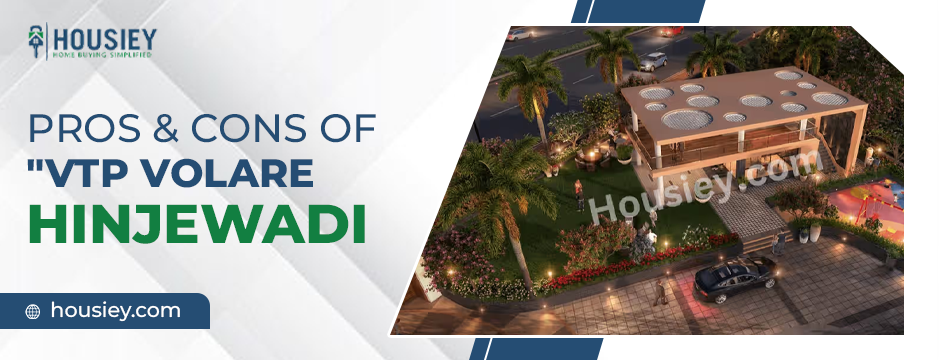
What are the pros & cons of “VTP Volare Hinjewadi”

You asked specifically for a phrase that will help buyers and search engines: what are pros & cons of “VTP Volare Hinjewadi”. Below is a detailed, candid pros and cons list tailored to a Housiey audience that expects clarity and a decision-ready view.

Pros

  1. Strong location for IT professionals. The proximity to Hinjewadi IT Park and Infosys Circle makes this a convenient choice for daily commuters and reduces travel time for many employees.

  2. Reputed developer with local track record. VTP Realty is an established name in Pune and the developer’s experience reduces execution risk relative to an unknown builder.

  3. Thoughtful product mix. The availability of 2 BHKs for end users and larger duplex options for families or investors widens the buyer pool. That makes resale and rental exits easier in many market cycles.

  4. Modern amenity set. Standard lifestyle amenities like clubhouse, pool, gym and indoor games align with expectations of mid-market premium buyers. When well executed, these can meaningfully improve lifestyle quality.

  5. RERA registration. The project’s RERA number is public, which provides a level of regulatory transparency about approvals and timelines. Always verify the RERA page for updated status.

Cons

  1. Possession timeline is not immediate. Public listings show possession around December 2029. For buyers who need ready possession or shorter wait times this may be a drawback. Confirm the RERA timeline and buffer for delays.

  2. Traffic and peak hour congestion. Hinjewadi can face heavy peak hour traffic. Even projects that are close to IT parks are affected by broader traffic patterns in the area. Site visits at different times of day are essential to assess real world commute times.

  3. Price sensitivity in a competitive market. Hinjewadi has many launches and resales. While location is strong, pricing needs to be evaluated against nearby contemporaries that may offer similar features at different price points. Compare developer incentives, block orientation, and parking availability.

  4. Construction and dust management in the micro area. The entire Hinjewadi sub-region has active construction. There have been instances where authorities have issued notices to developers for construction related road damage and mud on public roads. While that is not unique to a single project, it can affect short-term living conditions and commute safety during heavy construction phases. Keep an eye on local civic notices.

  5. Maintenance cost uncertainty. New projects can have changing maintenance costs in the first years. Check developer’s estimates, what constitutes sinking funds, and what the long-term maintenance plan looks like.

Deep dive: resale and appreciation potential

For investors the big question is appreciation over a 3 to 7 year horizon. Consider three key drivers:

  1. Micro-location premium. Projects closer to primary IT gates and with better access to arterial roads typically hold a premium. VTP Volare is positioned near Infosys Circle and Maan Road which supports a positive micro-location case.

  2. Supply pipeline. Hinjewadi has a steady stream of new launches. If supply overwhelms demand in a short window, price appreciation may be muted. On the other hand, high-quality launches with strong amenities tend to hold better. Compare upcoming supply in Hinjewadi Phase 1 and Phase 2 to gauge competition.

  3. Macro economic and employment trends. Long-term appreciation for a tech-focused micro-market depends on continued employment growth. If companies expand headcount, housing demand grows, improving rental yields and capital values.

Practical approach for investors:

  • Model two scenarios: conservative (flat real prices) and optimistic (5 to 8 percent annual appreciation). Use current all-inclusive price as the base and run the numbers for 3 and 5 year exits.

  • Consider rental yield and vacancy assumptions. In Hinjewadi, rental demand for 2 and 3 BHKs is steady, but yields vary. Factor in maintenance and property management fees if you plan to rent out the unit.

  • Exit strategy matters. If you plan to hold for long term, focus on product quality and builder reputation. If you plan to flip within 2 to 4 years, validate whether slab release pricing and early-bird discounts will allow a meaningful margin.

Unit planning, livability and practical checks

When you visit the project gallery or the site, look for these practical signs:

  • Carpet to built-up ratio. Carpet area is the usable area. Ask for precise carpet area figures and compare them to the unit’s super built-up or saleable area. A higher usable area for the same saleable area means a better living experience.

  • Ventilation and daylight. Check actual unit orientation and sample flats for cross ventilation and direct sunlight. Real comfort will depend on orientation and obstruction from nearby towers.

  • Kitchen layout and plumbing provision. Granite platform, branded sink and provision points are listed as standard. Verify brand names and the practical layout for appliances.

  • Parking availability. Confirm whether parking is included, whether it is stack or open, and whether visitor parking is adequate. Parking often gets underpriced in early discussions but becomes a daily pain later.

  • Sound insulation and partitioning. If you or renters require quiet for work from home, check for noise transfer between rooms and from neighboring units.

These checks can save future disappointment. Walk the mock-ups, ask the developer for sample bills for maintenance at their completed projects, and speak with any early occupants of nearby delivered projects to understand lived experience.

Practical visit checklist for Housiey users

When you book a site visit through Housiey or on your own, use this checklist:

  1. Visit in the morning and evening peak hours. Note commute time to your office or preferred work hub.

  2. Inspect the mock-up flat and actual slab work if available. Note finishes, tile joints, door alignment, and plumbing drainage at slab level.

  3. Confirm the final break-up of the “all inclusive” cost. Get everything in writing including parking and possession charges.

  4. Ask for the latest RERA disclosures, approved plans, and timelines. Check whether the RERA status has any caveats.

  5. Evaluate nearby micro services like grocery, pharmacy, clinics and school commute times.

  6. Ask about the builder’s policy on mitigation of dust and traffic during construction. Given local concerns in the Hinjewadi sub-region, this is a legitimate question to ask.

pros & cons of VTP Volare Hinjewadi

Buyer profiles: who should buy VTP Volare and who should pause

Different buyer goals change the answer to whether VTP Volare is a right fit. Here are quick profiles:

Good fit

  • IT professionals working in Hinjewadi. If your office is in or near Hinjewadi, the location saves commute time and reduces daily friction.

  • Young families wanting modern amenities. The amenity mix and unit sizes make it convenient for nuclear families who value on-site recreation.

  • Buyers looking for long term hold. If you plan to hold for five or more years, the micro-location and developer brand make a reasonable case for steady appreciation.

Pause and evaluate

  • Buyers needing immediate possession. With possession timelines in the later part of the decade, if you need to move in immediately this is not suitable.

  • Buyers constrained by tight budgets. While pricing is competitive for Hinjewadi, compare nearby resale options for ready possession and possibly lower immediate cost.

  • Highly price sensitive investors looking for short flipping gains. New launches can be less predictable for short term margin unless you have a reliable exit buyer.

Common buyer questions and quick answers

Is the project RERA registered?
Yes. The project is registered under PR1260002400020. Always verify the RERA page for the most updated status. 

What are typical unit sizes and starting price?
Carpet sizes for 2 BHKs are reported around 616 to 782 sq.ft and starting prices for small 2 BHKs sit in the high 70 lakh rupee range on public listings. Prices vary by floor, orientation and parking. 

When is possession expected?
Public listings commonly show possession around December 2029. Buyers should check RERA and the builder’s sales office for the most current timeline. 

Which banks are tied up for home loans?
Developers typically show multiple bank logos for approved financing. Confirm with the sales team which banks are actually sanctioning loans and whether there are special schemes.

Negotiation and deal-making tips

  1. Ask for a final written price break-up and negotiate on items like car park cost or floor rise charges. Small concessions add up.

  2. Check for exchange offers or bank tie-up discounts that reduce processing fees. Developers sometimes negotiate on regulatory charges or processing fees if you bring firm proof of financing.

  3. If buying off-plan, request a clause linking penalty to delayed possession. A reasonable possession guarantee clause gives buyers some protection.

  4. Consider developer history of delivery for his other projects in the city. Delivered projects and customer testimonials can help you decide on leniency during negotiating.

The Housiey perspective

Before wrapping up we want to tell you how we, at Housiey, think about projects like VTP Volare. We focus on clarity, unbiased evaluation and giving buyers the exact tools they need to decide. Our goal is to remove the marketing fluff and give you facts and practical advice. When we evaluate a project we look at verified regulatory data, walk the site ourselves where possible, and compare price and product against similar launches in the same micro market.

If you book a site visit through us, we will arrange a clear, consolidated presentation of all costs and timelines. We will also give you a pros and cons checklist tailored to your needs so you can compare VTP Volare against 2 or 3 handpicked alternatives in Hinjewadi. We stand by transparent pros and cons analysis for every project so that your decision is guided by reason and not only by glossy brochures.

Final verdict: is VTP Volare worth investing in, in 2025?

Short answer: Yes, for certain buyer profiles.

Long answer: For end users who work in Hinjewadi or nearby locations and for long-term investors who are comfortable with the construction timeline to 2029, VTP Volare represents a balanced proposition. The reasons are clear: a strong micro-location, a recognized developer, a product mix that matches both single professionals and families, and a modern amenities slate. These are all positives that match what Housiey buyers commonly prioritize.

However, there are caveats. If you need an immediate house to move into, or if you are highly focused on short-term flipping gains in the next 12 to 24 months, this project may not be ideal. Also monitor local construction activity and civic issues related to road maintenance and construction traffic. Check the latest RERA disclosures and keep a close eye on the timeline.

Actionable next steps if you are interested:

  1. Book a Housiey-led site visit and ask for the latest RERA and construction status documents.

  2. Get a full price break-up in writing and model your EMI, rent estimate and total cost to possession.

  3. Compare at least three nearby projects that match in size and price to validate value per usable carpet.

  4. If buying as investor, build conservative and optimistic exit scenarios and stress test them.

Buying a home is as much emotional as it is financial. When the address is Hinjewadi Phase 1, and the builder is VTP Realty, buyers expect a balance of location, quality, and future resale potential. VTP Volare is one of the newer launches in the area, and in this long-form guide we will walk through everything a buyer on Housiey needs to know. We will cover location and connectivity, the product mix, construction and amenities, price and payment, the investment angle, likely downsides, and ultimately answer the question of whether VTP Volare is worth investing in during 2025.

We will also include the explicit phrase you requested so readers searching for the same words will find this article: what are pros & cons of VTP Volare Hinjewadi. Throughout the article you will find practical advice, data-driven observations, and plain-speech recommendations for different buyer profiles.

Quick snapshot: what the project is

VTP Volare is a VTP Realty project in Hinjewadi Phase 1. It is a mid-rise to high-rise residential scheme spread over roughly 3.5 acres with multiple towers and a mix of 2, 3 and larger units including duplex options. Carpet areas are reported in the 616 to 1,936 square feet range and the launch pricing sits in the lower to mid crore band for larger units, with 2 BHK options starting in the range of the mid 70 lakh rupees. The project is RERA registered under PR1260002400020 and shows possession timelines in the second half of the decade.

Why Hinjewadi Phase 1 still matters in 2025

Hinjewadi is one of Pune’s most established IT nodes. Phase 1 sits close to IT parks, business towers, retail hubs and supports a dense ecosystem of employees who seek residences nearby. For investors and end users both, the factors that matter are consistent.

  1. Employment density and steady rental demand. Hinjewadi continues to host large campuses and mid-sized tech firms. That creates reliable rental demand from young professionals and families who want proximity to work.

  2. Infrastructure push. Over the last few years, civic upgrades, connecting roads, and last mile improvements have continued to strengthen. That matters for commute times and daily convenience.

  3. Mature retail and social infrastructure. From supermarkets to clinics to schools, the immediate catchment is better served than many greenfield suburbs.

Because location underpins future value, projects in Phase 1 tend to capture stable demand when well executed. If you are evaluating VTP Volare you are essentially weighing the product quality and developer execution against this location advantage.

Product mix and developer credentials

VTP Volare offers a mix of 2 BHK, 3 BHK, simplexes and 4 BHK duplexes across three towers with a design height that suggests 29 upper floors above a podium for many blocks. VTP Realty is a known Pune developer with a portfolio that includes several residential and mixed use projects in the region. The builder’s track record matters for delivery timelines, build quality and after-sales service. 

Key product data points buyers frequently ask about:

  • Land parcel: about 3.5 acres.

  • RERA registration: PR1260002400020.

  • Carpet area range: from roughly 616 sq.ft for the smallest 2 BHK to more than 1,900 sq.ft for duplex units.

  • Possession timeline shown on public listings: commonly stated as December 2029. Always check the RERA page for the latest confirmed date.

These numbers form the backbone of any financial calculation you will do. If you are doing EMI planning, calculating yields, or modelling resale, start with carpet area, price per square foot, and possession date.

Location and connectivity — practical reality, not brochure claims

VTP Volare’s immediate neighbourhood is arguably its main selling point. Here are practical travel and location facts every buyer should weigh.

  • Proximity to Hinjewadi IT Park and Infosys Circle. Public listings show the project within one to two kilometers of major IT anchors, which makes it attractive for tech professionals seeking short commutes.

  • Nearby retail and essentials. Listings indicate D-Mart and other grocery and retail options within a few kilometers. For weekly shopping and daily errands, it helps reduce friction.

  • Road access. Maan Road and other primary arteries are nearby, but traffic congestion during peak hours is still a reality in Hinjewadi. It is wise to visit the site during morning and evening peak times to gauge actual commute times for yourself.

  • Public transport and last mile. While buses and ride-hailing are available, first and last mile remains dependent on local feeder services. If you plan to commute without a personal vehicle, validate the availability of reliable local transport options for your work hours.

Overall, the location is a strong positive for end users working in the IT belt, and for investors who value steady rental demand.

Amenities and lifestyle offering

VTP presents Volare as a premium offering with a typical amenity list for projects in this category. Compilations of the public brochure and dealer pages list the following commonly promoted amenities:

  • Swimming pool and kids pool

  • Clubhouse with indoor games and party lawn

  • Dedicated gymnasium

  • Landscaped open spaces and kids play area

  • Digital door phone, branded fittings and a granite kitchen platform in the unit specifications.

What matters for buyers is not only whether the amenities exist on paper but their quality, maintenance model, and usable space. Here is how to evaluate them:

  • Check usable amenity area per resident. A crowd of amenities is only valuable if the amenity area is large enough for the resident population. Ask the sales team for the amenity area versus the number of units ratio.

  • Ask about maintenance and trust records. Ask whether the developer will handover an established maintenance company, what the expected monthly maintenance fee is, and how the developer plans to manage landscaping and water features.

  • Inspect fit and finish during a site visit. For example, verify tile quality, branded fitting models, and actual placement of amenities. Some brochure images are stylized. Seeing the mock-up or the built areas helps.

Pricing, payment plans and financials

Public listings and property portals show a price band for VTP Volare that varies by configuration. Typical numbers found across portals include 2 BHK starting around 73 to 85 lakh rupees for carpet areas in the mid 600s of square feet, and larger 3 BHKs and duplexes commanding price points in the higher lakhs to crores range. Average rate per square foot on listing sites is in the 11k to 12k rupee per square foot bracket, depending on the unit and exact area. These figures are consistent with launches in Hinjewadi for premium mid-market inventory. 

When calculating affordability and investment returns consider the following steps:

  1. Total cost of possession. Use the all-inclusive figure that includes taxes, parking, and possession charges. Developers often display both base price and an “all inclusive” price on brochures. Avoid surprises by asking for a final break-up.

  2. Loan and downpayment math. Many lenders provide up to 80 to 90 percent financing for under-construction projects. Confirm bank tie-ups and whether the developer has special tie-ups that reduce processing fees.

  3. EMI versus rent comparison. If you are buying for self-use, compute the EMI against likely rent savings and the non-monetary value of reduced commute. If you are buying for rental yield, compare expected monthly rent against EMI to estimate yield. Public data suggests Hinjewadi yields are healthy due to the large IT workforce, but yields vary by configuration and exact location.

  4. GST and stamp duty. Factor in GST on under-construction purchases and the stamp duty registration costs that apply at possession or registration.

If you are an investor or an NRI buyer, you should also ask for a clear payment schedule that ties major payments to construction milestones rather than arbitrary dates. A slabwise payment plan aligned to construction progress is standard practice and often safer for buyers than fixed-time payments.

What are the pros & cons of “VTP Volare Hinjewadi”

You asked specifically for a phrase that will help buyers and search engines: what are pros & cons of “VTP Volare Hinjewadi”. Below is a detailed, candid pros and cons list tailored to a Housiey audience that expects clarity and a decision-ready view.

Pros

  1. Strong location for IT professionals. The proximity to Hinjewadi IT Park and Infosys Circle makes this a convenient choice for daily commuters and reduces travel time for many employees.

  2. Reputed developer with local track record. VTP Realty is an established name in Pune and the developer’s experience reduces execution risk relative to an unknown builder.

  3. Thoughtful product mix. The availability of 2 BHKs for end users and larger duplex options for families or investors widens the buyer pool. That makes resale and rental exits easier in many market cycles.

  4. Modern amenity set. Standard lifestyle amenities like clubhouse, pool, gym and indoor games align with expectations of mid-market premium buyers. When well executed, these can meaningfully improve lifestyle quality.

  5. RERA registration. The project’s RERA number is public, which provides a level of regulatory transparency about approvals and timelines. Always verify the RERA page for updated status.

Cons

  1. Possession timeline is not immediate. Public listings show possession around December 2029. For buyers who need ready possession or shorter wait times this may be a drawback. Confirm the RERA timeline and buffer for delays.

  2. Traffic and peak hour congestion. Hinjewadi can face heavy peak hour traffic. Even projects that are close to IT parks are affected by broader traffic patterns in the area. Site visits at different times of day are essential to assess real world commute times.

  3. Price sensitivity in a competitive market. Hinjewadi has many launches and resales. While location is strong, pricing needs to be evaluated against nearby contemporaries that may offer similar features at different price points. Compare developer incentives, block orientation, and parking availability.

  4. Construction and dust management in the micro area. The entire Hinjewadi sub-region has active construction. There have been instances where authorities have issued notices to developers for construction related road damage and mud on public roads. While that is not unique to a single project, it can affect short-term living conditions and commute safety during heavy construction phases. Keep an eye on local civic notices.

  5. Maintenance cost uncertainty. New projects can have changing maintenance costs in the first years. Check developer’s estimates, what constitutes sinking funds, and what the long-term maintenance plan looks like.

Deep dive: resale and appreciation potential

For investors the big question is appreciation over a 3 to 7 year horizon. Consider three key drivers:

  1. Micro-location premium. Projects closer to primary IT gates and with better access to arterial roads typically hold a premium. VTP Volare is positioned near Infosys Circle and Maan Road which supports a positive micro-location case.

  2. Supply pipeline. Hinjewadi has a steady stream of new launches. If supply overwhelms demand in a short window, price appreciation may be muted. On the other hand, high-quality launches with strong amenities tend to hold better. Compare upcoming supply in Hinjewadi Phase 1 and Phase 2 to gauge competition.

  3. Macro economic and employment trends. Long-term appreciation for a tech-focused micro-market depends on continued employment growth. If companies expand headcount, housing demand grows, improving rental yields and capital values.

Practical approach for investors:

  • Model two scenarios: conservative (flat real prices) and optimistic (5 to 8 percent annual appreciation). Use current all-inclusive price as the base and run the numbers for 3 and 5 year exits.

  • Consider rental yield and vacancy assumptions. In Hinjewadi, rental demand for 2 and 3 BHKs is steady, but yields vary. Factor in maintenance and property management fees if you plan to rent out the unit.

  • Exit strategy matters. If you plan to hold for long term, focus on product quality and builder reputation. If you plan to flip within 2 to 4 years, validate whether slab release pricing and early-bird discounts will allow a meaningful margin.

Unit planning, livability and practical checks

When you visit the project gallery or the site, look for these practical signs:

  • Carpet to built-up ratio. Carpet area is the usable area. Ask for precise carpet area figures and compare them to the unit’s super built-up or saleable area. A higher usable area for the same saleable area means a better living experience.

  • Ventilation and daylight. Check actual unit orientation and sample flats for cross ventilation and direct sunlight. Real comfort will depend on orientation and obstruction from nearby towers.

  • Kitchen layout and plumbing provision. Granite platform, branded sink and provision points are listed as standard. Verify brand names and the practical layout for appliances.

  • Parking availability. Confirm whether parking is included, whether it is stack or open, and whether visitor parking is adequate. Parking often gets underpriced in early discussions but becomes a daily pain later.

  • Sound insulation and partitioning. If you or renters require quiet for work from home, check for noise transfer between rooms and from neighboring units.

These checks can save future disappointment. Walk the mock-ups, ask the developer for sample bills for maintenance at their completed projects, and speak with any early occupants of nearby delivered projects to understand lived experience.

Practical visit checklist for Housiey users

When you book a site visit through Housiey or on your own, use this checklist:

  1. Visit in the morning and evening peak hours. Note commute time to your office or preferred work hub.

  2. Inspect the mock-up flat and actual slab work if available. Note finishes, tile joints, door alignment, and plumbing drainage at slab level.

  3. Confirm the final break-up of the “all inclusive” cost. Get everything in writing including parking and possession charges.

  4. Ask for the latest RERA disclosures, approved plans, and timelines. Check whether the RERA status has any caveats.

  5. Evaluate nearby micro services like grocery, pharmacy, clinics and school commute times.

  6. Ask about the builder’s policy on mitigation of dust and traffic during construction. Given local concerns in the Hinjewadi sub-region, this is a legitimate question to ask.

pros & cons of VTP Volare Hinjewadi

Buyer profiles: who should buy VTP Volare and who should pause

Different buyer goals change the answer to whether VTP Volare is a right fit. Here are quick profiles:

Good fit

  • IT professionals working in Hinjewadi. If your office is in or near Hinjewadi, the location saves commute time and reduces daily friction.

  • Young families wanting modern amenities. The amenity mix and unit sizes make it convenient for nuclear families who value on-site recreation.

  • Buyers looking for long term hold. If you plan to hold for five or more years, the micro-location and developer brand make a reasonable case for steady appreciation.

Pause and evaluate

  • Buyers needing immediate possession. With possession timelines in the later part of the decade, if you need to move in immediately this is not suitable.

  • Buyers constrained by tight budgets. While pricing is competitive for Hinjewadi, compare nearby resale options for ready possession and possibly lower immediate cost.

  • Highly price sensitive investors looking for short flipping gains. New launches can be less predictable for short term margin unless you have a reliable exit buyer.

Common buyer questions and quick answers

Is the project RERA registered?
Yes. The project is registered under PR1260002400020. Always verify the RERA page for the most updated status. 

What are typical unit sizes and starting price?
Carpet sizes for 2 BHKs are reported around 616 to 782 sq.ft and starting prices for small 2 BHKs sit in the high 70 lakh rupee range on public listings. Prices vary by floor, orientation and parking. 

When is possession expected?
Public listings commonly show possession around December 2029. Buyers should check RERA and the builder’s sales office for the most current timeline. 

Which banks are tied up for home loans?
Developers typically show multiple bank logos for approved financing. Confirm with the sales team which banks are actually sanctioning loans and whether there are special schemes.

Negotiation and deal-making tips

  1. Ask for a final written price break-up and negotiate on items like car park cost or floor rise charges. Small concessions add up.

  2. Check for exchange offers or bank tie-up discounts that reduce processing fees. Developers sometimes negotiate on regulatory charges or processing fees if you bring firm proof of financing.

  3. If buying off-plan, request a clause linking penalty to delayed possession. A reasonable possession guarantee clause gives buyers some protection.

  4. Consider developer history of delivery for his other projects in the city. Delivered projects and customer testimonials can help you decide on leniency during negotiating.

The Housiey perspective

Before wrapping up we want to tell you how we, at Housiey, think about projects like VTP Volare. We focus on clarity, unbiased evaluation and giving buyers the exact tools they need to decide. Our goal is to remove the marketing fluff and give you facts and practical advice. When we evaluate a project we look at verified regulatory data, walk the site ourselves where possible, and compare price and product against similar launches in the same micro market.

If you book a site visit through us, we will arrange a clear, consolidated presentation of all costs and timelines. We will also give you a pros and cons checklist tailored to your needs so you can compare VTP Volare against 2 or 3 handpicked alternatives in Hinjewadi. We stand by transparent pros and cons analysis for every project so that your decision is guided by reason and not only by glossy brochures.

Final verdict: is VTP Volare worth investing in, in 2025?

Short answer: Yes, for certain buyer profiles.

Long answer: For end users who work in Hinjewadi or nearby locations and for long-term investors who are comfortable with the construction timeline to 2029, VTP Volare represents a balanced proposition. The reasons are clear: a strong micro-location, a recognized developer, a product mix that matches both single professionals and families, and a modern amenities slate. These are all positives that match what Housiey buyers commonly prioritize.

However, there are caveats. If you need an immediate house to move into, or if you are highly focused on short-term flipping gains in the next 12 to 24 months, this project may not be ideal. Also monitor local construction activity and civic issues related to road maintenance and construction traffic. Check the latest RERA disclosures and keep a close eye on the timeline.

Actionable next steps if you are interested:

  1. Book a Housiey-led site visit and ask for the latest RERA and construction status documents.

  2. Get a full price break-up in writing and model your EMI, rent estimate and total cost to possession.

  3. Compare at least three nearby projects that match in size and price to validate value per usable carpet.

  4. If buying as investor, build conservative and optimistic exit scenarios and stress test them.