
Encumbrance Certificate in Maharashtra: Complete Guide (Process, Documents, Fees & FAQs)
-
 By L. Sadriwala
- May 15, 2026
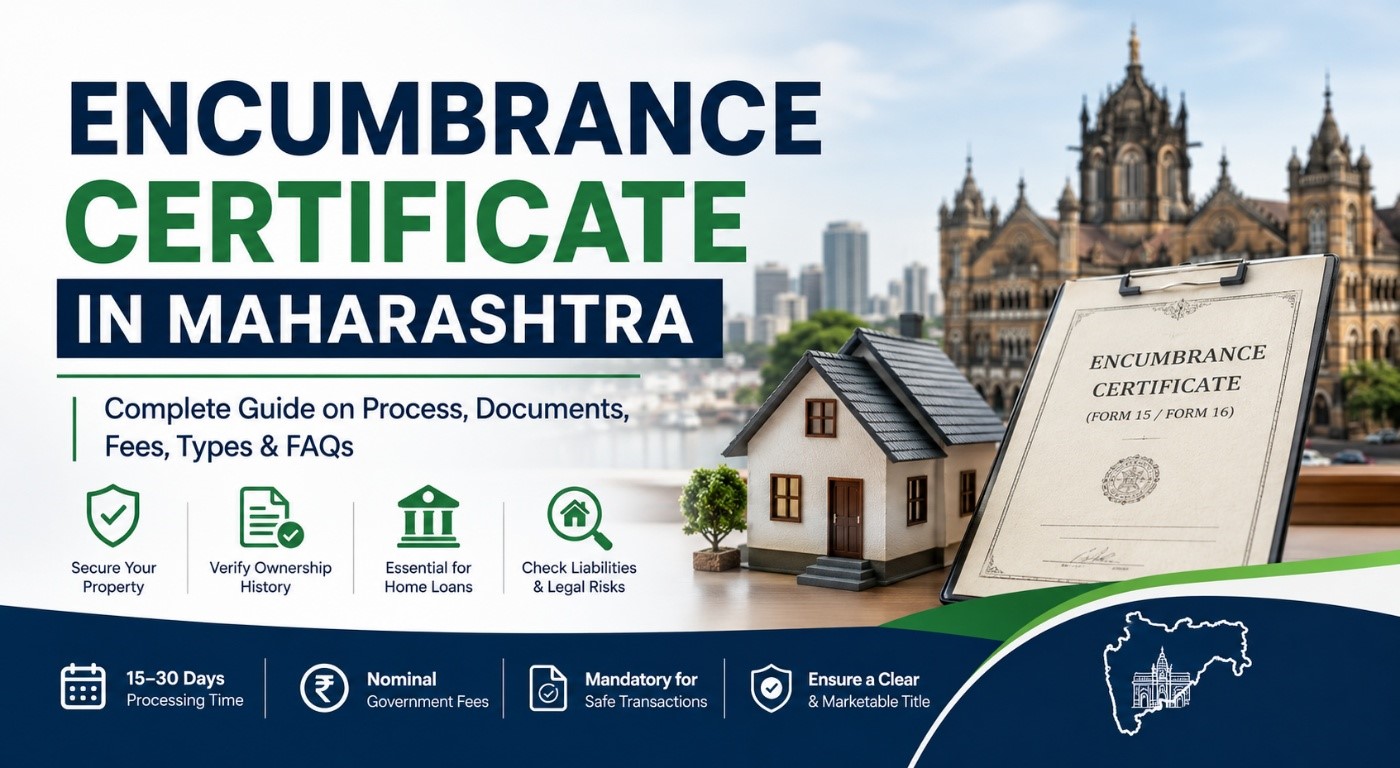
Buying property in Maharashtra is a major financial decision, and ensuring its legal safety is absolutely essential. One of the most important documents in this process is the Encumbrance Certificate (EC).
This certificate acts as a detailed record of a property’s financial and legal history, helping buyers confirm that the property is free from liabilities such as loans, disputes, or claims.
In this comprehensive guide, you’ll learn everything about obtaining an Encumbrance Certificate in Maharashtra, including its importance, types, documents required, application process, and more.
Also Read:- Encumbrance Certificate in Kerala: Registration | Apply Online | Download Certificate
What is an Encumbrance Certificate?
An Encumbrance Certificate is an official document issued by the Sub-Registrar Office (SRO) that records all registered transactions related to a property over a specific period.
It helps verify:
- Ownership history
- Financial liabilities (like loans or mortgages)
- Legal disputes or claims
Typically, buyers request an EC for 10 to 30 years to ensure a clean property title.
Also Read:- Encumbrance Certificate AP 2025: Step by Step to Apply Online IGRS
Why is an Encumbrance Certificate Important?

Confirms Clear Ownership
The EC establishes a transparent ownership trail by listing all past transactions. This ensures the seller has the legal right to sell the property.
Essential for Home Loans
Banks require an EC before approving a loan. It assures lenders that the property is not already pledged or under financial obligation.
Tracks Property History
It provides a chronological record of transactions such as sales, gifts, leases, and mortgages.
Detects Legal or Financial Liabilities
The EC highlights any pending dues, court orders, or claims attached to the property.
Required for Property Mutation
For updating ownership records in government documents, an EC is often mandatory.
Useful for Resale
A fresh EC increases buyer confidence and makes resale smoother.
Types of Encumbrance Certificate in Maharashtra
Form 15 (Encumbrance Certificate with Records)
- Issued when the property has recorded transactions or liabilities
- Includes details of mortgages, loans, leases, or legal claims
- Indicates that dues may still exist
Form 16 (Nil Encumbrance Certificate)
- Issued when no encumbrances are found
- Confirms a clean property title
- Preferred by buyers and banks
Who Should Apply for an EC?
- Property buyers
- Property sellers
- Loan applicants
- Legal advisors
- Real estate investors
Documents Required for Encumbrance Certificate
To apply for an EC in Maharashtra, keep the following documents ready:
Property-Related Documents
- Survey number / Gat number / CTS number
- Property address (village, taluka, district)
- Previous sale deed or title deed
Identity Proof
- Aadhaar Card
- PAN Card
- Passport (if applicable)
Application Details
- Purpose of application
- Time period for EC (e.g., 20–30 years)
How to Apply for an Encumbrance Certificate in Maharashtra
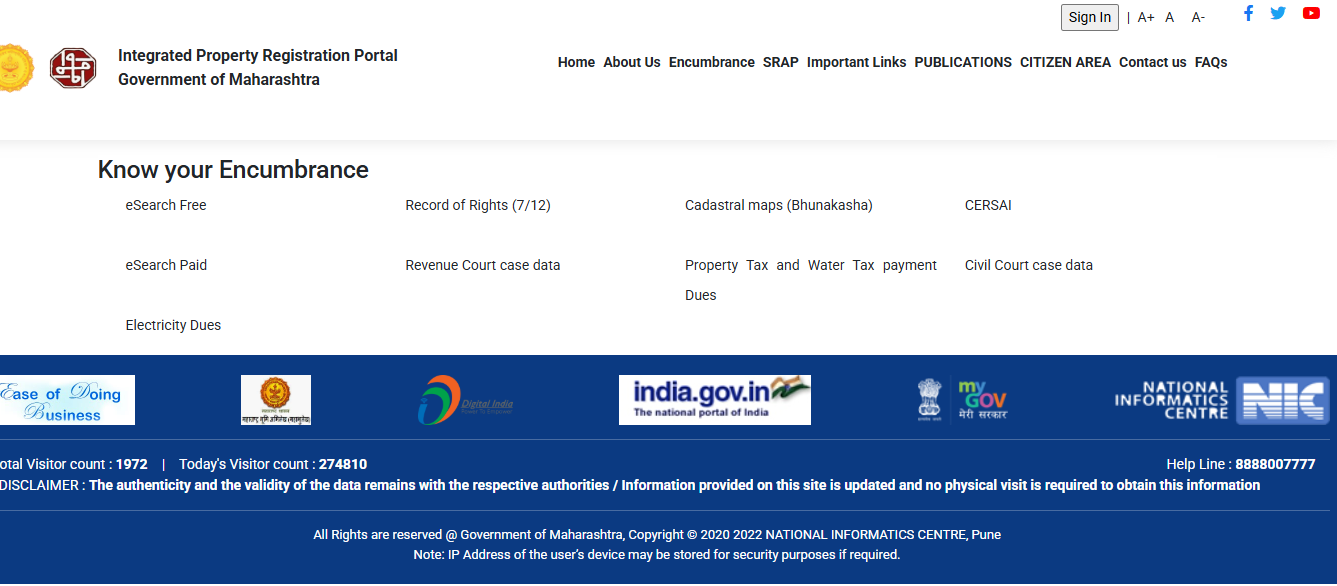
Step-by-Step Process (Primary Method)
Although some information is available online, the final EC must still be obtained physically.
Step 1: Visit the Sub-Registrar Office (SRO)
Go to the SRO where the property is registered.
Step 2: Fill Form 22
Obtain and complete the EC application form with accurate property details.
Step 3: Submit Documents
Attach all necessary documents including ID proof and property records.
Step 4: Pay Fees
Fees vary depending on the number of years for which the EC is requested.
Step 5: Verification Process
The SRO manually checks historical records.
Step 6: Collect the EC
The certificate is issued within 15–30 days.
Offline Method
Since Maharashtra does not offer a full EC download online, the offline process remains crucial:
- Visit the SRO and collect Form 22
- Submit the form along with the required documents
- Pay fees and receive an acknowledgment receipt
- Track the application using the receipt number
- Collect EC after processing
Can You Get an Encumbrance Certificate Online in Maharashtra?
What You Can Do Online
- Track application status
- View limited transaction details
- Access Index II document
What You Cannot Do Online
- Download the final EC
- Complete the full application digitally
The final EC must be collected physically from the SRO.
Processing Time and Fees
Processing Time
- Usually 15 to 30 days
Fees
- Based on the number of years searched
- Nominal charges set by the government
Encumbrance Certificate vs Index II
| Aspect | Encumbrance Certificate | Index II |
| Purpose | Shows full history & liabilities | Shows one transaction |
| Coverage | Up to 30 years | Single transaction |
| Use | Loan approval, verification | Proof of registration |
| Detail Level | Comprehensive | Limited |
Common Mistakes to Avoid
- Providing incorrect survey/CTS numbers
- Requesting an insufficient history period
- Not verifying EC details after receipt
- Assuming Index II is equal to EC
Tips for Buyers
- Always request EC for at least 20–30 years
- Cross-check with legal advisors
- Verify all names and dates carefully
- Ensure no hidden liabilities exist
Key Takeaways
- EC is essential for safe property transactions
- It confirms ownership and financial status
- Two types exist: Form 15 and Form 16
- Maharashtra requires physical collection of EC
- Always verify EC before buying property
Conclusion
An Encumbrance Certificate is one of the most critical documents when buying or selling property in Maharashtra. It protects you from hidden risks and ensures your investment is legally secure.
If navigating property documentation feels overwhelming, platforms like Housiey simplify the process by offering expert assistance, verified listings, and end-to-end property support. Whether you’re buying your first home or investing, Housiey helps you make confident and informed decisions.
Sources
- Maharashtra Inspector General of Registration (IGR)
- Sub-Registrar Office guidelines
- Banking and property loan documentation standards
- Legal property verification practices in India
FAQs
- It is a document that records all financial and legal transactions related to a property. It ensures the property is free from liabilities.
- Yes, it is required for property transactions and loan approvals. It verifies the legal status of the property.
- Ideally, you should request EC for 20–30 years. This ensures a complete ownership history.
- No, the final EC cannot be downloaded online. It must be collected from the SRO.
- Form 16 is a Nil Encumbrance Certificate. It indicates no liabilities on the property.
- Form 15 shows existing encumbrances. It lists loans, disputes, or claims.
- It usually takes 15 to 30 days. Processing depends on record verification.
- You need property details, ID proof, and ownership documents. Accurate information is essential.
- No, EC only shows registered transactions. Unregistered deals are not recorded.
- Yes, banks require EC for loan approval. It confirms the property is not mortgaged.
- Index II is a summary of a single registered transaction. It is not a substitute for EC.
- Yes, if you have property details. Ownership is not mandatory for application.
- The loan must be cleared before purchase. Always verify loan closure documents.
- Yes, it builds trust with buyers. It ensures transparency in transactions.
- You may face legal or financial risks. Hidden liabilities can create issues later.
- Yes, errors can be corrected through the SRO. Supporting documents are required.
- Fees are nominal and depend on duration. Charges are set by the government.
- Yes, it is crucial for all property types. It ensures legal safety.
- It helps verify ownership but is not the only proof. Title deed is also required.
- The Sub-Registrar Office issues EC. It verifies records before issuing.
L. Sadriwala, the Editor-in-Chief at Housiey, is a seasoned writer whose professional journey in content creation began in 2015. With a background rooted in a family of real estate developers, her transition into real estate writing was a natural evolution, bringing together her storytelling expertise and deep industry understanding.
Over the years, she has authored impactful blogs across diverse niches such as food, travel, and lifestyle, before establishing her reputation as a trusted voice in Indian real estate. Today, her work stands out for its clarity, accuracy, and ability to simplify complex property concepts for readers.
At Housiey, every article crafted by L. Sadriwala reflects thorough research, verified facts, and a reader-first approach. From decoding housing policies and trends to offering in-depth builder reviews and project insights, her mission is clear: to empower homebuyers and investors with the knowledge they need to make confident property decisions.
Her writing not only informs but also builds trust, making her one of the most credible editorial voices in the real estate space.
Related Stories