

Ghaziabad Tragedy: Three Sisters Die by Suicide After Alleged Online Gaming Obsession
-
 By L. Sadriwala
- February 5, 2026
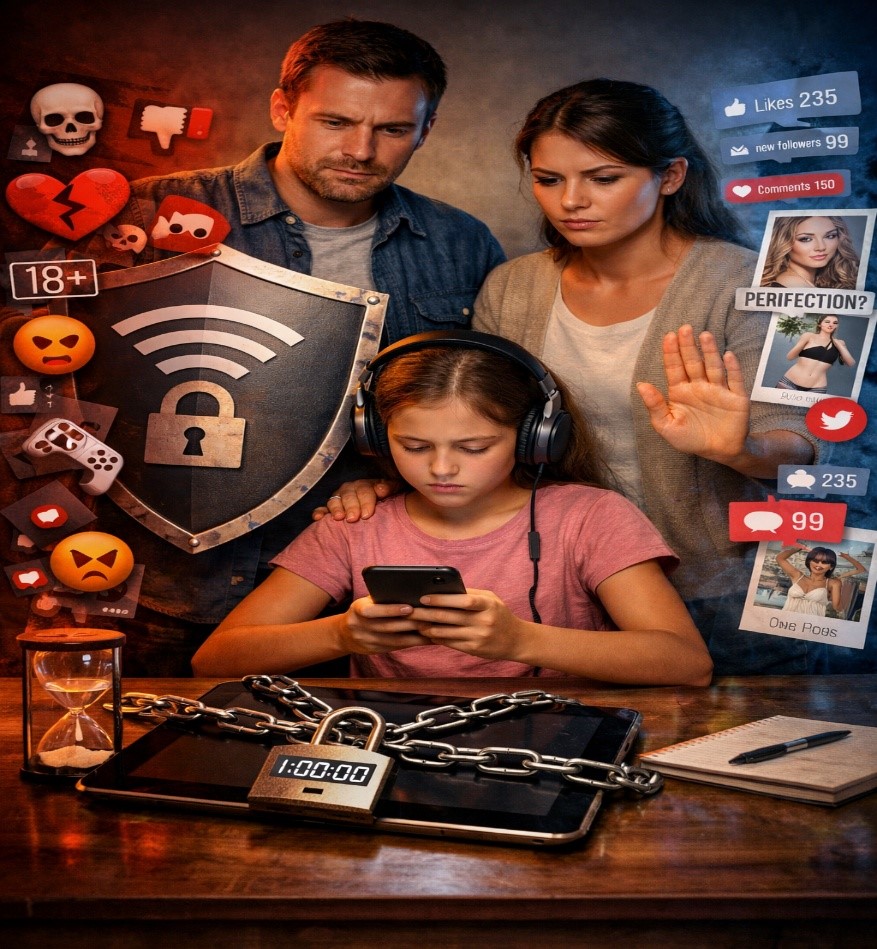
In a devastating incident from Ghaziabad, Uttar Pradesh, three minor sisters reportedly died by suicide after jumping from the 9th floor of a residential building in Bharat City Society.
The deceased have been identified as Nishika (16), Prachi (14), and Pakhi (12). Police officials confirmed that the girls allegedly climbed onto a chair and jumped one after the other from the balcony of their apartment.
Authorities have stated that the case is being investigated from all angles, but early findings suggest that the sisters had become deeply emotionally dependent on a Korean task-based online gaming application.
A Note That Shook Everyone
During the investigation, police reportedly found handwritten notes and diary pages near the spot. A suicide note is also said to have been recovered, in which the girls expressed that they could not imagine their lives without their online game.
According to sources, the note included a disturbing message addressed to their father, reportedly stating:
“Sorry, Papa… we cannot leave Korea. Korea is our life, and you cannot make us leave it. That’s why we are committing suicide.”
The note, along with additional written pages, is currently being examined for authenticity and psychological clues.
The Game Under Investigation
Reports claim the game the girls were addicted to is called ‘Korean Love Game’, believed to involve around 50 task-based challenges.
Police officials stated that the sisters were so influenced by the game that they allegedly started using Korean names for each other, and reportedly began believing they were not Indian but Korean personalities, describing themselves as “Korean princesses.”
Assistant Police Commissioner Atul Kumar Singh said investigators found diary notes with apology messages and even crying caricatures, pointing toward emotional distress and obsession.
School Dropout Since Covid
Another concerning detail revealed in the investigation is that the girls reportedly had not attended school since the Covid-19 pandemic. Shockingly, reports also suggest the eldest sister, despite being 16, was enrolled only in Class 4.
Their father, Chetan Kumar, told media agencies that the addiction developed during the pandemic when phone usage increased at home.
Restriction May Have Triggered the Final Step
Police officials stated that the family had reportedly restricted the girls’ phone access in the past few days. Investigators believe this may have led to panic, emotional breakdown, and extreme reaction.
DCP Nimish Patil said that the sisters appeared disturbed after being stopped from using the phone, and that may have played a role in their tragic decision.
The police have seized the girls’ mobile phones and are conducting a detailed digital analysis to understand their activity patterns and the role of the gaming app.
The investigation remains ongoing.
This Is a Lesson for Every Parent: What We MUST Understand
This incident isn’t just about a game.
This is about:
- unmonitored screen exposure
- psychological dependence
- social isolation
- lack of real-world routine
- and a child’s brain being unable to regulate dopamine-driven habits
Many parents think:
“It’s okay, they’re just on the phone.”
But the truth is:
A child’s brain does not have the maturity to control addiction.
Why Screen Addiction Becomes Dangerous in Children
Screen addiction is not only “bad habit.” It becomes dangerous because it affects:
Dopamine levels
Games and apps reward children instantly:
- points
- new tasks
- streaks
- levels
- characters
- “rewards”
This trains the brain to crave quick pleasure and reject normal life.
Emotional dependence
Children start using screens not for fun, but for emotional comfort.
They escape:
- loneliness
- insecurity
- boredom
- family stress
- school pressure
Identity confusion
Some games create fantasy lives where children feel:
- important
- loved
- powerful
- admired
Real life feels “boring” and “painful” in comparison.
Warning Signs Parents Should NEVER Ignore
If your child shows these signs, it’s not “attitude”, it’s addiction.
Behavioural Red Flags
- anger when phone is taken away
- crying, screaming, or panic when WiFi is off
- refusing to eat without screen
- lying about screen time
- using phone secretly at night
- becoming aggressive with siblings/parents
Emotional Red Flags
- staying isolated
- loss of interest in toys, books, outdoor play
- mood swings
- sudden sadness after screen restriction
- saying “my real friends are online”
- feeling life is meaningless without game
Physical Red Flags
- headaches
- weak eyesight complaints
- irregular sleep
- dark circles
- body weakness
- constant tiredness
School & Social Red Flags
- poor performance
- skipping school
- no interest in studies
- refusing to meet relatives or friends
- avoiding family conversations
The BIGGEST Mistake Parents Make
The biggest mistake is:
Taking away the phone suddenly and harshly.
Because for an addicted child, the phone is not a device.
It becomes:
- their world
- their comfort
- their escape
- their identity
So sudden removal feels like emotional withdrawal.
Just like addiction withdrawal.
How to Intervene the Correct Way (Step-by-Step)
Step 1: Don’t Shame Them
Never say:
- “You are useless”
- “You’re addicted like a drug addict”
- “You’ll become mad”
- “You’re destroying the family”
This pushes the child deeper into secrecy.
Instead say:
“I know you love this game. But I’m worried it’s taking over your health.”
Step 2: Observe Before Acting
Before changing anything, spend 2-3 days observing:
- what apps they use
- what time they play
- what triggers usage (boredom, sadness, loneliness)
This helps you intervene smartly instead of emotionally.
Step 3: Have a Calm Conversation (Not a Lecture)
Sit with them and ask questions like:
- “What do you like in this game?”
- “Who do you talk to?”
- “How does it make you feel?”
- “Do you feel stressed without it?”
The goal is not to scold.
The goal is to understand.
Step 4: Slowly Reduce Screen Time (Not Suddenly Stop)
Addiction needs gradual reduction.
Example plan:
- Week 1: reduce by 20%
- Week 2: reduce by 40%
- Week 3: strict fixed timings
Sudden bans often lead to:
- rebellion
- depression
- secret phone usage
- extreme emotional reactions
Step 5: Replace Screen Time With Something Exciting
This is the most important part.
You cannot remove a habit without replacing it.
Replace with:
- sports classes
- dance
- art
- swimming
- library visits
- play dates
- family board games
- gardening
- cooking with parents
If life feels full, screens feel less necessary.
How to Handle Screen Addiction Without Constant Fights
Rule 1: Stop Negotiating Daily
Parents get tired because every day becomes a fight.
Instead make fixed family rules like:
- phone only after homework
- no phone during meals
- no phone in bedroom
- no phone after 9 pm
Make rules non-negotiable like brushing teeth.
Rule 2: Use Parental Controls Quietly
Parents often hesitate to monitor phones because they think it’s “privacy.”
But children need safety more than privacy.
Use:
- Google Family Link
- Apple Screen Time
- Safe search filters
- restricted downloads
- app approvals
This is not controlling. This is parenting.
Rule 3: Remove Screens From Bedrooms
A child alone with a phone at night is the biggest danger.
Night-time usage increases:
- addiction
- depression
- secret communities
- inappropriate exposure
Keep phones in the living room after dinner.
What to Do If Your Child Gets Extremely Angry When You Restrict Screens
If your child reacts with rage, tears, panic, or violence, do not ignore it.
This is a serious sign.
What you should do:
- stay calm
- don’t shout back
- say:
“I can see you’re upset. Let’s sit and breathe.”
- give them 10 minutes to settle
- then explain boundaries
If they threaten self-harm, treat it as a medical emergency.
How to Know Your Child Needs Professional Help
If your child:
- says “I want to die”
- says “life is useless”
- starts self-harming
- refuses to eat
- becomes silent for long hours
- locks themselves in room
- has sleep problems for weeks
Then you should consult:
1. child psychologist
2. child psychiatrist (if needed)
3. school counselor
This is not “drama.” This is mental health.
Screen Addiction Solutions Every Parent Should Apply
Here are practical solutions that actually work:
Create a Daily Routine
Children without routine automatically fall into screen addiction.
A healthy routine includes:
- wake-up time
- school/study time
- play time
- screen time
- family time
- sleep time
Increase Outdoor Exposure
Even 45 minutes outside daily reduces screen obsession massively.
Sunlight + physical movement = natural dopamine.
Encourage Friendships Offline
Kids who have no real-world friends will always choose online worlds.
Encourage:
- cousin meetups
- society playtime
- group activities
Be a Role Model
If parents are scrolling all day, children will follow.
Kids learn more from what you do than what you say.
Keep Screens as a Reward, Not a Lifestyle
Instead of unlimited access, use it like:
“After homework + one hour playtime, you get 45 minutes screen.”
How Parents Can Build Emotional Safety at Home
This is the deepest part.
Kids become addicted when they don’t feel emotionally connected.
Every child needs:
- daily conversation
- emotional validation
- hugs and affection
- feeling heard
- feeling important
Even 20 minutes of daily bonding reduces screen addiction.
The Right Way to Discipline (Without Trauma)
Wrong:
“You’re banned from phone forever!”
“I’ll break your phone!”
“You’re wasting our money!”
Right:
“We are reducing screen time because I love you and I want you healthy.”
“Let’s make a plan together.”
“If you follow the routine, you can earn your screen time.”
Discipline must feel like structure, not punishment.
If Your Child Is Influenced by Foreign Culture or Fantasy Worlds
This is common now: K-dramas, K-pop, anime worlds, fantasy roleplay games.
It’s not wrong to enjoy culture.
But parents must ensure the child knows:
- their identity
- their real life responsibilities
- their real world goals
If they start saying:
“I am not Indian, I’m Korean.”
That is a red flag of escapism. It means they hate their current life emotionally.
Most Important: Don’t Wait for Things to Become Extreme
Parents often act only when marks fall or behaviour becomes unbearable.
But addiction starts silently.
The best time to intervene is early:
- when screen time crosses 3-4 hours daily
- when the child starts isolating
- when anger starts increasing
Final Message to Parents
This tragedy is not just a news story.
It is a reminder that in today’s world:
phones are not toys
internet is not harmless
gaming is not always “just fun”
and children need guidance more than ever
Children don’t always know how to express loneliness, anxiety, or emotional pain.
So they escape.
And sometimes, that escape becomes an obsession.
If a child is addicted, it doesn’t mean the child is bad.
It means the child is struggling. And they need help not punishment.
L. Sadriwala, the Editor-in-Chief at Housiey, is a seasoned writer whose professional journey in content creation began in 2015. With a background rooted in a family of real estate developers, her transition into real estate writing was a natural evolution, bringing together her storytelling expertise and deep industry understanding.
Over the years, she has authored impactful blogs across diverse niches such as food, travel, and lifestyle, before establishing her reputation as a trusted voice in Indian real estate. Today, her work stands out for its clarity, accuracy, and ability to simplify complex property concepts for readers.
At Housiey, every article crafted by L. Sadriwala reflects thorough research, verified facts, and a reader-first approach. From decoding housing policies and trends to offering in-depth builder reviews and project insights, her mission is clear: to empower homebuyers and investors with the knowledge they need to make confident property decisions.
Her writing not only informs but also builds trust, making her one of the most credible editorial voices in the real estate space.
Related Stories